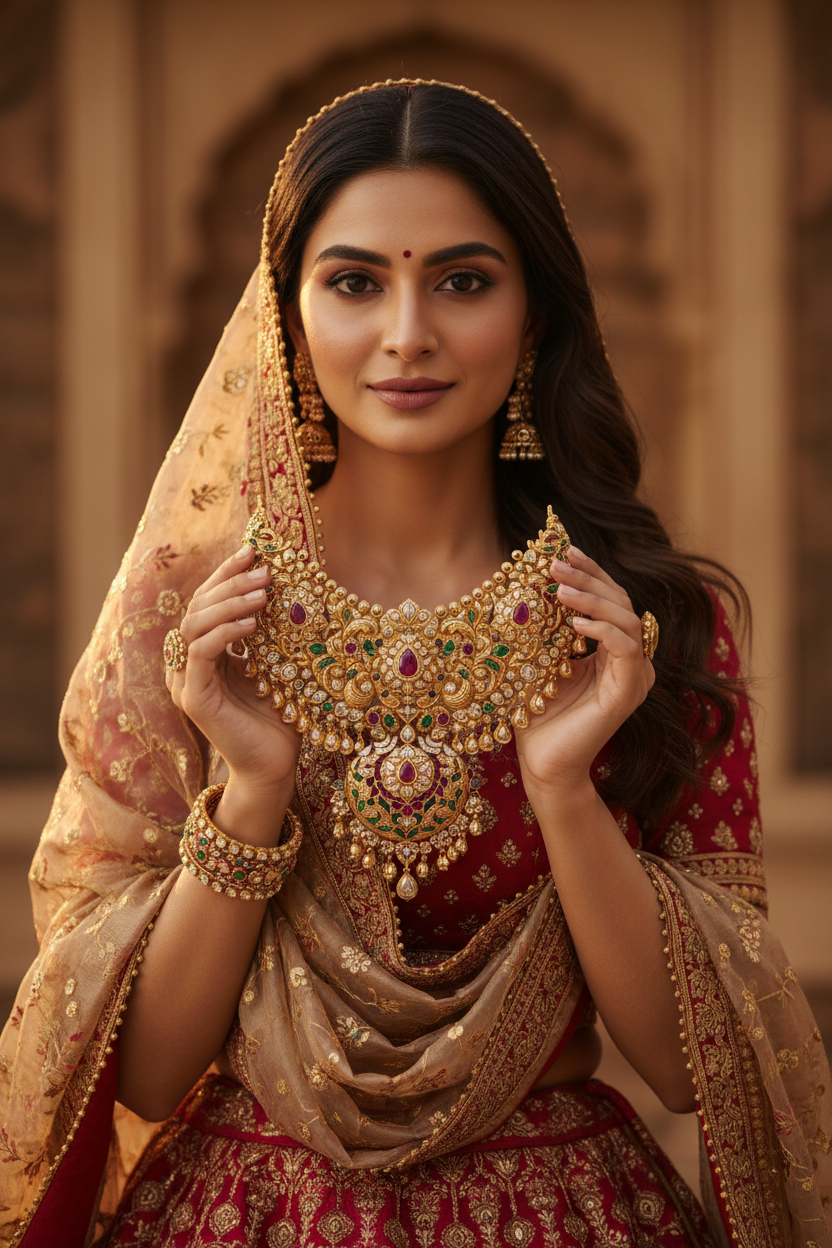


What Is Imitation Jewelry? Materials, Making, and Meaning Explained Simply
Imitation jewelry (noun): jewelry made from non-precious materials, such as base metals, glass, cubic zirconia, and simulated pearls, designed to recreate the look of fine jewelry at a much lower cost.
That is the dictionary answer. But if you are shopping for it, wearing it, or gifting it, you probably have more questions. What is it made of? How is it made? Is "one gram gold" the same thing? How do you know if a piece is good quality?
This guide answers each of those questions clearly, so you know exactly what you are buying.
What Is Imitation Jewelry, in Simple Words?
Imitation jewelry is jewelry that looks like gold, silver, diamonds, or gemstones, but is not made of them. It uses cheaper materials and focuses on design, style, and wearability.
The goal is not to trick anyone. It is openly sold as artificial or fashion jewelry. People choose it because it lets them:
-
Own many designs for different outfits
-
Match jewelry to trends without a big investment
-
Wear statement pieces without worrying about loss
-
Enjoy bridal and festive looks at an accessible price
Where Did the Idea Come From?
Imitation jewelry is not new. People have worn decorative pieces made of glass, shell, clay, and beads for thousands of years.
In modern fashion, the idea of "costume jewelry" became popular in the 1920s, when designers like Coco Chanel made bold, non-precious jewelry fashionable for wealthy women. Before that, wearing non-precious jewelry was often seen as something to hide. After that, it became a style choice.
In India, crafts like lac bangles, glass bead jewelry, and folk metal jewelry have long existed alongside gold traditions. Today's imitation jewelry builds on that history with modern materials and techniques.
Imitation, Artificial, Fashion, Costume: Are They the Same Thing?
Mostly, yes. These words are often used interchangeably.
-
Imitation jewelry: Highlights that the piece imitates the look of fine jewelry.
-
Artificial jewelry: The most common term in India for non-precious jewelry.
-
Fashion jewelry: Highlights style and trends.
-
Costume jewelry: An older term, common in the US and UK, linked to bold, decorative pieces.
On most Indian shopping websites, you will see all four used for the same kinds of products.
What Is Imitation Jewelry Made Of?
Every piece has three main parts: the base metal, the surface finish, and the stones or decorations.
Base Metals
The base is the main body of the piece. Common base metals include:
-
Brass: An alloy of copper and zinc. Strong, easy to shape, and widely used in Indian imitation jewelry.
-
Copper: Often used as a base for gold-toned plating.
-
Zinc alloy: Light and easy to cast into detailed shapes.
-
White metal: A general term for light-colored alloys used in budget pieces.
Surface Finishes and Plating
The finish decides the final color and look.
-
Gold plating: A thin gold-toned layer applied over the base metal, usually through electroplating.
-
Rhodium or silver-toned plating: Gives a bright white or silver look, common with American diamond pieces.
-
Rose gold-toned plating: A soft pinkish gold finish.
-
Antique or matte finish: A darker, less shiny gold-toned look.
-
Oxidized finish: A darkened silver-toned look with an aged effect.
-
Enamel (meenakari): Colored enamel filled into the design.
Stones and Pearls
-
Glass stones: Used in Kundan-style and many colorful designs.
-
Cubic zirconia: The sparkling stones used in American diamond jewelry.
-
Acrylic and resin: Light, colorful materials used in fun or statement designs.
-
Simulated pearls: Made from glass, shell, or plastic with a pearl-like coating.
How Is Imitation Jewelry Made?
Most imitation jewelry goes through these steps:
-
Design: A designer sketches the piece and plans its stones and finish.
-
Mould making: A mould is made from the design.
-
Casting: Molten base metal is poured into the mould to form the shape.
-
Filing and polishing: Rough edges are smoothed and the surface is cleaned.
-
Plating: The piece is coated with its final finish, such as gold-toned or rhodium.
-
Stone setting: Stones, pearls, or enamel are added.
-
Assembly: Chains, hooks, clasps, and threads are attached.
-
Quality check: The finished piece is checked for loose stones, uneven finish, and weak closures.
Some pieces also involve hand-finishing, especially detailed bridal and Kundan-style designs.
What Does "One Gram Gold" Really Mean?
You will often see "one gram gold jewelry" in Indian markets. It is a trade term for jewelry with a gold-toned plating or micro-coating over a base metal.
It does not always mean a piece contains exactly one gram of gold. The actual gold content, if any, is not standardized and can vary by seller. If gold content matters to you, read the product description carefully and ask the seller directly.
How Can You Judge Quality at Home?
You do not need special tools. Check these five things:
-
Finish evenness: The color should look the same across the whole piece, with no patches or bare spots.
-
Stone setting: Stones should sit level and secure, with no visible glue.
-
Edges: Run your finger along the edges. They should feel smooth, not sharp.
-
Closures: Hooks, clasps, and screw backs should work smoothly and hold firmly.
-
Back side: A well-made piece looks neat on the back too.
Who Is Imitation Jewelry Right For?
Imitation jewelry is a great fit for:
-
Students who want trendy pieces on a budget
-
Working women who want variety for office wear
-
Brides who want a grand look without investing in gold
-
Wedding guests who need matching pieces for many functions
-
Gift buyers looking for beautiful, well-presented gifts
-
Travelers who do not want to carry expensive jewelry
The fashion jewellery online collection at Emporia Jewels covers everyday and occasion imitation jewelry, so you can find pieces for each of these needs.
What Should You Not Expect From Imitation Jewelry?
Being honest about limits helps you buy smarter.
-
No precious metal value: Imitation jewelry is bought for style, not resale or investment.
-
Finishes need care: Plating can wear over time with moisture, perfume, and friction.
-
Skin sensitivity varies: Some people react to certain base metals. If you have sensitive skin, check material details and test new pieces with short wear first.
-
Not a family heirloom in the traditional sense: It is made for wearing and enjoying, not for passing down as an asset.
Understanding these limits helps you choose pieces for the right reasons. For more design-led options with a premium look, explore the designer jewellery online collection at Emporia Jewels.
How Do You Make Imitation Jewelry Last Longer?
-
Put jewelry on after perfume, lotion, and makeup.
-
Remove it before bathing, swimming, or exercising.
-
Wipe with a soft, dry cloth after each wear.
-
Store each piece separately in a dry pouch or box.
-
Keep silica gel packets in your jewelry box to reduce moisture.
The Answer in Fifty Words
What is imitation jewelry? It is jewelry made from base metals, plated finishes, glass, cubic zirconia, and simulated pearls, designed to look like fine jewelry. It is chosen for style, variety, and affordability, not metal value. Choose evenly finished, well-set pieces, care for them gently, and they will serve you beautifully.
Frequently Asked Questions
What is imitation jewelry made of?
It is usually made from base metals like brass, copper, or zinc alloy, with plated finishes and stones like glass, cubic zirconia, or simulated pearls.
Is imitation jewelry the same as artificial jewelry?
Yes. In India, imitation, artificial, fashion, and costume jewelry are commonly used to mean the same thing.
Does one gram gold jewelry contain real gold?
"One gram gold" is a trade term for gold-plated or micro-coated jewelry. Gold content is not standardized, so check the product details.
How long does imitation jewelry last?
With proper care, good-quality imitation jewelry can look good for a long time. Moisture, perfume, and friction affect how long the finish lasts.
Can imitation jewelry be worn daily?
Yes. Lightweight, simple pieces are well suited to daily wear when cared for properly.
Who made costume jewelry popular?
Designers like Coco Chanel helped make non-precious costume jewelry fashionable in the 1920s.