

Traditional Gold Bangle Designs: The Definitive Guide to Regional Craftsmanship and Selection Metrics
Traditional gold bangle designs serve as a testament to regional craftsmanship and ancestral heritage across India. From the intricate temple carvings of the South to the vibrant enamel works of the North, these ornaments reflect deep-seated cultural narratives. Exploring their distinct geometries and gold purities helps buyers choose enduring heirlooms.
Regional Heritage of Traditional Gold Bangle Designs
South Indian Temple and Kasu Valayal Motifs
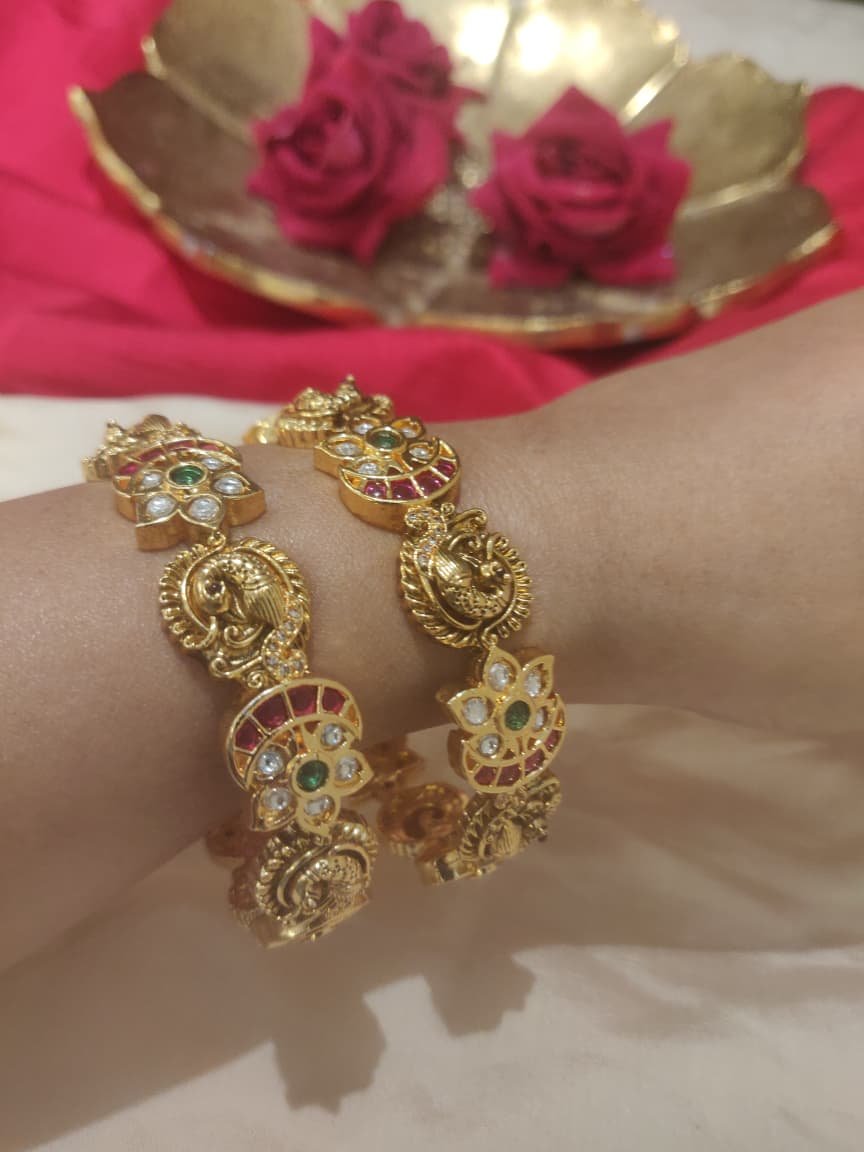
South Indian temple bangles draw rich artistic inspiration from historical monuments, depicting divine figurines like goddess Lakshmi and intricate floral patterns. Regional artisans carve these sacred motifs using repousse and chasing techniques to create deep, three-dimensional reliefs on the heavy golden surface. Incorporating auspicious coin elements, known as Kasu Valayal, these designs symbolize prosperity and remain preferred for traditional bridal trousseaus.
The following characteristics define South Indian gold bangle heritage:
-
Temple architecture influences bring high-relief carvings of sacred deities to life.
-
Kasu Valayal arrangements showcase beautiful overlapping gold coins representing goddess Lakshmi.
-
Vanki-inspired undulating contours introduce delicate geometric borders along the bangle edges.
-
Antique matte finishes utilize chemical darkeners to highlight deep carvings and relief depths.
-
Mango motifs, or Manga Malai designs, offer traditional South Indian foliage aesthetics on borders.
North Indian Kundan, Meenakari, and Patla Craftsmanship
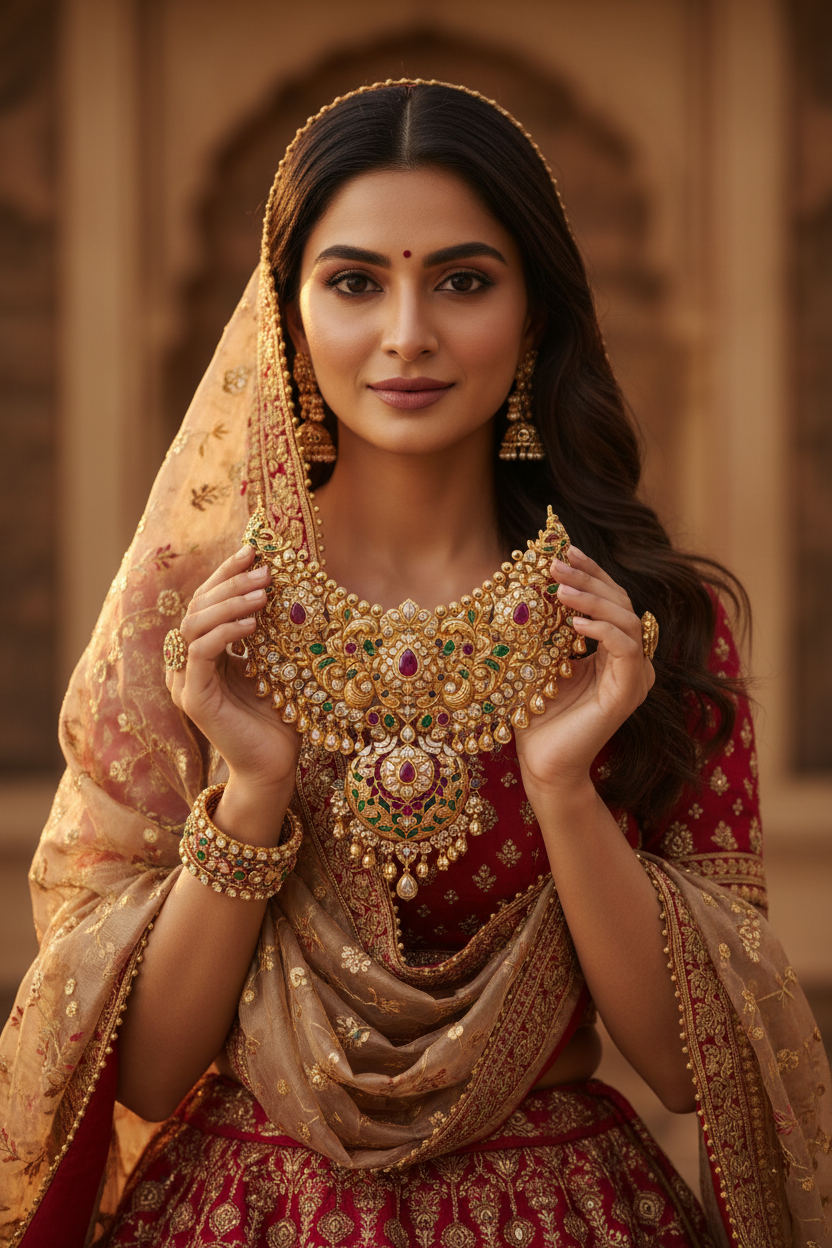
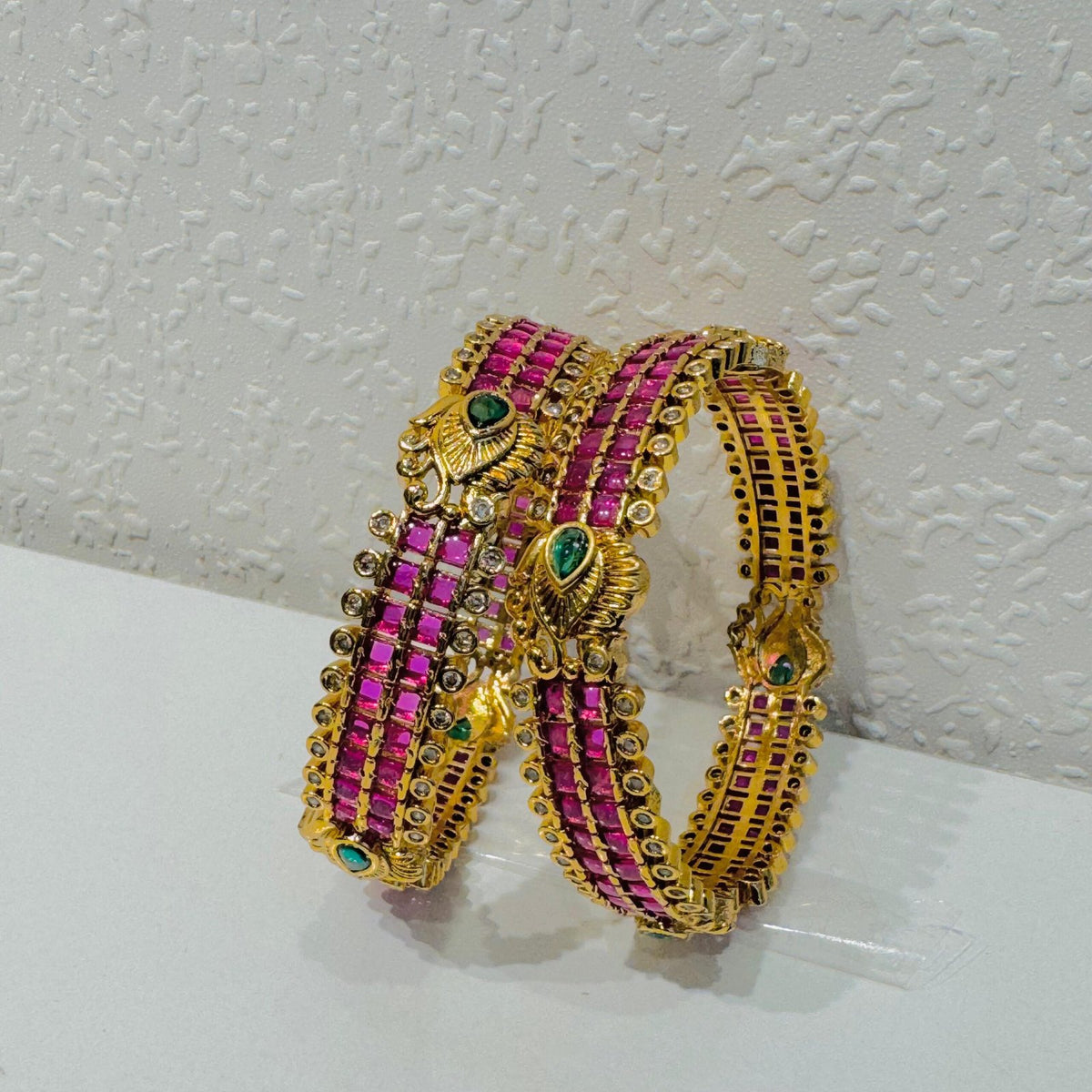
North Indian jewellery showcases vibrant visual contrasts by setting precious gemstones in refined gold foil through the centuries-old Kundan setting technique. Rajasthani craftsmen often complement these arrangements with colorful Meenakari enamel work, applying baked glass powders in deep crimson and emerald hues. For a broader decorative statement, the flat-surfaced Gujarati Patla style provides an expansive canvas for delicate filigree carvings, making it a standout choice among fancy artificial jewellery enthusiasts seeking heritage-inspired aesthetics.
The table below outlines key traditional regional designs and their distinguishing properties:
|
Traditional Bangle Type |
Regional Origin |
Key Structural Technique |
Design Ornamentation Style |
Recommended Styling |
|
Kasu Valayal |
Tamil Nadu |
Coin-overlay casting |
Divine relief carvings |
Traditional silk sarees |
|
Meenakari Patla |
Rajasthan |
Vibrant glass enamelling |
Floral and geometric patterns |
Lehengas and ethnic wear |
|
Bengali Chur |
West Bengal |
Die-stamped sheet carving |
Intricate filigree meshwork |
Formal bridal wear |
|
Coorgi Toda |
Karnataka |
Twisted wire braiding |
Bold rope texture |
Minimalist heritage dress |
|
Nallapusalu |
Andhra Pradesh |
Beaded wire stringing |
Black beads and gold accents |
Daily casual wear |
Structural Classification and Weight Profiles of Heritage Bangles
Broad Kadas and Sturdy Patla Baselines
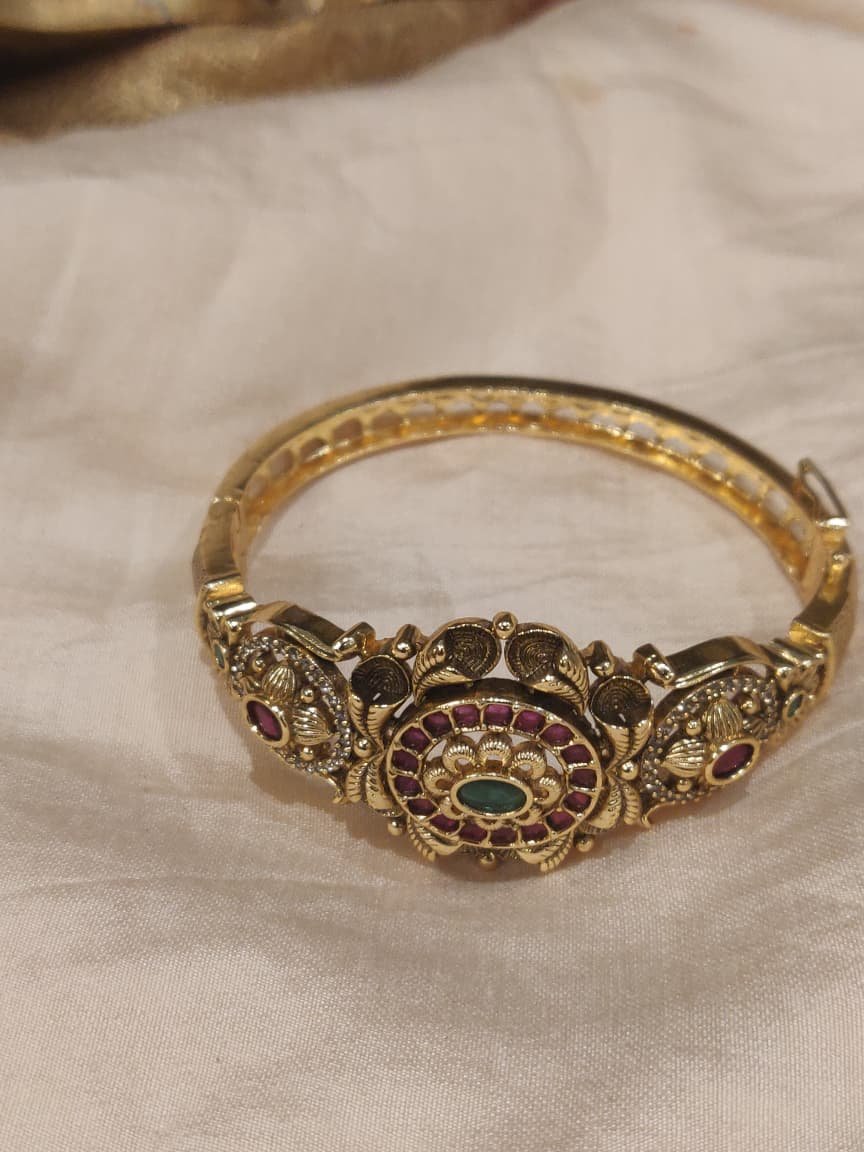
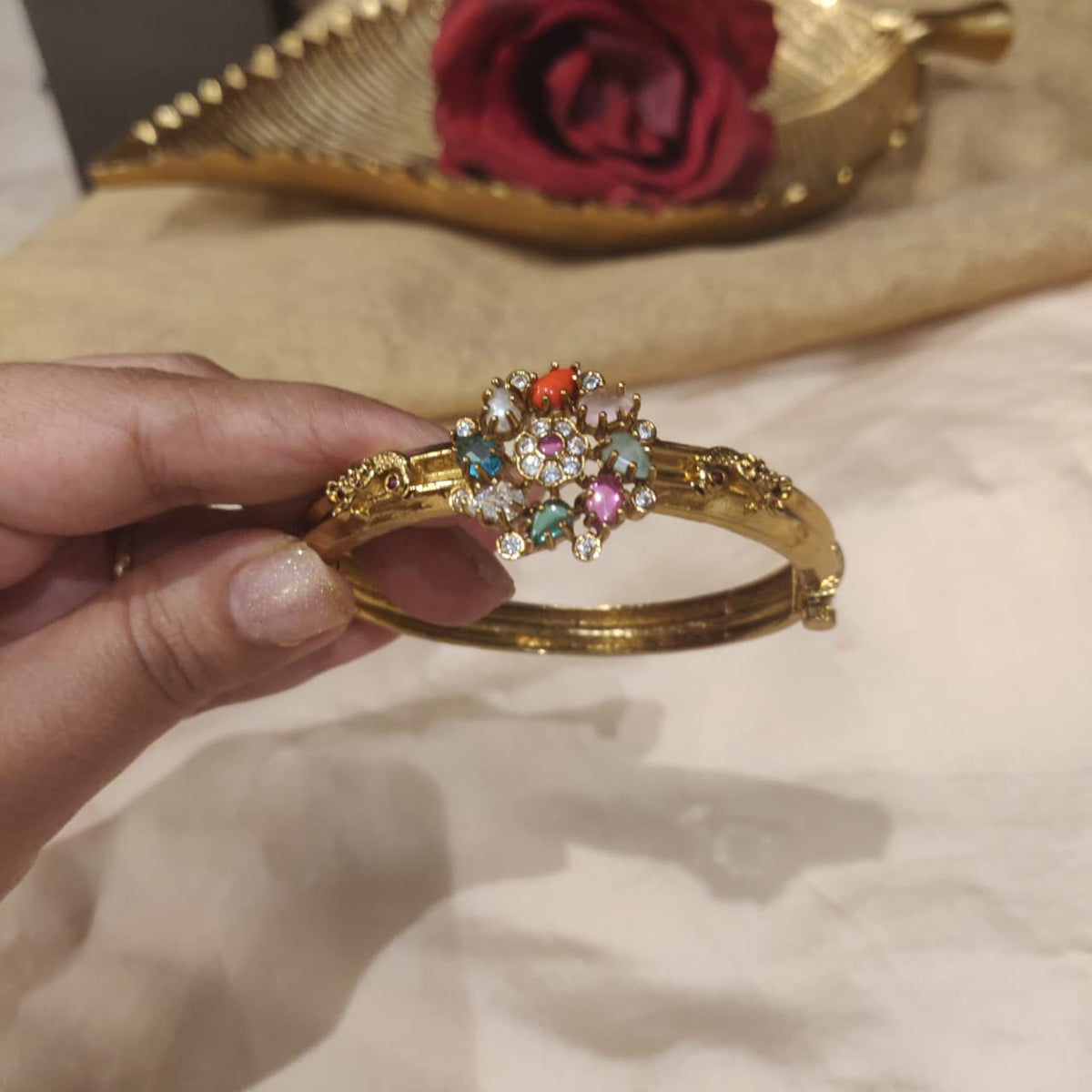
The traditional Kada represents a robust, heavy gold bangle frequently secured with an ornamental screw closure for convenient daily wear. Skilled artisans incorporate animal head terminals, such as stylized elephants or lions, on the tips of open-ended Kada designs. These substantial ornaments are built as bold, singular statements, providing exceptional structural stability that resists bending or denting over a lifetime.
Key structural features of broad traditional bangles include:
-
Hinged side joints with safety locks ensure heavy bangles stay secure on the wrist.
-
Reinforced solid gold borders prevent thin structures from warping during regular wear.
-
Embossed central ridges add structural stiffness while creating a distinctive layered look.
-
Smooth, high-polish inner bands guarantee comfortable, friction-free movement against the skin.
-
Intricate wire filigree filling provides lightweight strength while maintaining a highly decorative appearance.
Fine Churi Stacks and Hollow Bala Designs
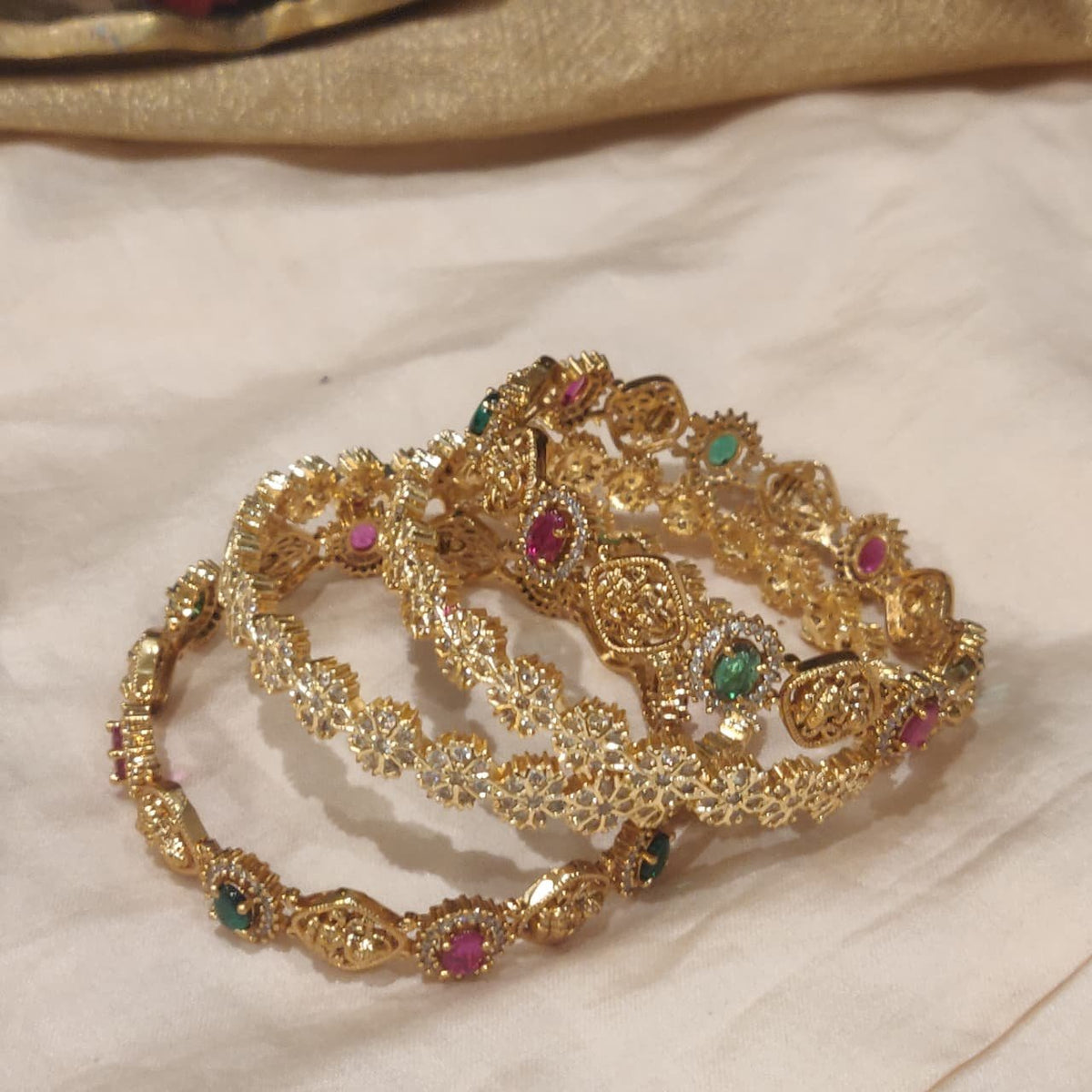
In contrast to heavy individual bands, the delicate Churi is designed to be worn in stacks that produce a musical jingling sound during hand movement. These lightweight bands are regularly paired with broader end-pieces to anchor the wrist stack and balance visual proportions. Meanwhile, the hollow Bala design originating from East India offers a prominent visual profile while using internal air gaps to minimize gold weight, a concept also seen in contemporary fashion jewellery online collections.
The following matrix details the common weights and purities used across traditional classifications:
|
Bangle Class |
Karat Standard |
Average Gold Weight |
Durability Profile |
Care Intensity Level |
|
Heavy Kada |
22-Karat Gold |
35 to 60 grams |
Extremely high structural rigidity |
Low general maintenance |
|
Filigree Patla |
22-Karat Gold |
20 to 35 grams |
Moderate resistance to bending |
Medium regular cleaning |
|
Stackable Churi |
18-Karat Gold |
6 to 12 grams |
High daily wear resilience |
Low regular cleaning |
|
Kundan Bangle |
22-Karat Gold |
25 to 45 grams |
Low moisture and impact resistance |
High specialized care |
|
Hollow Bala |
22-Karat Gold |
12 to 20 grams |
Moderate daily wear strength |
Medium general maintenance |
Practical Purchasing Guide and Material Integrity Metrics
Navigating Gold Karats and Hallmark Verification
When evaluating traditional gold jewellery, understanding karat purity ensures you receive full, authentic value for your investment. While 22-karat gold offers the vibrant, warm yellow tone desired for traditional bridal sets, 18-karat gold provides superior scratch resistance for daily-wear options. When exploring traditional gold bangle designs online, verified collections from trusted providers like Emporia Jewels offer guaranteed hallmarked standards that protect long-term value.
Follow these key steps to verify the quality of traditional gold bangles before finalizing your purchase:
-
Verify the laser-engraved HUID code on the inner rim of each gold bangle.
-
Compare the daily gold market rate against the seller's base gold pricing.
-
Evaluate the making charges as a transparent percentage of the total gold cost.
-
Request a detailed receipt containing weight breakdowns for gemstones and enamel fillings.
-
Test the durability of the screw threads and hinge clasps before leaving the store.
Weight versus Wearability for Heritage Jewellery
Balancing visual prominence with wearability ensures that heritage pieces do not remain locked in bank vaults indefinitely. Extremely heavy, solid-gold bangles are highly resilient but can cause wrist fatigue during long festive events. Modern manufacturing allows for sophisticated hollow-core designs that preserve historic details while offering ergonomic daily comfort, and pairing them with a classic pearl necklace and earring set creates a refined, balanced ensemble.
Maintenance and Preservation of Intricate Gold Filigree
Cleaning Solutions for Polished and Antique Finishes
Regular maintenance preserves the warm, luxurious glow of traditional gold ornaments without stripping away delicate vintage finishes. Owners should use lukewarm water combined with a few drops of mild soap to safely dissolve accumulated oils. Gently brushing intricate filigree channels with a soft-bristled brush avoids scratching the polished gold surface.
Storage Guidelines to Prevent Deformation and Scratches
High-karat traditional gold bangles are naturally malleable and prone to warping if stored under heavy, unpadded jewellery. We recommend wrapping each piece in tarnish-resistant velvet and storing them in rigid, compartmentalized slots to prevent abrasive contact. For those seeking to preserve heritage gold, consulting specialists like Emporia Jewels, who also offer an extensive range of designer jewellery online, can help you understand subtle wear patterns on clasps and antique finishes.
To keep your precious family heirlooms pristine, read the Care and Maintenance Guide.
Frequently Asked Questions
What is the ideal karat weight for daily-wear traditional bangles?
An 18-karat gold composition is ideal for daily wear due to its superior resistance to bending and surface scratches.
How do you identify authentic antique gold bangles?
Authentic antique bangles can be verified by checking for standard government-approved hallmark certifications and checking the HUID database online.
Can traditional kundan bangles be worn in wet environments?
Traditional Kundan bangles should never be exposed to moisture because water can damage the underlying wax and foil settings.
Why do some traditional gold bangles have a reddish tint?
A reddish tint typically indicates a higher copper alloy ratio or a traditional South Indian antique finish designed to emphasize relief carvings.