

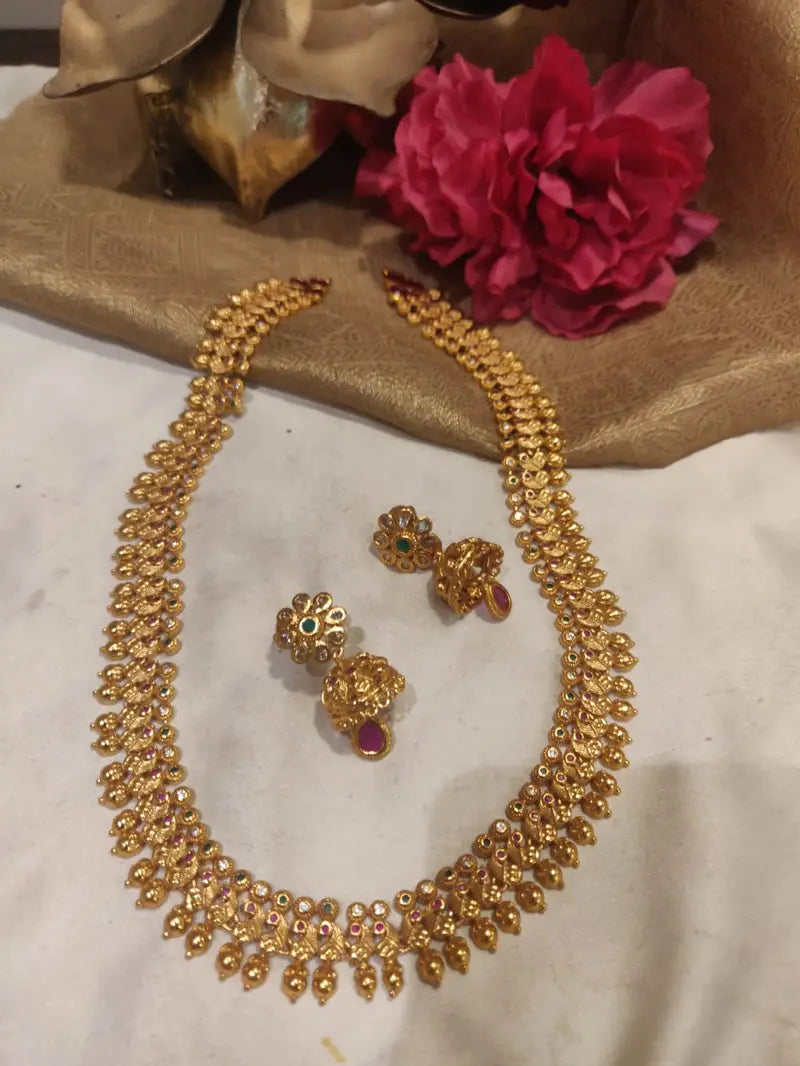
Temple Jewellery Online USA: South India's Sacred Craft, Delivered to Your Door
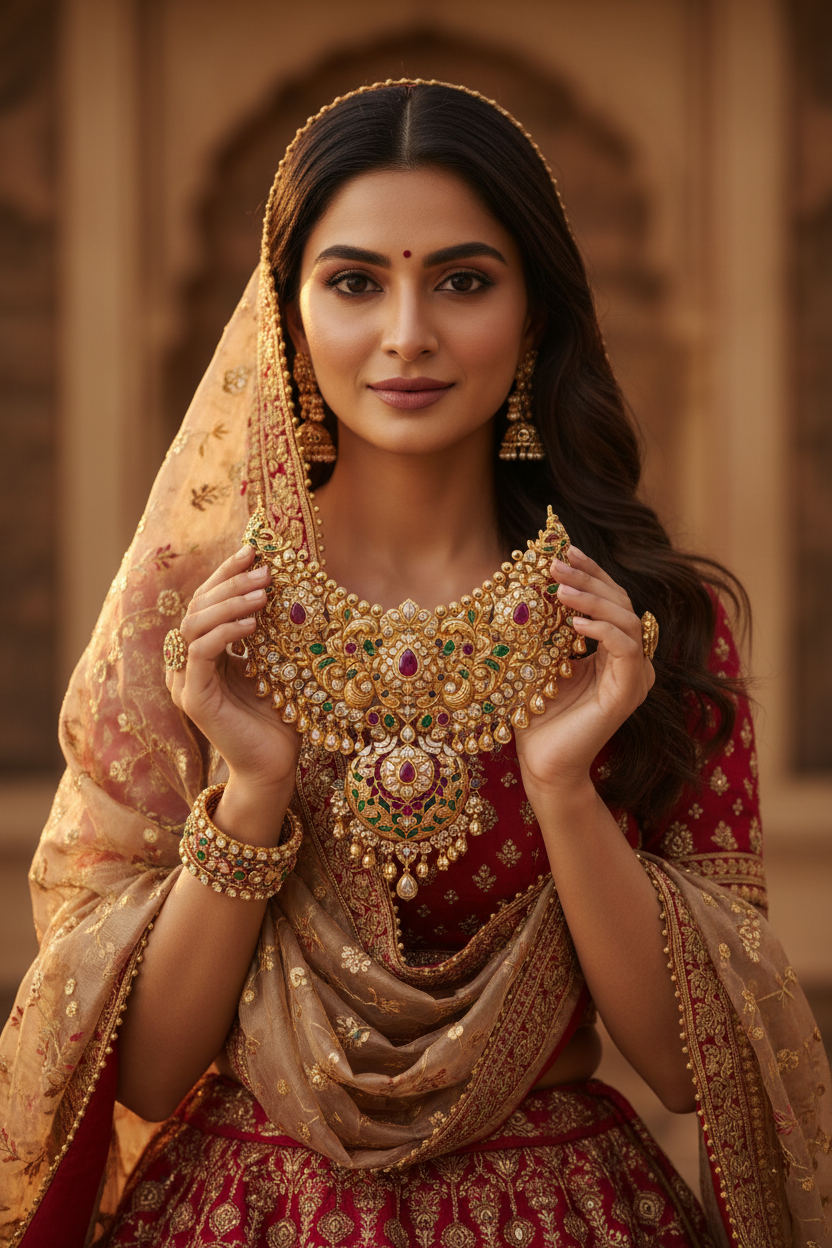
There is a specific kind of jewellery that photographs unlike anything else at an Indian wedding or classical dance performance. It is layered, bold, deeply detailed, and instantly recognisable. It is temple jewellery, and it originated in the temples of South India centuries ago.
For NRI women in the USA looking to buy temple jewellery online, this is a style with a clear identity and equally clear styling rules. It is not casual jewellery. It is statement jewellery with cultural roots that run deep into South Indian heritage.
This guide covers what temple jewellery actually is, who wears it and when, how to style it correctly, and what to look for when shopping online from the USA.
What Is Temple Jewellery and Where Does It Come From?
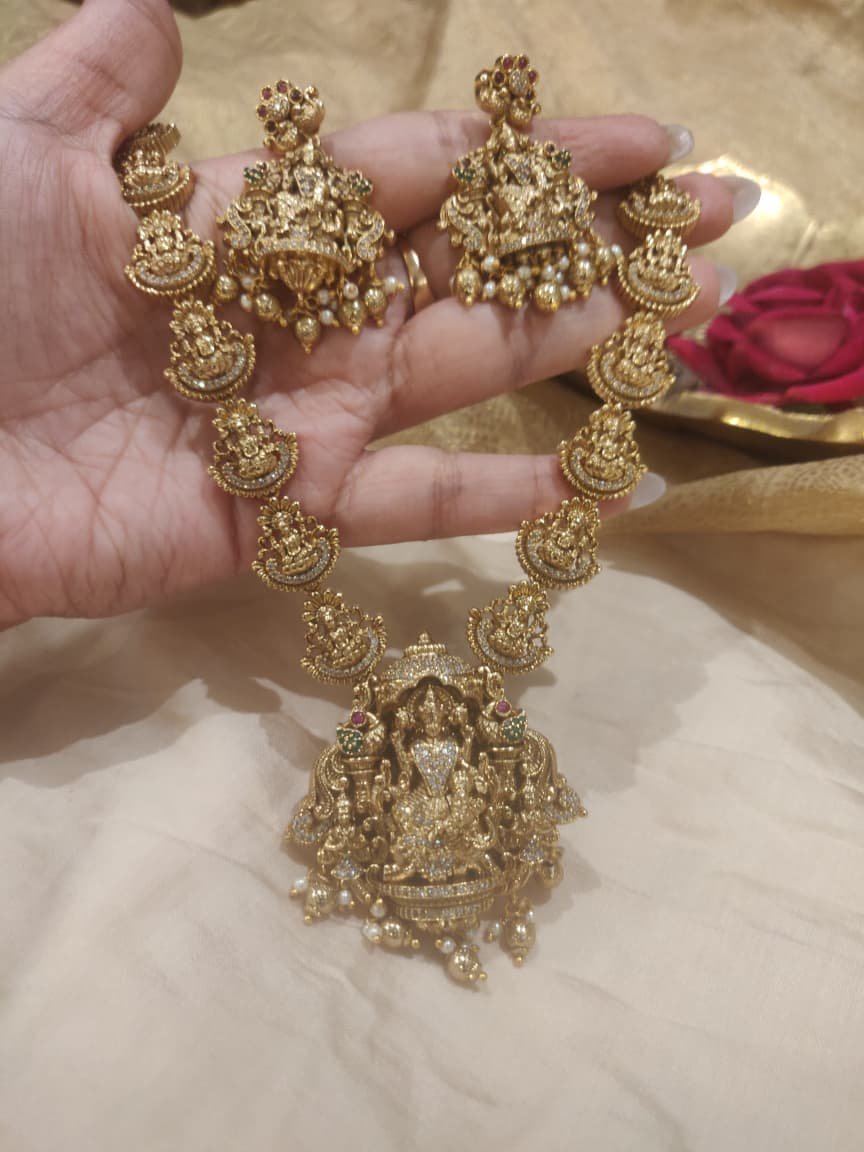
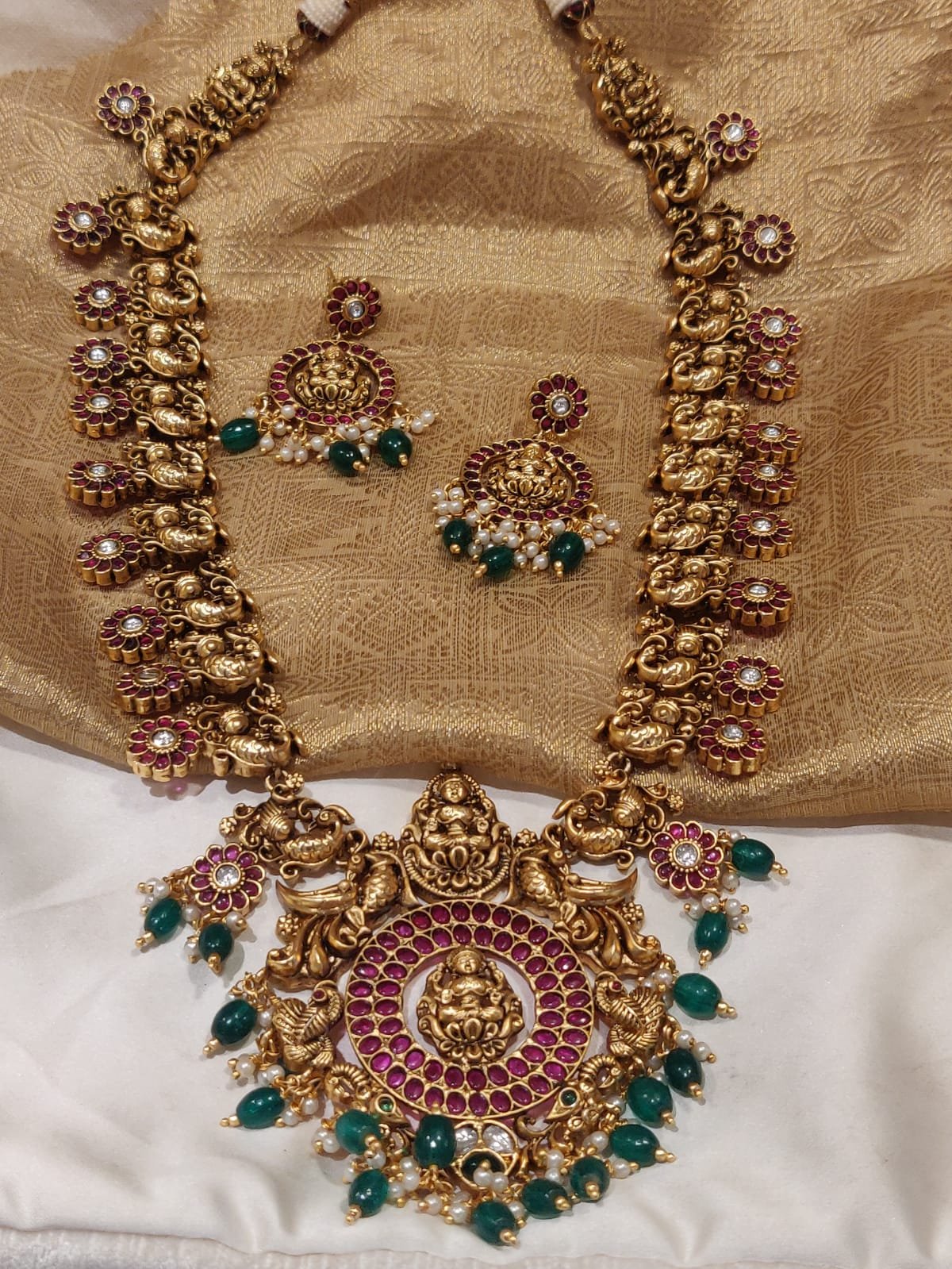
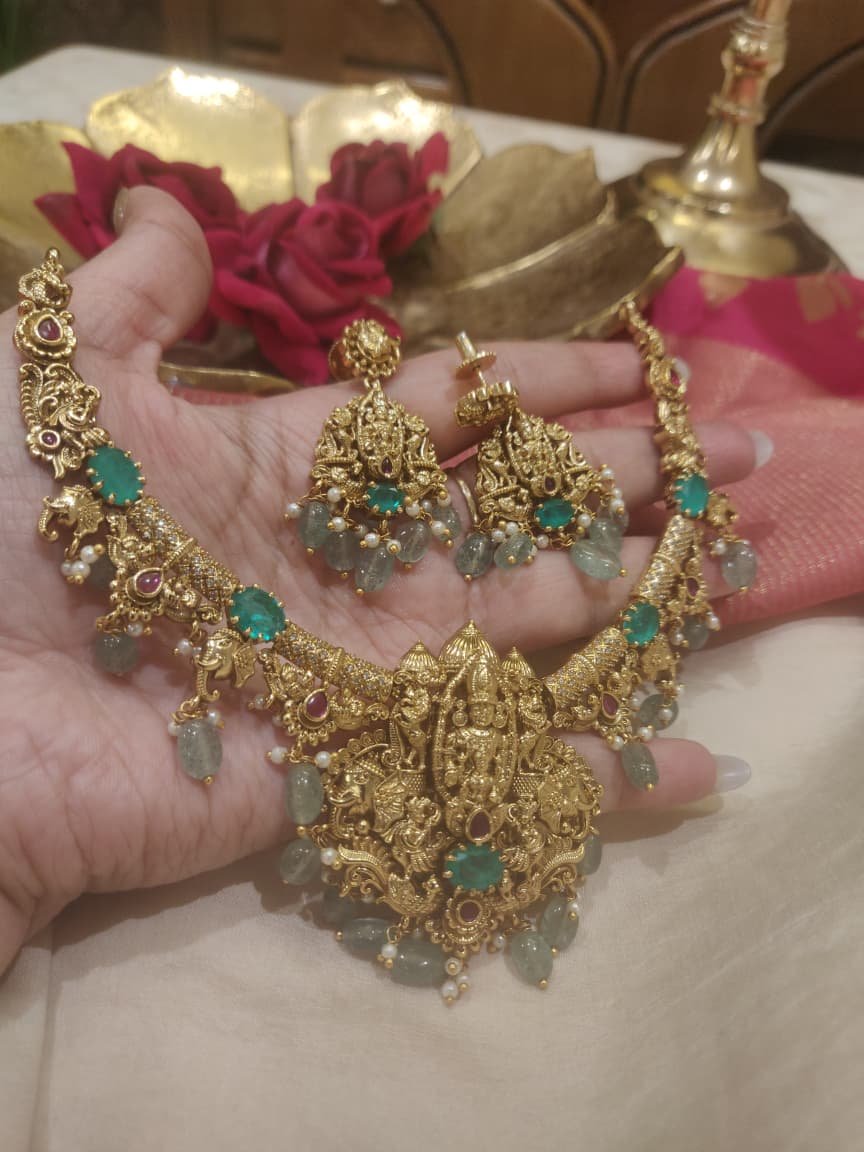
Temple jewellery originated in South India, specifically in Tamil Nadu, and was historically crafted for temple deity idols. Over time, it became the ceremonial jewellery of classical dancers performing Bharatanatyam, Kuchipudi, and Mohiniyattam, and later entered the mainstream bridal and festive jewellery market.
The defining features of temple jewellery include:
-
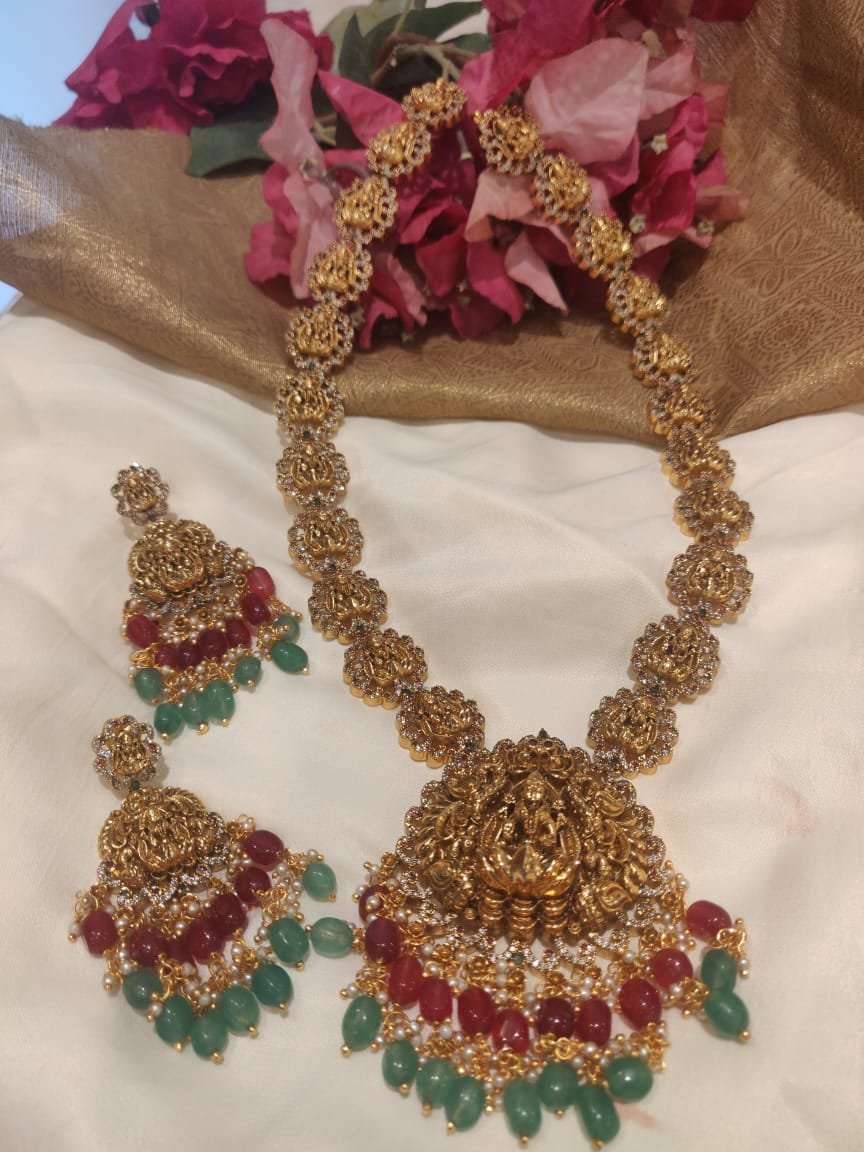
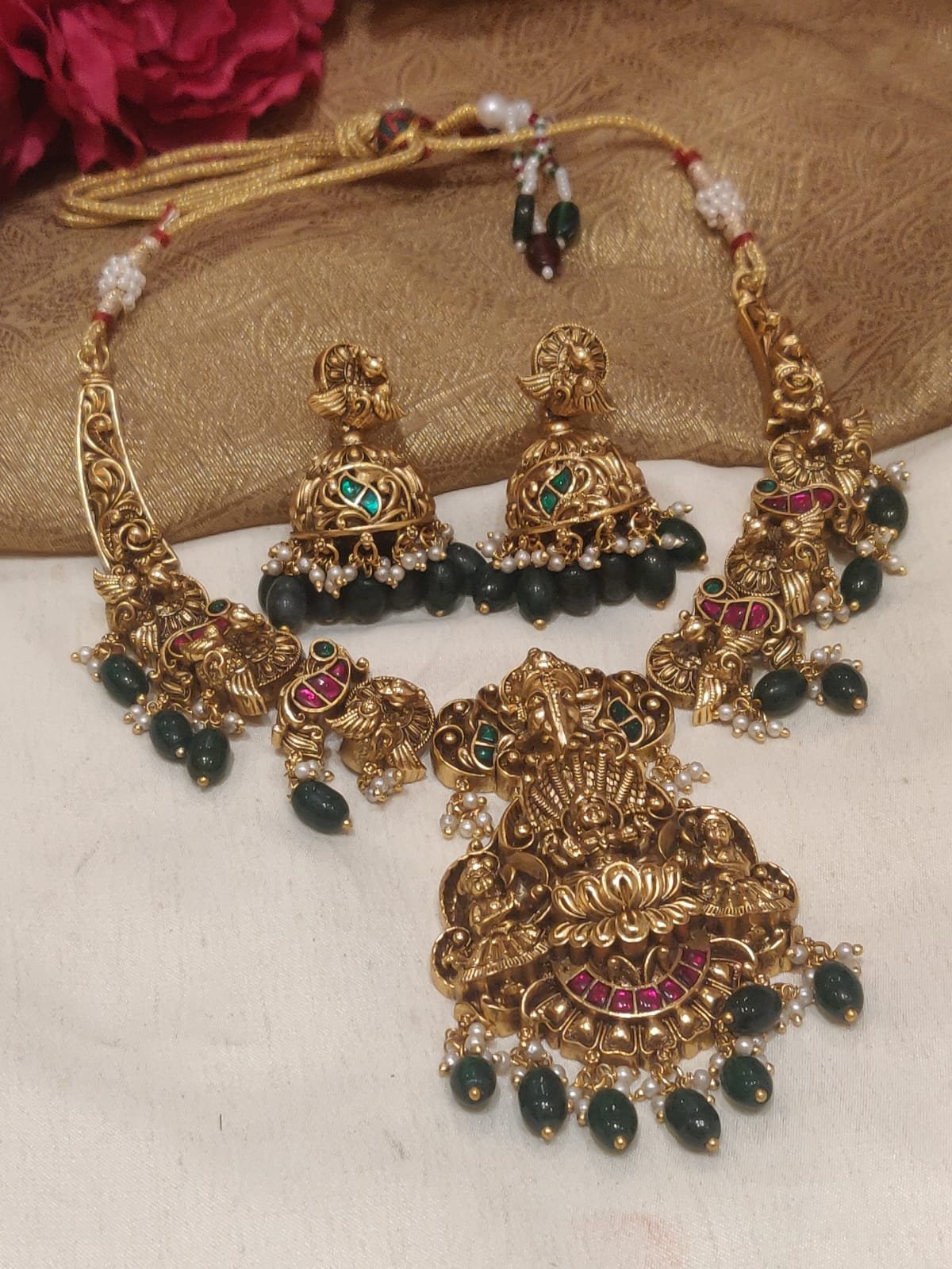
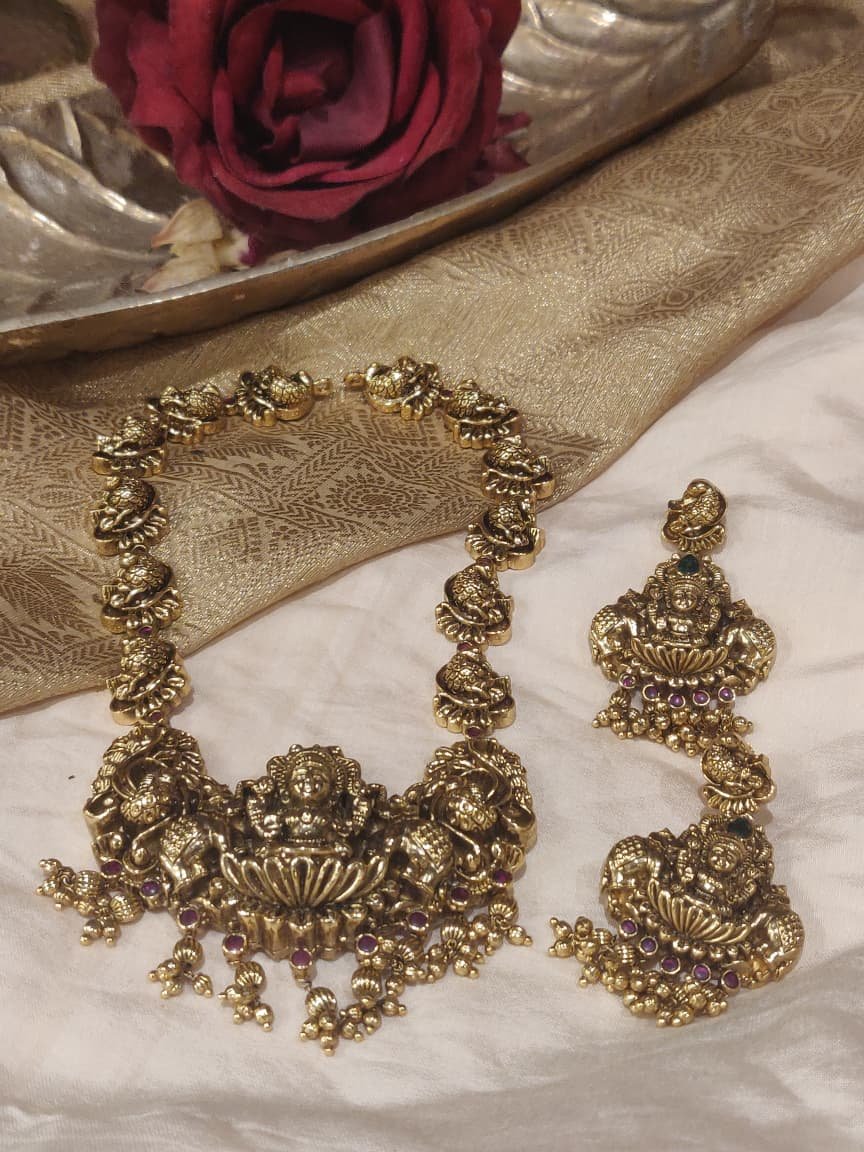
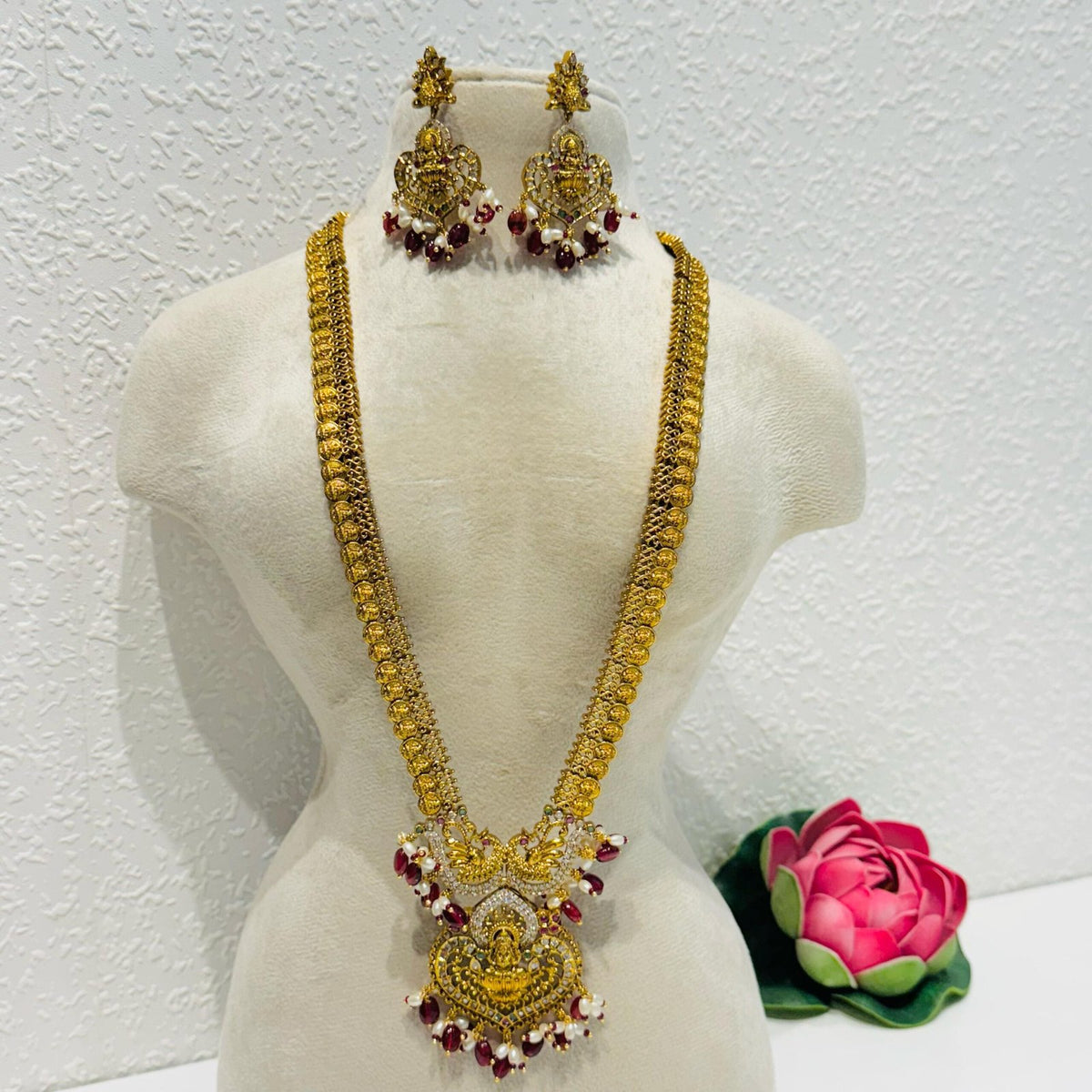
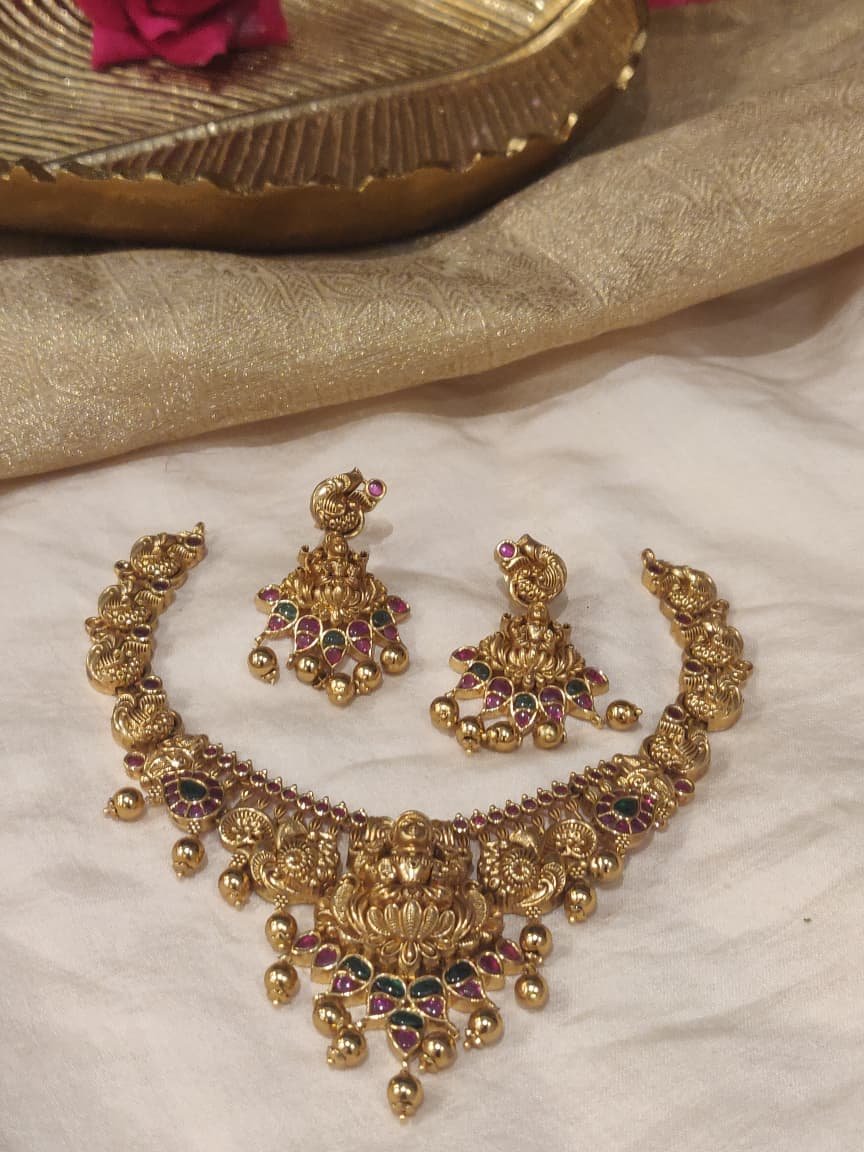
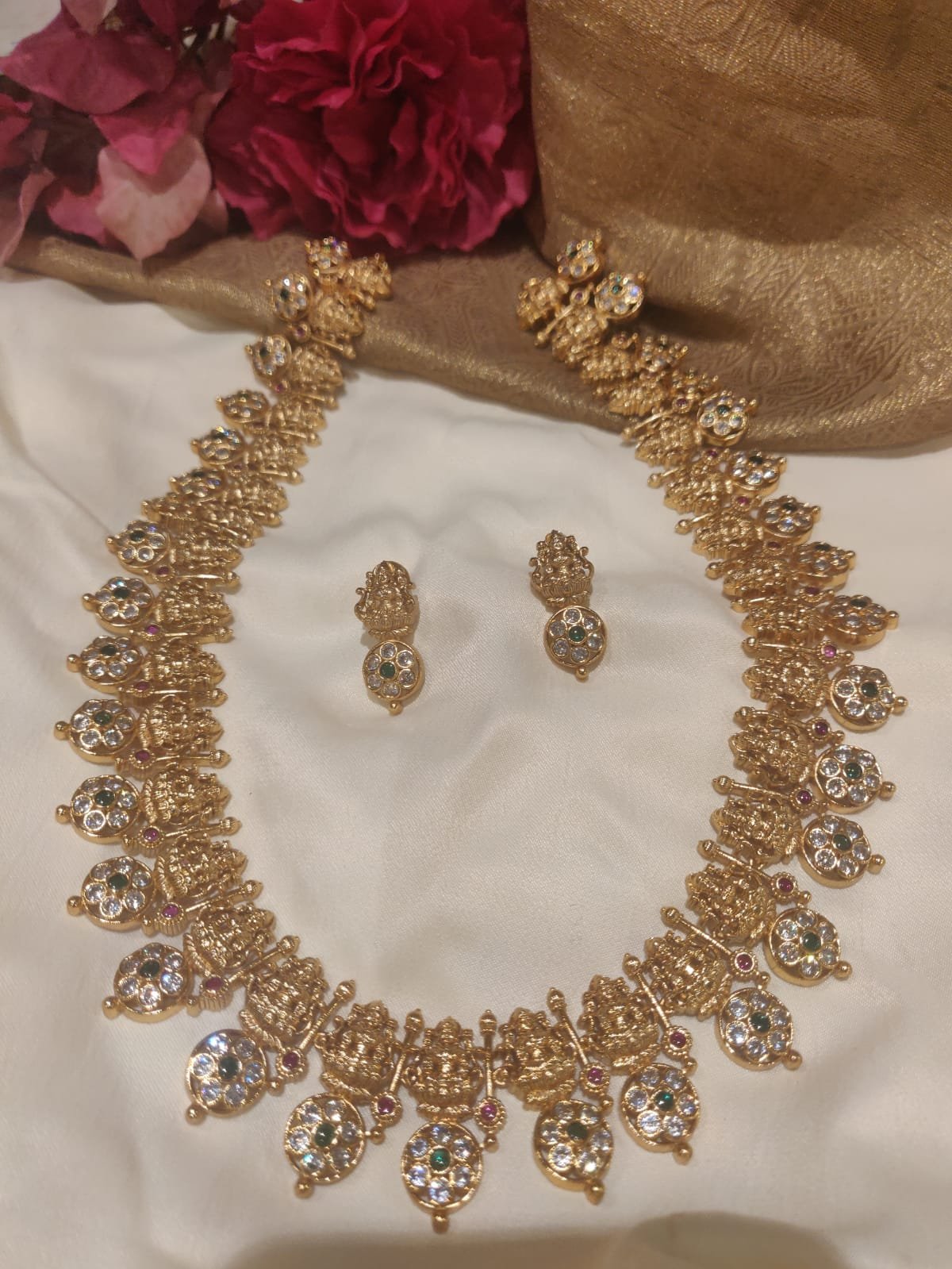
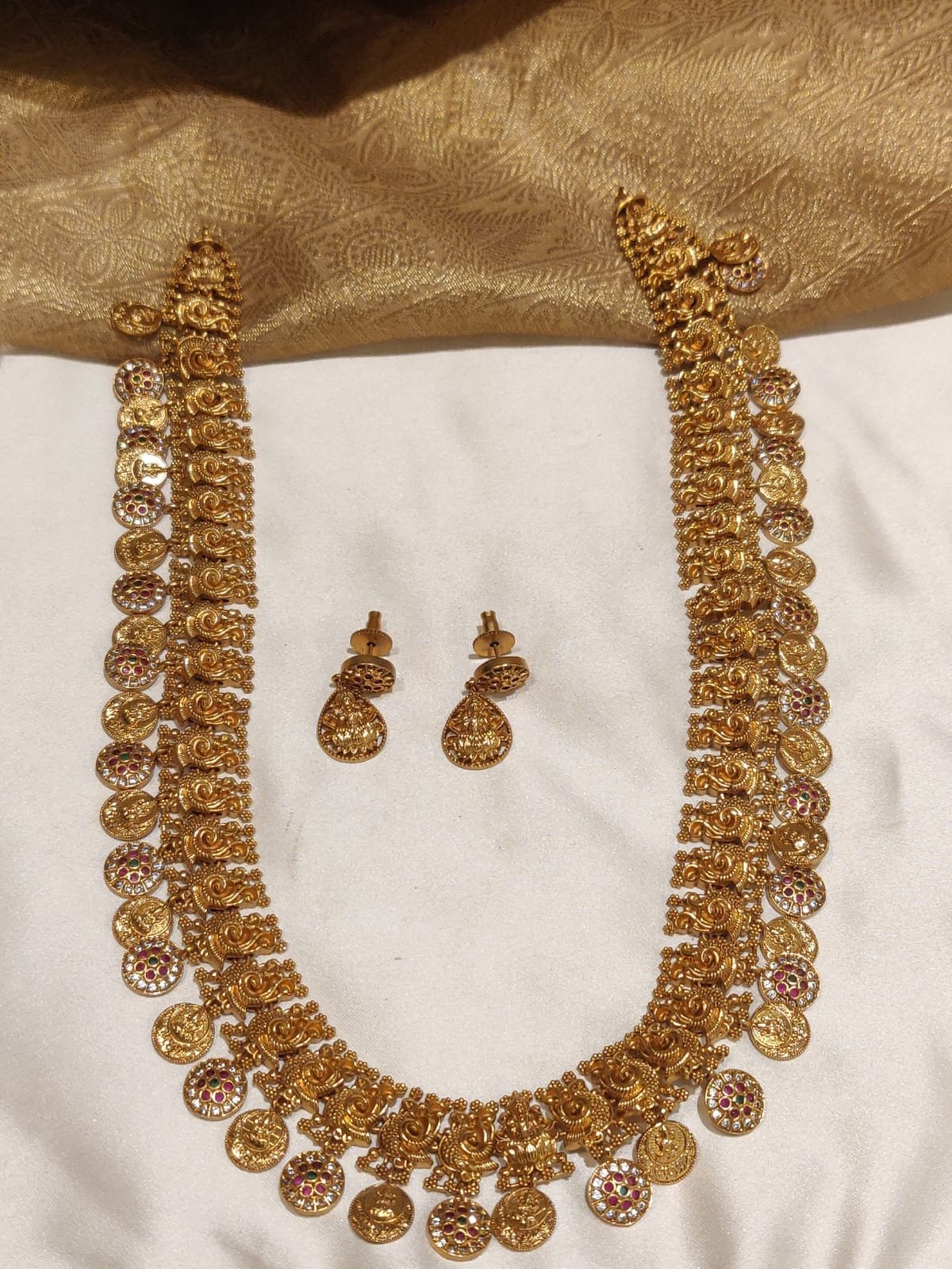
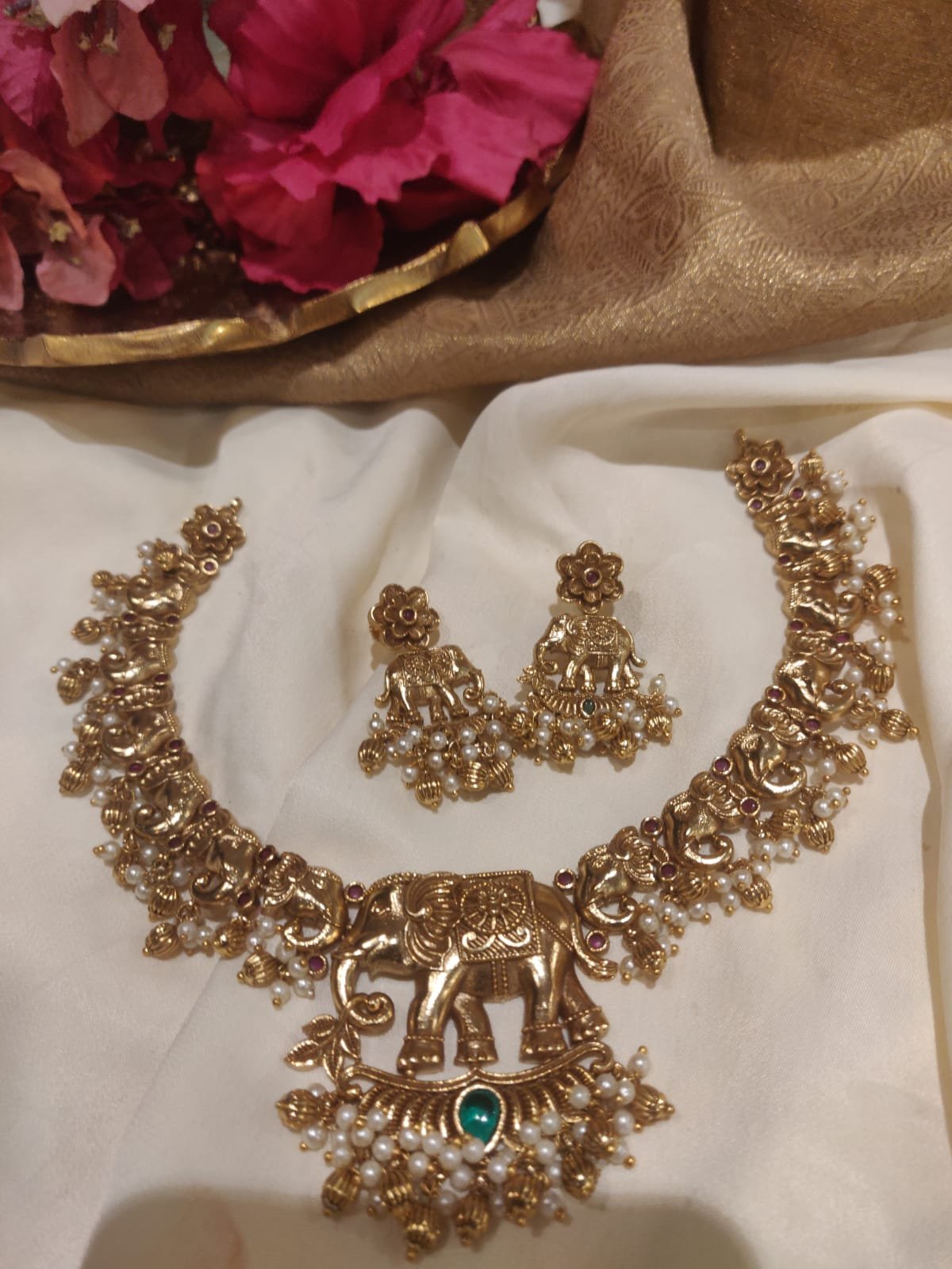
Deity and nature motifs: Lakshmi, Ganesha, peacocks, lotuses, and coin pendants are the most recognisable design elements
-
Gold-toned finish: Traditional temple jewellery uses 22-carat gold. Fashion versions replicate this gold tone using quality metal alloys
-
Layered necklace structures: Long harams (necklaces), coin chains, and chokers are often layered together
-
Red and green stone accents: Rubies and emeralds are traditionally used in fine temple jewellery. Fashion versions use matched glass stones
The result is jewellery that looks architectural. Every piece tells a visual story.
Who Wears Temple Jewellery and for What Occasions?
Temple jewellery has a broad range of wearers in both India and abroad.
Classical dancers: Bharatanatyam performers are among the most consistent wearers of temple jewellery. A full classical dance set includes a necklace, earrings, jimikis (hanging earrings), hair ornaments, bangles, and sometimes a vanki (upper arm cuff).
South Indian brides: Temple jewellery is the traditional bridal choice for Tamil, Telugu, Kannada, and Malayali weddings. A South Indian bridal look without temple jewellery is unusual by tradition.
Saree wearers: Any formal saree occasion benefits from temple jewellery. Kanjivaram silk sarees and temple jewellery are among the most photographed ethnic pairings in Indian fashion.
Festive occasions in the USA: Navratri, Diwali, Pongal, Onam, and Ugadi are all occasions where temple jewellery is worn by South Indian families in American cities.
For styling versatility across these occasions, explore fashion jewellery online collections that include temple-style pieces for every event type.
How to Style Temple Jewellery with Different Outfits
With Kanjivaram silk sarees: This is the most classic pairing. A long Lakshmi haram with a matching choker, jimiki earrings, and bangles creates the traditional South Indian look. Keep the colour palette consistent. Gold-toned jewellery on jewel-toned silk is the standard.
With half-sarees and pavadai: Young women and girls wearing half-sarees for arangetram or Bharatanatyam events typically wear full temple jewellery sets. The heavier the performance context, the more complete the set.
With contemporary sarees: Lighter georgette or chiffon sarees paired with a single temple jewellery piece, such as long jhumkas or a coin necklace, create a fusion look that is increasingly popular.
With lehengas: South Indian brides sometimes incorporate temple jewellery into a lehenga bridal look. A long temple haram over a silk or brocade lehenga bridges regional traditions effectively.
Pair your temple jewellery look with a set of traditional gold bangle designs to complete the South Indian aesthetic from wrist to neckline.
What to Check Before Buying Temple Jewellery Online from the USA
Remote shopping for temple jewellery requires specific attention to a few details that are easy to overlook.
Necklace length: Temple harams are long by design. Confirm the approximate length in centimetres or inches before ordering, since a haram that sits too short loses its layered visual effect.
Stone colour accuracy: Red and green stones are a signature of traditional temple jewellery. If the product images show muted or off-colour stones, the final piece may not match your outfit or look as expected.
Set components: A full temple jewellery set for a bride or dancer includes far more pieces than a basic necklace and earring combination. Confirm which pieces are included and which need to be sourced separately.
Motif clarity: Deity motifs should be clearly defined, not blurred or mass-pressed. Product close-up images help you assess the detail quality before purchasing.
Emporia Jewels curates ethnic and temple-inspired jewellery collections designed for the NRI shopper who wants quality and cultural accuracy in a single place.
Browse designer jewellery online to find temple-style sets built around specific occasions and outfit pairings.
Frequently Asked Questions
Q1: What is temple jewellery used for?
Temple jewellery is used for South Indian weddings, classical dance performances, and festive occasions. It is the traditional bridal jewellery style across Tamil, Telugu, Kannada, and Malayali communities.
Q2: Can I wear temple jewellery if I am not South Indian?
Yes. Temple jewellery works across Indian ethnic outfits for anyone who appreciates the aesthetic. It is not restricted to a single regional community.
Q3: What is the difference between temple jewellery and Kundan jewellery?
Temple jewellery is defined by South Indian deity motifs and a gold-toned finish with red and green stones. Kundan is a North Indian setting technique using flat, polished stones in a lacquer base.
Q4: Is temple jewellery suitable for Bharatanatyam performances?
Yes. A full temple jewellery set is the traditional and most commonly used jewellery for Bharatanatyam and other South Indian classical dance forms.
Q5: Can I buy temple jewellery online and get it delivered to the USA?
Yes. Several Indian jewellery brands offer international shipping, including to the USA. Check the individual brand's shipping policy before ordering.
Q6: What saree pairs best with temple jewellery?
Kanjivaram silk sarees are the most traditional pairing. However, any rich silk or brocade saree in jewel tones works well with a full temple jewellery set.