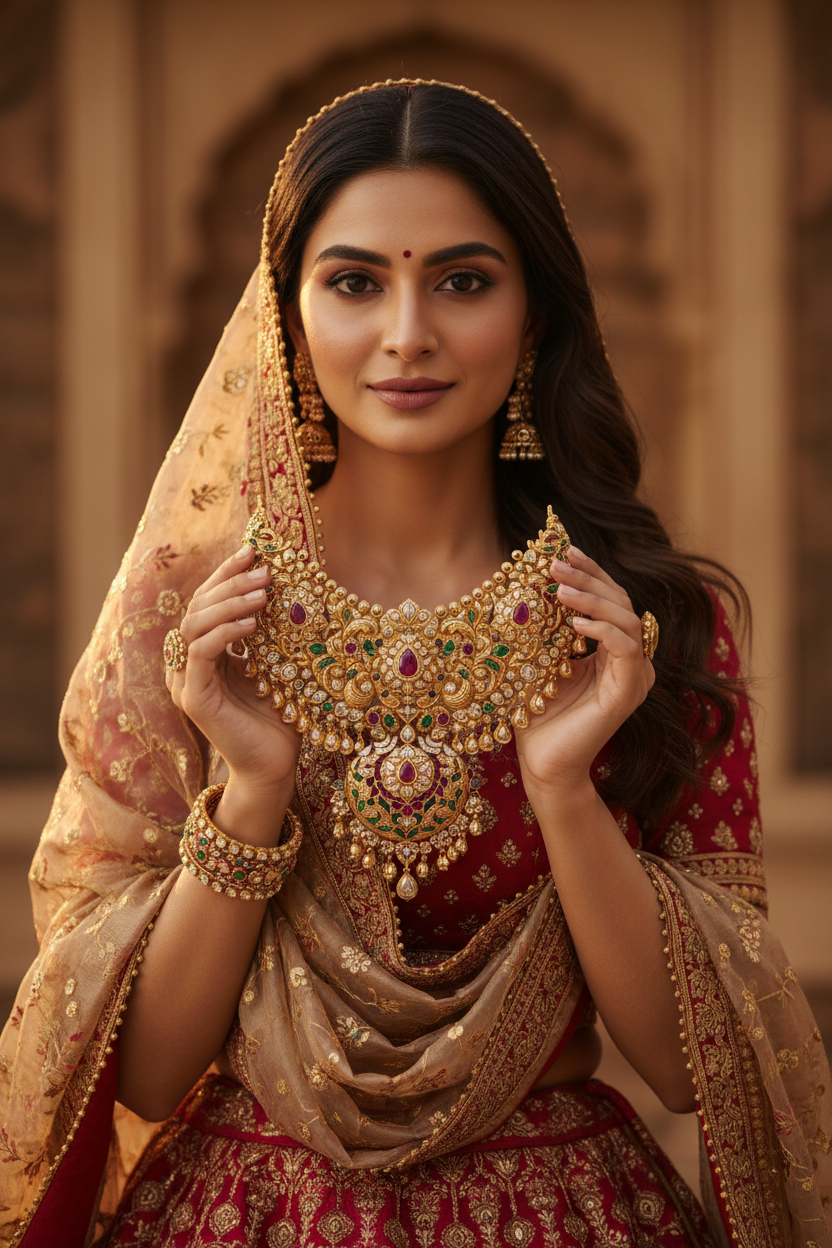


Temple jewellery online has moved from niche craft markets to mainstream fashion retail, giving buyers access to South Indian, Rajasthani, and pan-Indian devotional styles from a single screen. Knowing exactly what to look for separates a confident purchase from a costly mistake.
What Temple Jewellery Actually Is and Why the Category Matters
Defining the Craft: Motifs, Metals, and Regional Roots
Temple jewellery originated as adornment for deity idols in South Indian temples, particularly in Tamil Nadu and Andhra Pradesh, before transitioning into classical dance and bridal wear. Authentic traditional pieces feature deity motifs such as Lakshmi, Ganesha, and peacocks, rendered in gold-toned brass or copper bases with red and green stone accents. Fashion versions sold online today replicate these motifs using gold-plated alloy bases, glass stones, and synthetic rubies to deliver the same visual impact at accessible price points. Shoppers exploring fancy artificial jewellery will find temple-style pieces sitting alongside other devotional and festive designs.
Why Buyers Search for Temple Jewellery Online Specifically
Physical craft stores stocking genuine temple jewellery are concentrated in Chennai, Nagercoil, and Hyderabad, making online the primary access point for buyers across India and the diaspora. Online platforms allow side-by-side comparison of necklace lengths, pendant sizes, and stone colour combinations that a single local store cannot offer. Emporia Jewels addresses this gap by curating temple-style sets designed for weddings, Bharatanatyam performances, and festival occasions, all available without geographic restriction.
How to Evaluate Temple Jewellery Listings Before You Buy
Reading Product Descriptions with a Buyer's Eye
The most reliable listings specify the base metal, plating type, stone variety, and approximate weight, because these four data points determine both appearance and longevity. Look for descriptions that mention "gold-plated brass," "copper base," or "zinc alloy" alongside stone types such as "glass ruby," "synthetic emerald," or "AD stone" so you know precisely what you are ordering. Browsing fashion jewellery online with this checklist in mind helps you filter out vague listings quickly.
Sizing, Weight, and Set Completeness: The Three Overlooked Checks
Temple necklace sets vary significantly in pendant drop length, typically ranging from 14 inches to 22 inches, and a mismatch with your neckline can ruin the look for a saree or lehenga. Weight matters for earrings especially: heavier gold-plated pieces above 30 grams per earring can cause discomfort during long ceremonies. Always confirm whether a "set" includes the necklace, earrings, maang tikka, and jhumkas, or only the necklace and earrings, since incomplete sets are common at lower price points.
|
Set Component |
Typical Inclusion at Budget Tier |
Typical Inclusion at Mid Tier |
Typical Inclusion at Premium Tier |
|
Necklace |
Yes |
Yes |
Yes |
|
Earrings (Jhumka) |
Yes |
Yes |
Yes |
|
Maang Tikka |
Rarely |
Often |
Always |
|
Vanki / Armlet |
No |
Sometimes |
Often |
|
Waist Belt (Oddiyanam) |
No |
Rarely |
Sometimes |
Matching Temple Jewellery to Occasion and Outfit
Occasion-Specific Selection: Bridal, Dance, and Festival Contexts
Bridal temple sets prioritise full coverage, so a complete set with necklace, earrings, maang tikka, and nose ring suits a South Indian wedding look paired with a Kanjivaram silk saree. Bharatanatyam performers require lightweight pieces with secure clasps, making smaller pendant sizes and screw-back earrings the practical choice. Festival and puja occasions allow more flexibility, where a single statement necklace with matching jhumkas avoids the weight of a full bridal set. A pearl necklace and earring set can also serve as an elegant, lighter alternative for semi-formal occasions.
Colour Pairing Rules That Actually Work
Temple jewellery's dominant palette is gold with red and green stone accents, which pairs naturally with jewel-toned sarees in deep red, bottle green, royal blue, and mustard yellow. Avoid pairing red-stone temple sets with pink or orange outfits, as the colour clash reduces the traditional visual impact. Emporia Jewels offers temple sets in varied stone colour combinations, including white stone and blue stone variants, extending pairing options to contemporary lehengas and fusion outfits.
-
Gold with red and green stones: best for Kanjivaram silk, Patola, and Banarasi sarees. For more information, explore the Traditional gold bangle designs.
-
Gold with white stones: suits pastel lehengas and ivory bridal wear.
-
Gold with blue stones: pairs well with navy, royal blue, and teal outfits.
-
Oxidised temple finish: complements cotton sarees and casual ethnic wear.
Buying Temple Jewellery Online: A Step-by-Step Decision Framework
The Evaluation Sequence Before Adding to Cart
Skipping a structured evaluation sequence is the most common reason buyers receive pieces that do not match their expectations. Working through a fixed checklist before purchase reduces return rates and ensures the set suits both the occasion and the outfit. Emporia Jewels makes this process straightforward with detailed product images, multiple angle shots, and clear material descriptions across its temple jewellery range. Those seeking designer jewellery online will find curated temple sets that balance authenticity with contemporary styling.
-
Confirm the occasion: bridal, dance performance, festival, or casual ethnic wear.
-
Check set completeness: verify which components are included before purchase.
-
Review material details: identify base metal, plating type, and stone variety.
-
Verify sizing: check necklace length and earring drop against your outfit neckline.
-
Assess the return policy: confirm the seller's exchange or return window before ordering.
|
Price Range (INR) |
Typical Base Metal |
Stone Type |
Best Suited For |
|
Under 500 |
Zinc alloy |
Plastic/acrylic |
Casual festivals, gifting |
|
500 to 1500 |
Brass or copper |
Glass / synthetic ruby |
Festivals, puja occasions |
|
1500 to 3500 |
Brass with gold plating |
AD stone/glass |
Weddings, receptions |
|
Above 3500 |
Copper or brass, thick plating |
Semi-precious/high-grade AD |
Bridal, classical dance |
-
Always request multiple product images if only one angle is shown. -
Check customer review photos, not just brand images, for accurate colour representation.
-
Confirm clasp type for earrings: screw-back for dance, hook for general wear.
Frequently Asked Questions
What is temple jewellery made of when sold online?
Most online temple jewellery uses a brass or copper base with gold plating, accented by glass stones, synthetic rubies, or AD stones depending on the price tier.
Is temple jewellery suitable for Bharatanatyam performances?
Yes, but choose lightweight sets with screw-back earrings and secure clasps to ensure stability during stage movement.
How do I prevent gold-plated temple jewellery from tarnishing?
Store pieces in individual soft pouches away from moisture, and wipe them with a dry cloth after each use to slow oxidation.
Can temple jewellery be worn with contemporary outfits?
Yes, white-stone or blue-stone temple sets pair well with pastel lehengas and fusion ethnic wear beyond traditional sarees.
What should a complete temple jewellery bridal set include?
A full bridal set typically includes a necklace, jhumka earrings, maang tikka, and sometimes a vanki or oddiyanam depending on the regional style.