


Meenakari Jewellery UK: The Enamel Art That Turns Indian Accessories into Wearable Craft
Colour is not a feature of meenakari jewellery. Colour is the point.
While most Indian jewellery categories are defined by their stone settings or structural technique, meenakari is defined entirely by its use of fired enamel to create vivid, permanent colour patterns across a gold-toned metal surface. The result is a category of jewellery that looks unlike anything else in Indian ethnic accessories: rich, painterly, and intricate in a way that photographs under event lighting with a particular quality that stone-set jewellery cannot replicate.
Meenakari jewellery originated in Persia and arrived in India through the Mughal courts of the sixteenth century. The craft found its permanent home in Jaipur, Rajasthan, where artisans developed a distinctive style of applying coloured enamel to gold and gold-toned surfaces using techniques that are still practised today. The word meenakari comes from the Persian word "mina," meaning heaven, a reference to the colour blue that was central to early enamel work before the full colour palette was developed.
For UK-based Indian diaspora women, meenakari jewellery sits slightly outside the mainstream conversation dominated by Kundan and American Diamond styles. This is an oversight. Meenakari offers a distinct aesthetic, a craft heritage as rich as any other Indian jewellery tradition, and a versatility that makes it appropriate for a wider range of occasions and outfits than its reputation suggests.
Understanding the Craft: How Meenakari Jewellery Is Made
The traditional meenakari process involves several distinct stages.
-
The base metal, traditionally gold, is shaped into the desired form
-
A craftsperson engraves the design onto the surface to create channels that hold the enamel in place
-
Powdered glass mixed with metallic oxide colourants is packed into each channel
-
The piece is fired in a kiln, fusing the glass powder into a smooth, hard enamel surface
-
Multiple colours require separate firings, with each colour applied and fired independently
-
The finished surface is polished and often combined with Kundan stone settings on the front face
In contemporary fashion, meenakari jewellery, gold-toned alloy bases replace gold, and the enamel technique is replicated at scale. The visual output maintains the vivid, opaque colour quality of traditional meenakari while making the jewellery accessible for everyday and occasion wear.
The Meenakari Colour Palette and What Each Combination Signals
Meenakari is not a random explosion of colour. The colour combinations used in traditional Jaipur meenakari carry meaning and association.
Red and Green (Laal Meenakari)
The most traditional meenakari combination. Red and green against a gold-toned base is the classic Rajasthani wedding palette. This combination appears across bridal necklaces, earrings, and bangles in Rajasthani and Gujarati traditions.
Blue and White (Persian-influenced)
The oldest meenakari colour combination, reflecting the Persian origin of the craft. Blue and white meenakari has a more restrained, elegant appearance compared to the warmer red and green combinations. It is increasingly popular for Eid celebrations and contemporary ethnic wear.
Multi-colour Meenakari
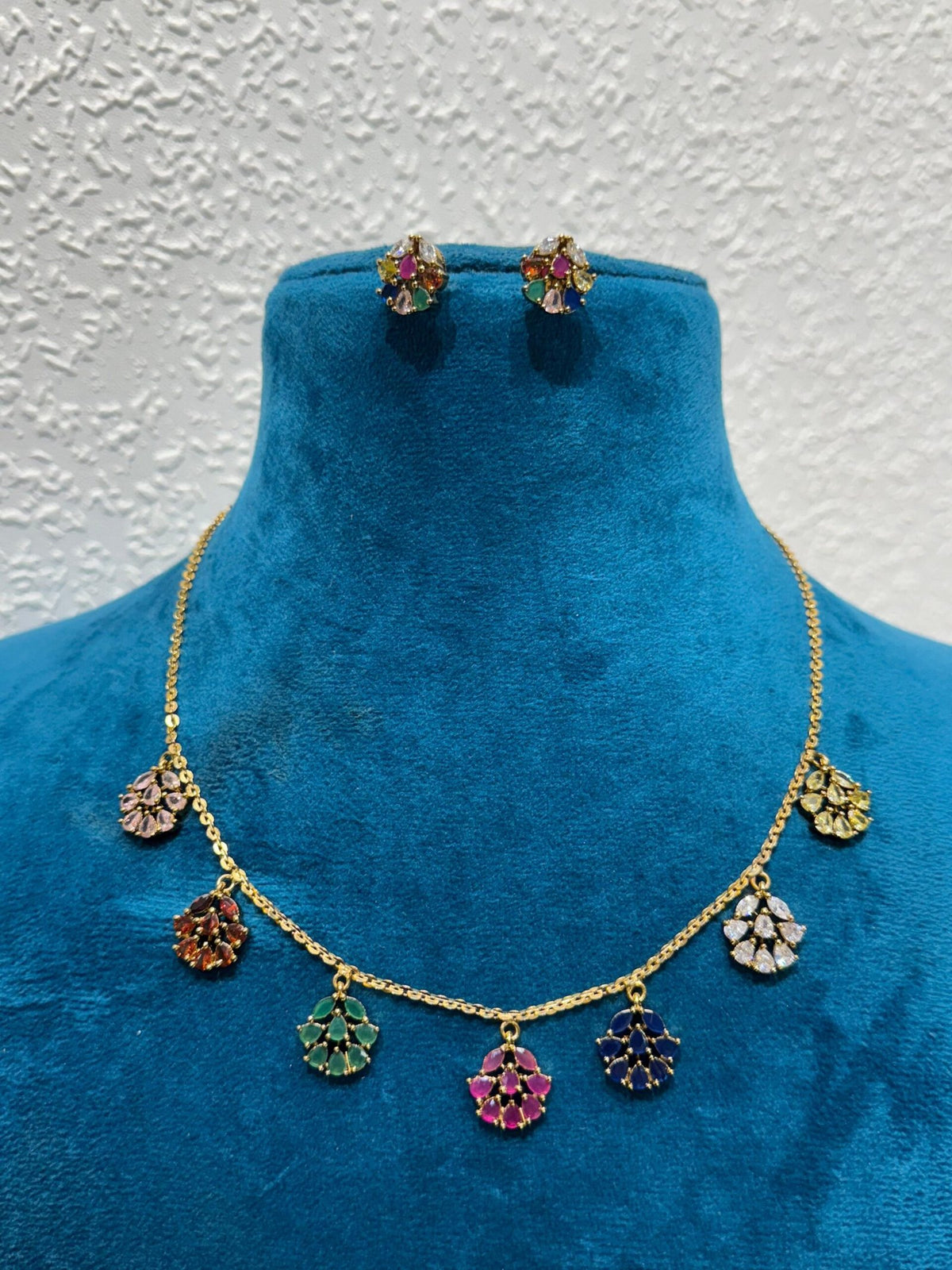
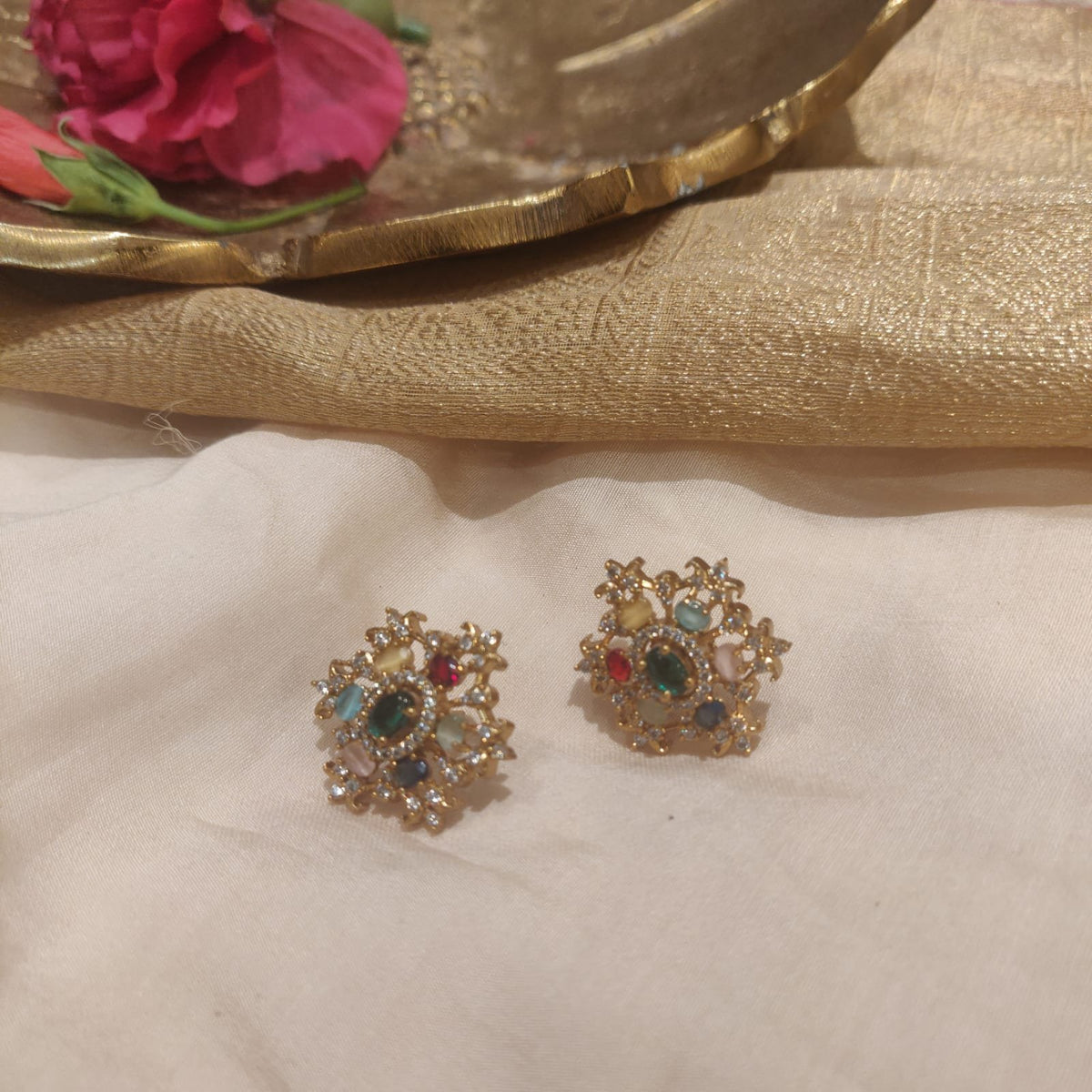
Full multi-colour meenakari incorporates four to five colours in a single piece, typically red, green, blue, yellow, and white. This is the most elaborate and most traditional form of Jaipur meenakari and is reserved for occasion pieces, bridal sets, and statement jewellery.
Pink and Turquoise (Contemporary Meenakari)
Contemporary meenakari jewellery has expanded the palette into softer, more fashion-forward combinations. Pink and turquoise meenakari suits, pastel outfit tones and works well for reception looks and semi-formal occasions.
When Should You Wear Meenakari Jewellery in the UK?
Rajasthani and Gujarati Weddings
Meenakari is central to the jewellery tradition of both communities. Rajasthani brides in the UK often wear full multi-coloured meenakari sets for the wedding ceremony, with red and green combinations being the most traditional choice. Gujarati wedding guests frequently choose meenakari jewellery for its warm colour palette that complements bandhani and patola sarees.
Navratri in the UK
Navratri celebrations in UK cities, particularly the large garba events in Leicester and London, are the peak wearing occasion for meenakari jewellery. Bright multi-coloured meenakari against a vibrant chaniya choli is one of the most visually consistent looks at UK Indian Navratri events.
The colour richness of meenakari pieces photographs beautifully under garba event lighting, which is one of the reasons it has become a Navratri staple across the Indian diaspora in the UK.
Diwali
Festive Diwali dressing benefits from jewellery that has visual warmth and colour. Meenakari pieces in red, green, and gold tones complement the candlelit and fairy-light aesthetic of Diwali celebrations more effectively than white stone-dominant styles.
Eid Celebrations
Meenakari jewellery has Mughal and Persian cultural roots that give it a natural resonance for Eid celebrations. Blue and white meenakari combinations, or contemporary turquoise and gold pieces, are popular choices for Eid outfits across British Muslim communities.
Explore fashion jewellery online for meenakari jewellery collections suited to all of these UK occasions.
Styling Meenakari Jewellery with Different Outfits
With chaniya choli (Navratri): Full multi-colour meenakari sets in necklace, earring, and bangle combinations. The colour richness of meenakari complements the embroidery and mirror work of chaniya choli without competing with it.
With bandhani or leheriya sarees: Red and green meenakari picks up the warm colour family of these Rajasthani textile traditions. A meenakari necklace with matching earrings over a bandhani saree creates a cohesive regional look.
With contemporary salwar suits and kurta sets: A single meenakari statement earring or a light meenakari necklace adds ethnic depth to otherwise simple outfits. Keep the meenakari as the primary accessory and avoid layering it with other statement pieces.
With silk sarees: Blue and white meenakari or a restrained two-colour combination works well against the formality of a silk saree. Avoid full multi-coloured meenakari on heavily patterned silk as the two pattern-rich elements compete visually.
With lehengas for wedding occasions: Meenakari jewellery that picks up one or two colours from the lehenga embroidery or border creates a coordinated look that is both traditional and considered. Pair with a pearl necklace and earring set as an underlayer for a contemporary layered aesthetic.
What to Check Before Buying Meenakari Jewellery Online from the UK
Remote purchasing of meenakari jewellery requires specific quality checks that differ from stone-set jewellery categories.
Enamel opacity: The enamel colour in product images should appear fully opaque and vivid, not thin, patchy, or washed out. Thin enamel application is visible as a colour that shows the underlying metal through it.
Edge definition: Where the enamel meets the gold-toned metal framework, the boundary should be clean and precise. Blurred or rough edges in close-up images indicate inconsistent enamel application.
Colour consistency: Within a single piece, each application of the same colour should match precisely. Varying shades of the same colour within one earring or pendant suggest uneven enamel quality.
Front and reverse detail: On higher-quality meenakari pieces, the enamel work is visible and detailed on the reverse face as well as the front. If product images show the reverse and it carries visible enamel detail, it is a strong quality signal.
Set coherence: In meenakari sets, the necklace and earrings should match exactly in colour palette, enamel quality, and design motif. Mismatched sets in colour tone between pieces indicate inconsistent production quality.
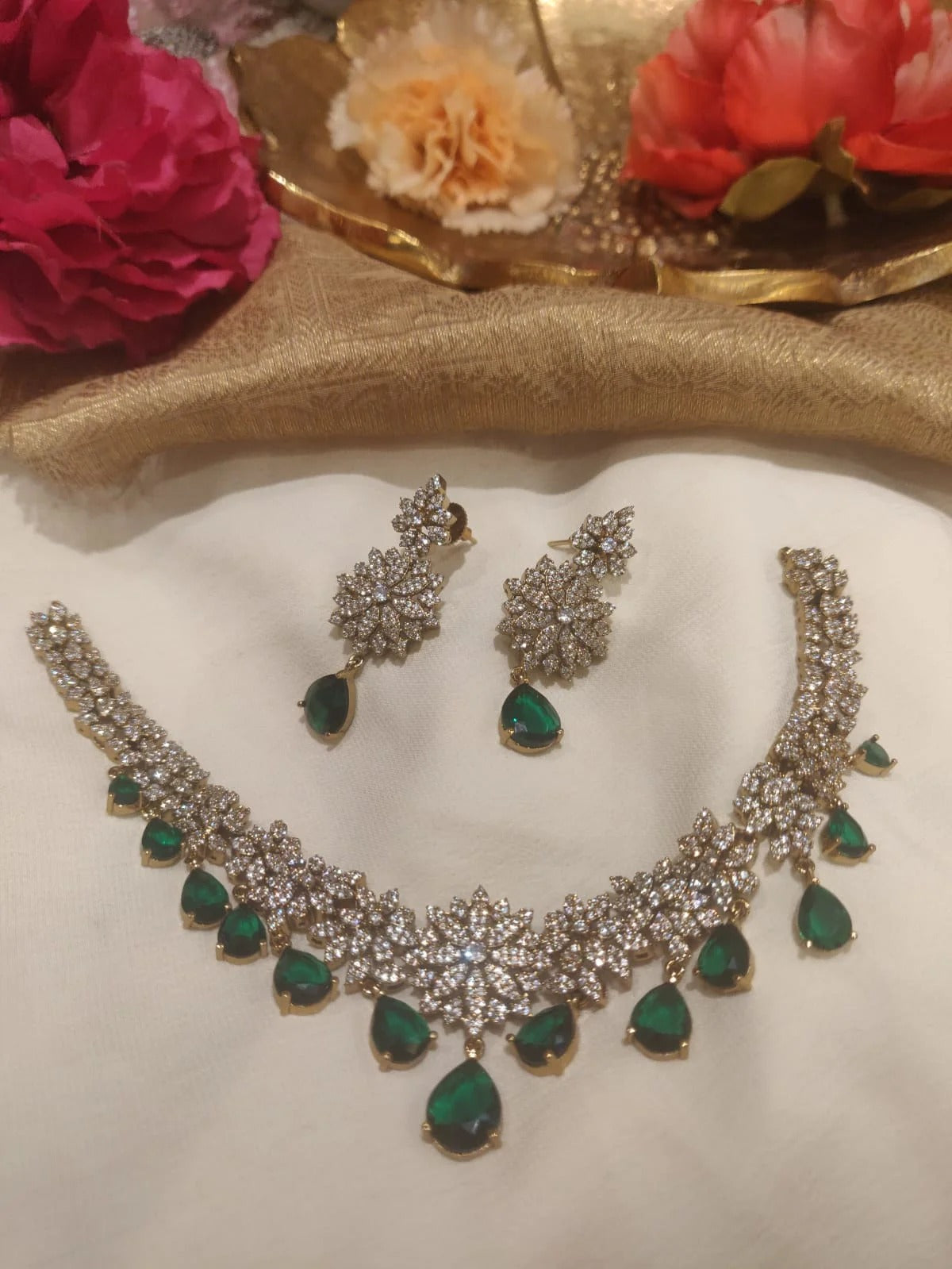
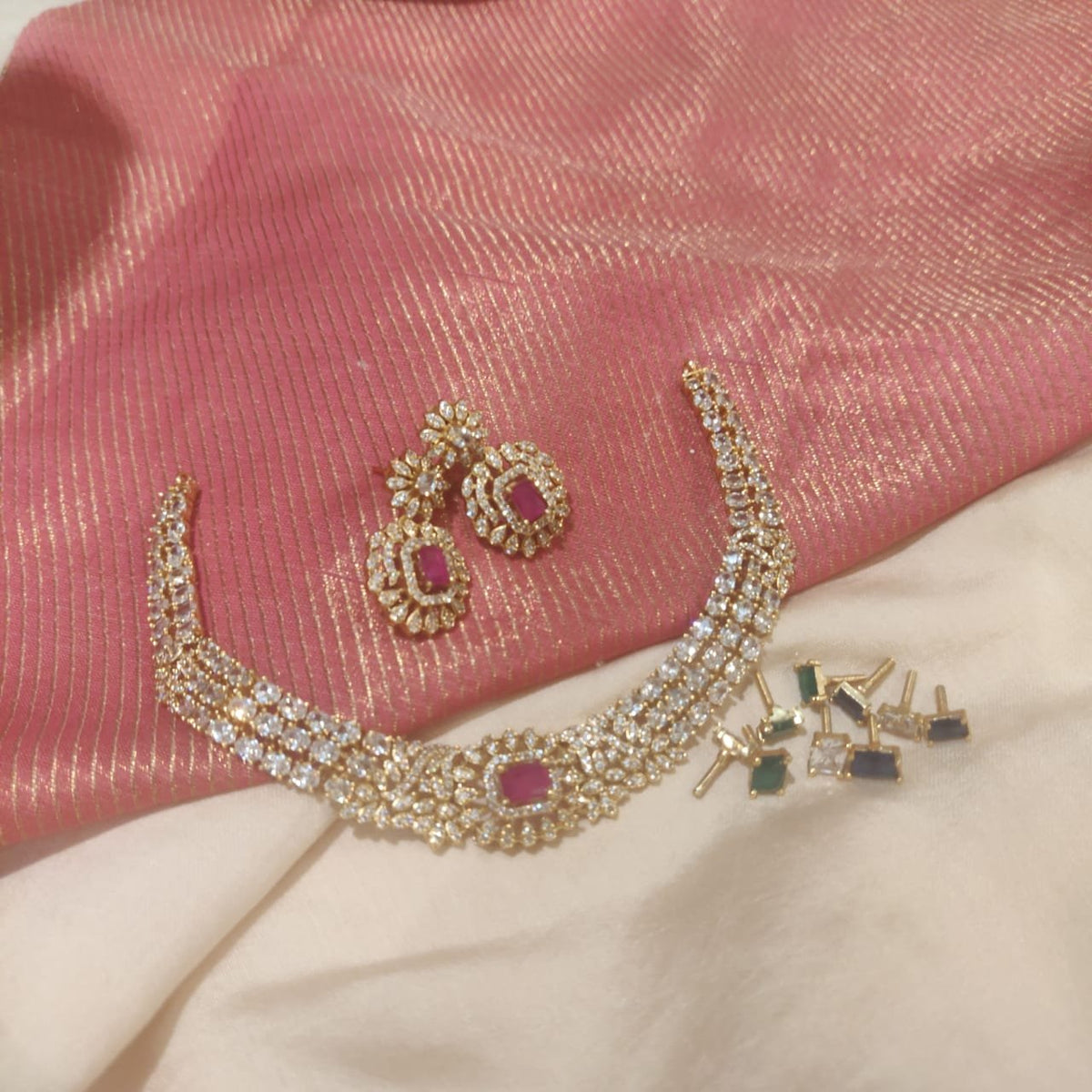
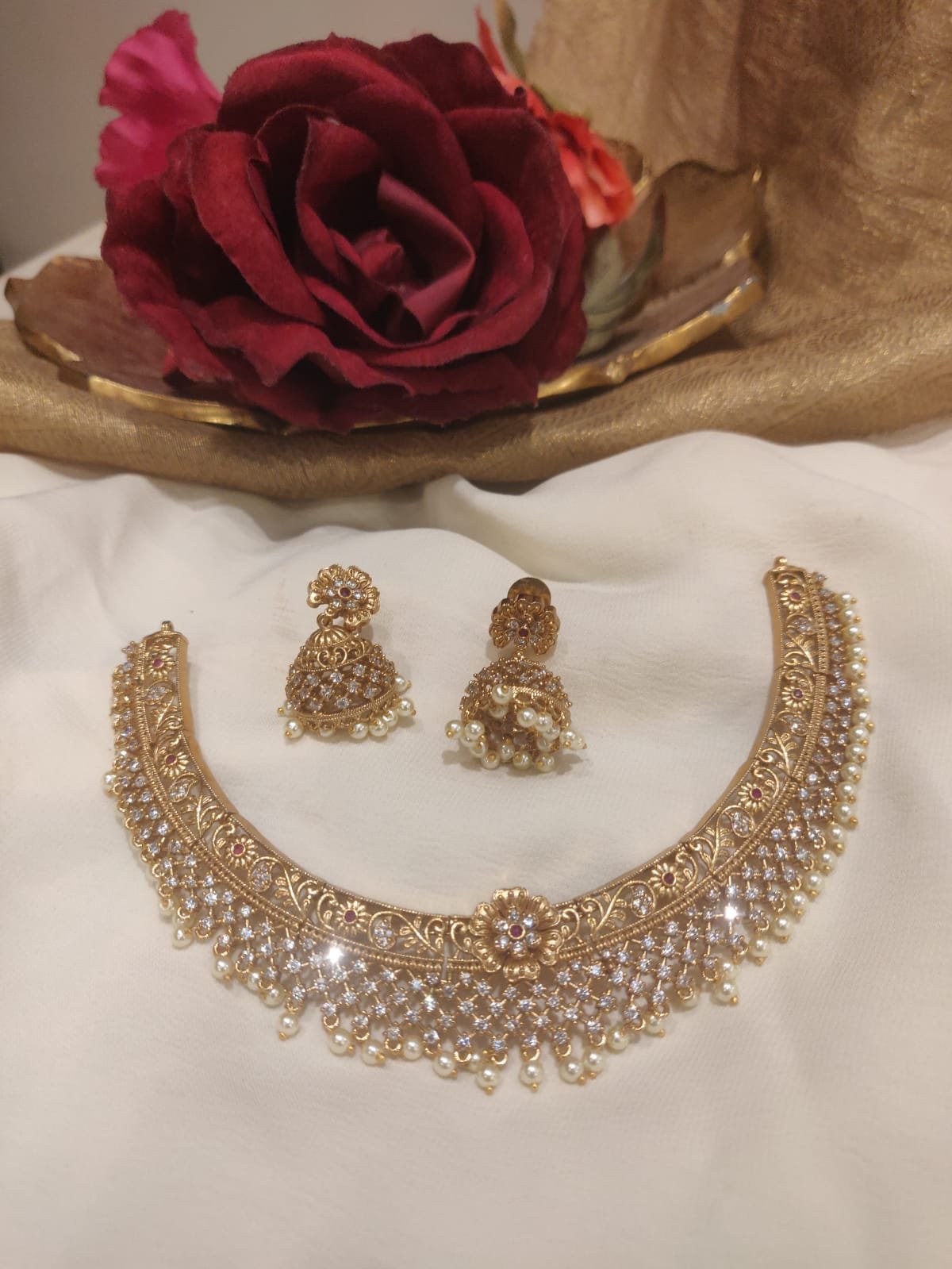
For meenakari jewellery sets with detailed product imagery suited to remote purchasing from the UK, explore fancy artificial jewellery.
For bangles that complement meenakari necklace and earring sets for festive and wedding occasions, browse traditional gold bangle designs.
Emporia Jewels carries meenakari-inspired jewellery collections organised by occasion type, making it straightforward for UK buyers to find pieces suited to the events and outfits in their own lives.
Frequently Asked Questions
Q1: What is meenakari jewellery?
Meenakari is a jewellery-making tradition involving the application of coloured enamel to a metal surface. It originated in Persia and is most strongly associated with Jaipur, Rajasthan in India.
Q2: What makes meenakari jewellery different from Kundan?
Kundan jewellery is defined by flat stone settings in a gold-toned framework. Meenakari is defined by coloured enamel applied to the metal surface. The two techniques are often combined, with Kundan stone settings on the front and meenakari enamel on the reverse.
Q3: Is meenakari jewellery suitable for weddings in the UK?
Yes. Meenakari is central to Rajasthani and Gujarati bridal jewellery traditions and is widely worn at weddings across these communities in the UK.
Q4: How do I care for meenakari enamel jewellery?
Avoid hard impacts that can chip the enamel surface. Store pieces separately to prevent contact damage. Keep away from moisture and harsh cleaning solutions.
Q5: What colours are most traditional in meenakari jewellery?
Red, green, blue, white, and yellow are the most traditional meenakari enamel colours, with red and green being the most iconic combination in Jaipur meenakari.
Q6: Can I buy meenakari jewellery online with delivery to the UK?
Yes. Indian D2C brands, including Emporia Jewels, offer meenakari-inspired jewellery collections with international shipping to UK addresses. Check the website for current delivery options.