

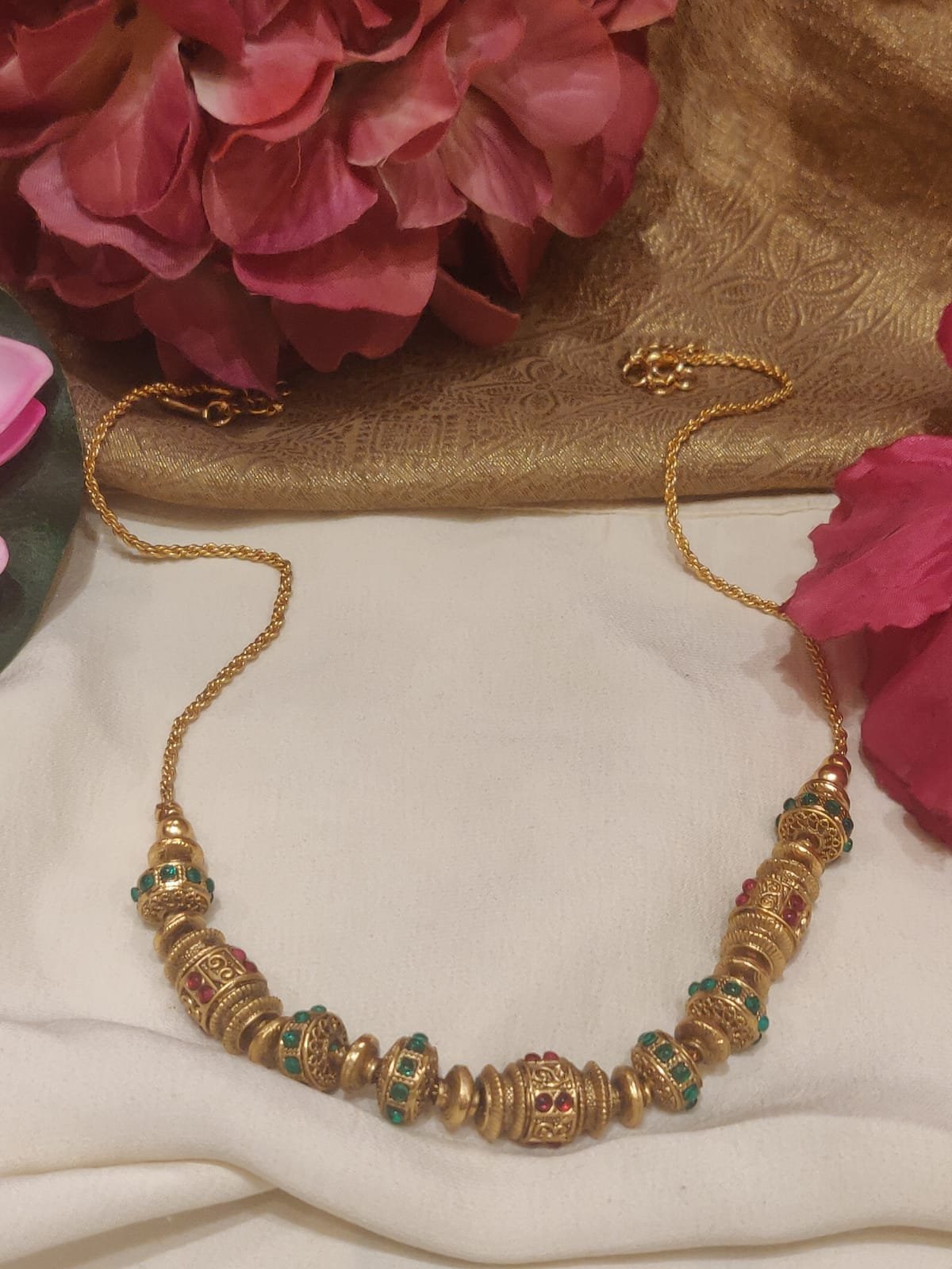
Meenakari Jewellery Online: A Guide to India's Most Colourful Jewellery Craft
Colour is the first thing anyone notices about meenakari jewellery. The vivid reds, the sharp greens, the cobalt blues, the clean whites, all fired onto a gold-tone metal surface in intricate patterns of flowers, paisleys, and geometric borders. No other jewellery craft produces colour in quite this way. And no photograph, however well-taken, fully captures how meenakari looks in person when the light catches the enamel surface.
If you are exploring meenakari jewellery online for the first time, or looking to understand the craft better before buying, this guide covers everything from how enamel is applied to how to tell a quality piece from a poor imitation of one.
What Is Meenakari? The Craft, The History
Meenakari is the art of colouring the surface of metals using enamel. The word comes from the Persian word "mina," meaning heaven, likely a reference to the sky-blue that was a signature colour of the craft in its early form.
The technique arrived in India through Mughal influence in the 16th century. Emperor Akbar is credited with bringing skilled enamel craftsmen from Persia and establishing meenakari as a court art in Rajasthan. The city of Jaipur became, and remains, the most important centre for meenakari craft in India.
How the craft works:
The process involves several stages. First, the base metal (typically gold or silver in traditional fine jewellery; brass in fashion jewellery) is shaped and engraved. Then, different coloured glass enamels are filled into the recessed areas of the engraving. The piece is fired in a kiln at high temperature, which fuses the enamel to the metal surface. This process is repeated for each colour in the design. The result is a hard, glass-like coloured surface bonded to the metal.
In fashion meenakari jewellery sold online in India, the base is typically brass or zinc alloy with gold-tone plating, and the enamel process is simplified for scale production. The visual result closely resembles traditional meenakari while being accessible at a much lower price point.
The Different Regional Styles of Meenakari in India
Meenakari craft varies by region, and understanding those differences helps you identify what you are looking at when browsing online.
Jaipur meenakari: The most widely known form. Characterised by vivid five-colour enamel work: red, green, blue, white, and yellow. Floral motifs, paisleys, and bird designs in a dense, pattern-filled style. Both sides of the piece are often enamelled (double-sided meenakari). This is the style most commonly associated with meenakari jewellery nationally.
Varanasi meenakari: Similar technique but typically single-sided and with a more restrained colour palette. Often done on silver rather than gold-tone metal. The designs tend to be more geometric and less densely packed than Jaipur meenakari.
Lucknow meenakari: Closely associated with the Nawabi aesthetic. Uses a softer colour palette: pastels, whites, and light blues rather than the vivid primary colours of Jaipur. The patterns are more delicate, and the overall effect is more refined.
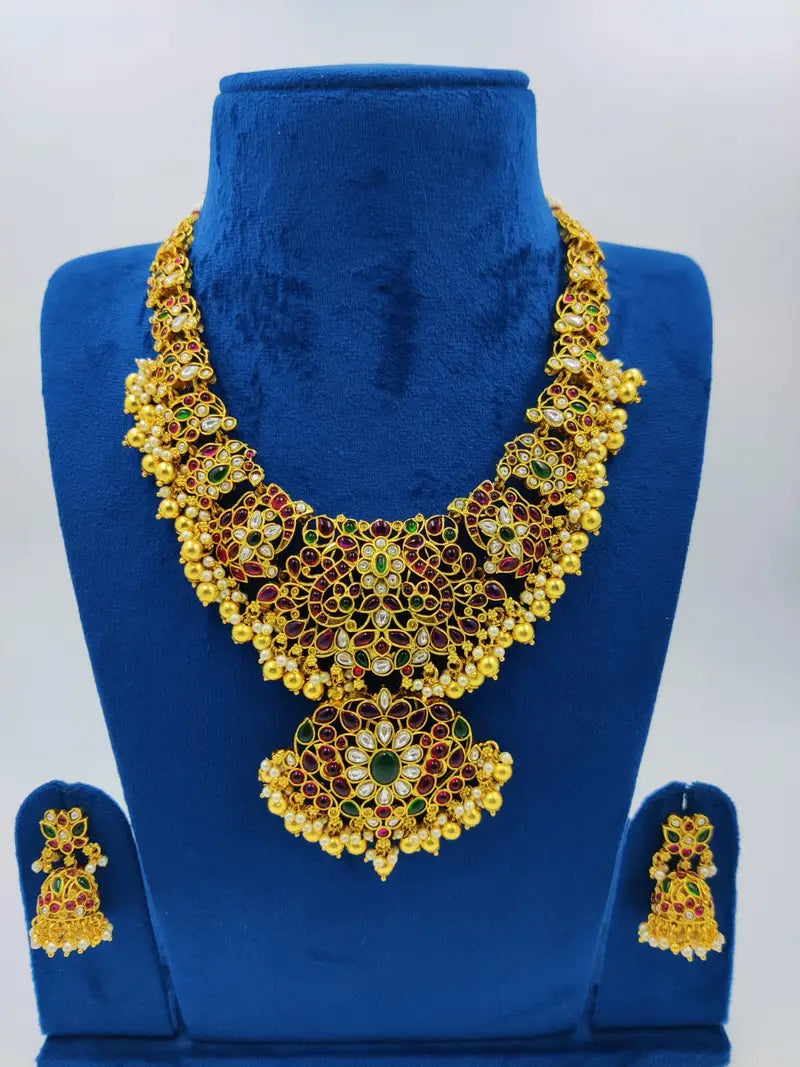
South Indian meenakari: Enamel work combined with kemp stone settings in temple jewellery tradition. The colour palette here is specifically red and green in a structured design language very different from the floral Rajasthani styles.
What to Look For in Quality Meenakari Jewellery Online
This is the section that most browsing buyers need the most. The difference in quality between meenakari pieces at similar price points can be significant.
Even enamel fill: Look carefully at product images. The enamel should fill each cell of the design completely with no gaps, thin patches, or bubbles visible. In quality pieces, the enamel surface is smooth and level with the metal borders.
Clean colour edges: Where two colours meet in a meenakari design, the border between them should be sharp and clean, not blurred or bleeding into each other. Colour bleeding indicates poor-quality enamel application.
Colour vibrancy: Meenakari enamel should be vivid and saturated, particularly in Jaipur-style pieces. Dull, pale, or washed-out enamel indicates low-quality glass material.
Metal surface quality: The gold-tone metal between enamel sections should be smooth and evenly finished. Rough or pitted metal surfaces suggest poor base metal quality.
Reverse side: On high-quality meenakari pieces, particularly Jaipur-style, the reverse is also enamelled. In mass-produced fashion meenakari, the reverse is typically plain metal. This is expected and not a defect, but check what you are buying.
The handcrafted jewelry range includes meenakari-detailed pieces where the enamel work quality is a defining characteristic.
Styling Meenakari Jewellery: The Colour Logic
Meenakari jewellery is colour-forward. Styling it successfully is mostly a question of managing colour relationships between your jewellery and your outfit.
Option 1: Complement, do not match. Meenakari in red and green enamel does not require you to wear red or green. It works beautifully as a contrast against blue, ivory, gold, and black. The jewellery colour stands out more sharply against a neutral or contrasting outfit.
Option 2: Pull one colour from the enamel into your outfit. If your meenakari piece has a predominantly blue enamel detail, wearing a blue outfit creates a coordinated look without matching the full spectrum of the jewellery colours.
Option 3: Fabric choice matters. Meenakari sits naturally against rich, textured fabrics: silk sarees, brocade suits, velvet and embroidered lehengas. On simpler fabrics like cotton and linen, a single meenakari piece, like a pair of earrings, adds visual interest without competing with the fabric's simplicity.
The kundan jewelry range includes pieces that combine kundan stone setting with meenakari enamel detailing, which is a common traditional combination in Rajasthani jewellery.
Caring for Meenakari Jewellery
Enamel is glass. It is harder than most stone finishes used in jewellery but it can chip or crack if struck against a hard surface.
Care essentials:
- Store each meenakari piece individually, wrapped in soft cloth
- Do not stack pieces where enamel surfaces contact each other
- Avoid pressure or impact on enamel panels
- Clean only with a dry, soft cloth. No liquids, no chemicals
- Keep away from water, perfume, and hairspray
- Do not use ultrasonic cleaners, which can crack enamel
The artificial jewellery section includes meenakari pieces across necklaces, earrings, and bangles, with care guidance for each category.
Frequently Asked Questions
Q1. Is meenakari jewellery the same as enamel jewellery?
Yes. Meenakari is the Indian craft term for what is technically enamel work on metal. The process is the same as European enamel jewellery traditions, but the design language and aesthetic are distinctly Indian.
Q2. Does meenakari enamel fade over time?
Properly fired enamel is extremely durable and does not fade under normal conditions. What damages meenakari enamel is physical impact, which can chip the glass surface, and chemical exposure, which can affect the metal surface around the enamel.
Q3. Can meenakari jewellery be worn in summer heat?
Yes. The enamel itself is not heat-sensitive in the range of temperatures encountered in normal wear. However, excessive heat combined with sweat can affect the metal plating beneath the enamel over time.
Q4. What is the best meenakari colour combination for a North Indian bridal look?
Red and green enamel with antique gold-tone metal is the most traditional choice. For a more contemporary bridal look, blue meenakari with kundan stone settings in a Jaipur style is a popular and visually striking option.
Q5. How do I tell if meenakari in a product listing is genuine enamel work or printed?
Genuine enamel has a slightly three-dimensional quality, with the enamel surface sitting within or flush with metal borders. Printed colour work on metal looks flat and one-dimensional. In close-up product photography, genuine enamel has a slightly glossy, glass-like surface texture that printed colour does not replicate.