

Kundan vs Polki Jewellery: What Is the Difference and Which One Should You Actually Buy?
Kundan and polki are two of the most prestigious jewellery styles in Indian tradition. They are frequently mentioned in the same breath, often confused with each other, and sometimes used interchangeably in jewellery descriptions, even by sellers who should know better. If you have been trying to understand the difference before choosing one for a bridal look, a major occasion, or simply to understand what you are looking at when you shop, this guide gives you that clarity.
The differences are real, meaningful, and have direct implications for how much you spend, what you get, and how you wear it.
Origins: Where Each Tradition Comes From
Kundan jewellery has its origins in the royal courts of Rajasthan, with Jaipur established as its primary centre of production. The term "kundan" refers to highly refined gold, and the technique of setting stones using this refined metal base became associated with Mughal and Rajput court jewellery from around the 16th century. Kundan technique is defined by its setting method, not its stone type.
Polki jewellery also originates in the Mughal court tradition of the same period. "Polki" refers specifically to uncut diamonds: natural diamonds that have been cleaved but not faceted into the brilliant-cut shapes we associate with modern diamond jewellery. Polki diamonds retain their natural, irregular form. This is the defining material characteristic of polki jewellery. Where kundan is defined by its setting technique, polki is defined by its stone material.
Both traditions emerged from the same Mughal craft heritage but represent distinct technical approaches and material categories.
The Technical Difference: Setting and Materials
This is where most of the confusion originates. The setting technique used in kundan and polki jewellery is identical or very closely related. The difference is in what is being set.
Kundan setting technique: The base of the jewellery is made from a gold framework. The recesses within this framework are filled with lac (resin), which provides the bedding for the stones. Flat, polished glass stones (in traditional fine kundan, foiled or backed glass) are pressed into the warm lac base. The gold borders are then worked up around the stones to encase them securely. The result is a smooth, flat stone surface flush with the gold borders.
In fine kundan jewellery, real gold and precious or semi-precious stones are used. In fashion and artificial kundan jewellery online in India, the same setting technique is applied using base metal and high-quality glass stones. The visual aesthetic is closely replicated.
Polki technique: The setting process in polki jewellery is similar to kundan in that it uses a lac base and worked gold borders to secure the stones. What is fundamentally different is the stone itself. Polki uses uncut natural diamonds, which means the stones are irregular in shape and size, have a natural surface texture rather than a polished facet, and produce a different optical quality from cut diamonds. Polki diamonds have a characteristic soft, dusty sparkle rather than the sharp brilliance of a faceted diamond.
The critical point: in traditional fine jewellery, polki is always set with real, uncut diamonds. There is no meaningful "artificial polki" in the fine jewellery sense, though fashion jewellery pieces may replicate the aesthetic using uncut-style glass or resin stones.
Visual Differences: What Each Looks Like
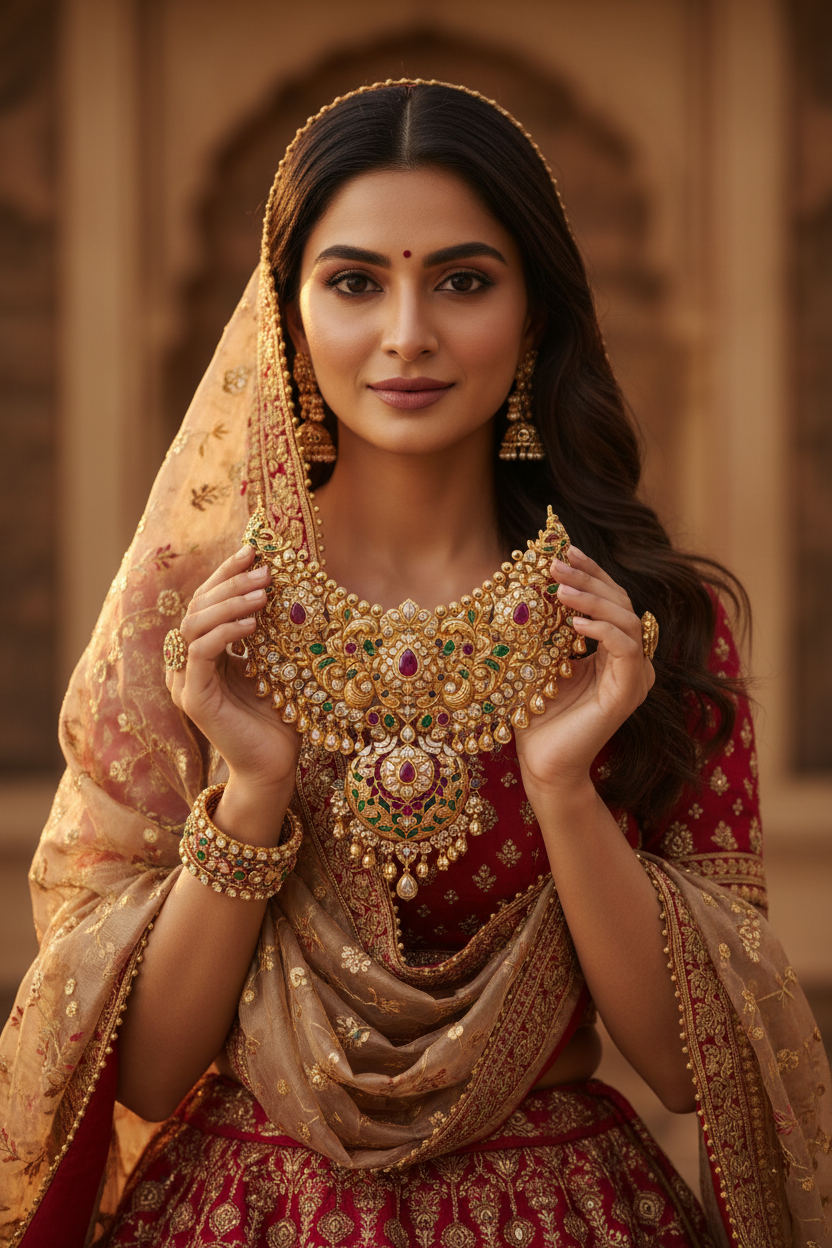
Kundan jewellery appearance: Flat, highly polished stones in red, green, white, or other colours set within worked gold-tone borders. The surface is clean and even. The stones have a smooth, almost mirror-like quality. The overall look is structured, colourful, and architectural. Kundan often incorporates meenakari enamel work on the reverse side of pieces.
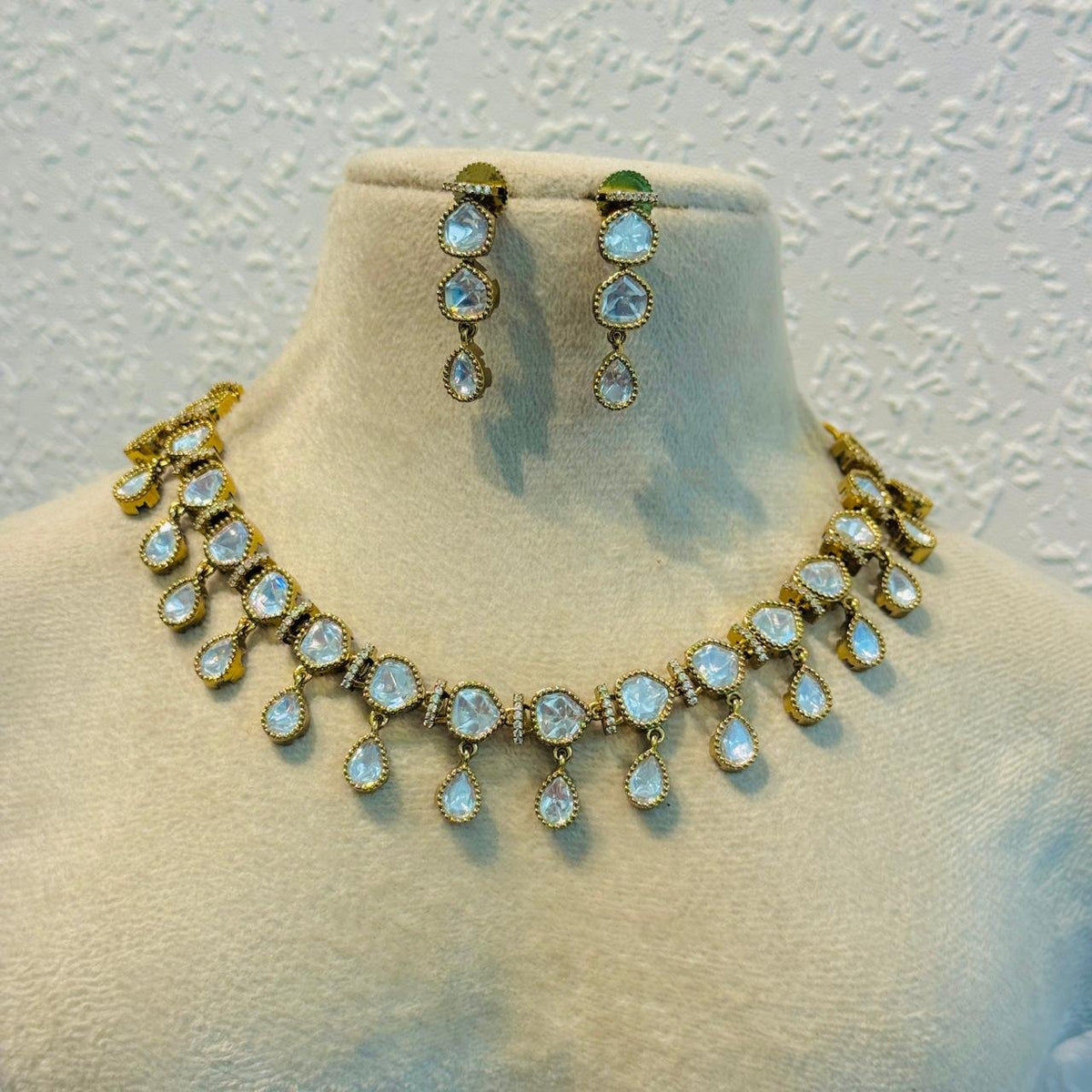
Polki jewellery appearance: Irregular, uncut diamond surfaces within gold settings. The stones are not flat or polished to a high shine. They have a natural, textured surface that produces a soft, diffused light rather than sharp brilliance. The overall look is organic, less perfectly uniform than kundan, and associated with a deep, warm richness that cut diamonds do not produce. The irregularity of the stones is a feature, not a defect. It is precisely what makes polki look the way it does.
Price: A Very Significant Difference
Traditional fine polki jewellery uses uncut natural diamonds set in gold. It is, accordingly, one of the most expensive categories in Indian fine jewellery. A full polki bridal set from an established fine jeweller in India can cost well into the lakhs or significantly higher.
Fine kundan jewellery using real gold and precious stones is also expensive, but the absence of diamonds means it occupies a different price tier from polki.
Fashion and artificial kundan jewellery, using base metal and glass stones in the kundan setting technique, is available at accessible price points. This is the category most relevant to buyers shopping for artificial jewellery online in India.
Fashion jewellery that replicates the polki aesthetic (using rough-cut or irregular glass or resin stones in a kundan-style setting) exists in the artificial category, but it is important to be clear: this is an aesthetic reference to polki, not polki jewellery in any technical sense.
Which to Choose: A Decision Framework
Choose kundan jewellery (artificial) when:
- You want the traditional North Indian or Rajasthani jewellery aesthetic for a wedding or formal occasion
- You want the colour versatility of kemp-style or coloured glass stones in a kundan setting
- You are shopping within the artificial jewellery price range
- You want coordinated sets for bridal or festive wear
The kundan jewelry range at Emporia Jewels covers this category across necklace sets, earrings, maang tikka, and bridal combinations.
Choose fine polki jewellery when:
- You are purchasing fine jewellery with a significant budget
- The authentic diamond content and craftsmanship of traditional polki is the goal
- The piece is intended as a financial asset or heirloom alongside its ornamental purpose
Choose artificial polki aesthetic jewellery when:
- You want the visual character of uncut-style stones in a fashion jewellery piece
- The piece is for a specific occasion rather than a long-term investment
- The accessible price point of artificial jewellery makes the purchase practical
For bridal occasion shopping where the kundan aesthetic is the goal at fashion jewellery pricing, the bridal collections page offers the most comprehensive starting point.
Common Mistakes When Shopping for Kundan or Polki
Confusing the terms: A seller describing a glass-set piece as "polki" in the fine jewellery sense is using the term inaccurately. Real polki is an uncut diamond. Ask specifically what the stone material is.
Assuming polki-style glass is the same as polki: The aesthetic can be replicated. The material cannot. Know which you are buying.
Overlooking the reverse side: Quality kundan pieces have meenakari enamel work on the reverse. Check product images for the back of any piece described as quality kundan. A bare, unfinished metal reverse is a quality indicator.
Buying full sets without checking coordination: Kundan sets should be designed as cohesive units. Mixing kundan pieces from different collections or sellers risks visible inconsistencies in stone colour, metal tone, and design scale.
Frequently Asked Questions
Q1. Is all kundan jewellery made with real gold?
Traditional fine kundan uses real gold. Fashion and artificial kundan jewellery use base metal with gold-tone plating in the same setting technique. The materials are different, but the setting method is similar.
Q2. Can you tell the difference between kundan and polki just by looking?
In fine jewellery, yes. Kundan stones are flat, polished, and even in surface. Polki stones are irregular, uncut, and have a natural texture. In fashion jewellery replicating both styles, the distinction may be less clear and depends on how accurately the aesthetic has been replicated.
Q3. Is meenakari always present on the back of kundan jewellery?
In high-quality traditional kundan, meenakari enamel work on the reverse is a hallmark of craftsmanship. In mass-produced fashion, kundan, the reverse is often plain metal. The presence of reverse meenakari is a quality indicator but not a universal requirement.
Q4. What occasions are most appropriate for kundan jewellery?
Weddings, formal cultural events, Diwali and festive occasions, and formal receptions are the most appropriate contexts for kundan jewellery. The style is too formal for casual or everyday wear.
Q5. Where is the best kundan jewellery produced in India?
Jaipur is the traditional and contemporary centre of kundan jewellery production in India. Delhi is also a significant centre. Both cities have established workshops producing pieces ranging from fine jewellery to accessible fashion kundan.