

Kundan Jewellery Online: A Buyer's Guide to India's Most Regal Jewellery Tradition
Kundan jewellery carries one of the oldest and most recognisable design traditions in Indian craft history. It traces its origins to the royal courts of Rajasthan and later became synonymous with Mughal-era adornment. Today, kundan jewellery online is one of the most searched categories in Indian fashion jewellery, and for good reason: the style translates beautifully across traditional occasions, bridal looks, and formal festive wear.
If you are shopping for kundan jewellery for the first time, or looking to add to a collection you already have, this guide will walk you through exactly what kundan is, how to identify quality, and how to style it for the occasions that matter most.
What Is Kundan Jewellery? The Origin and the Craft
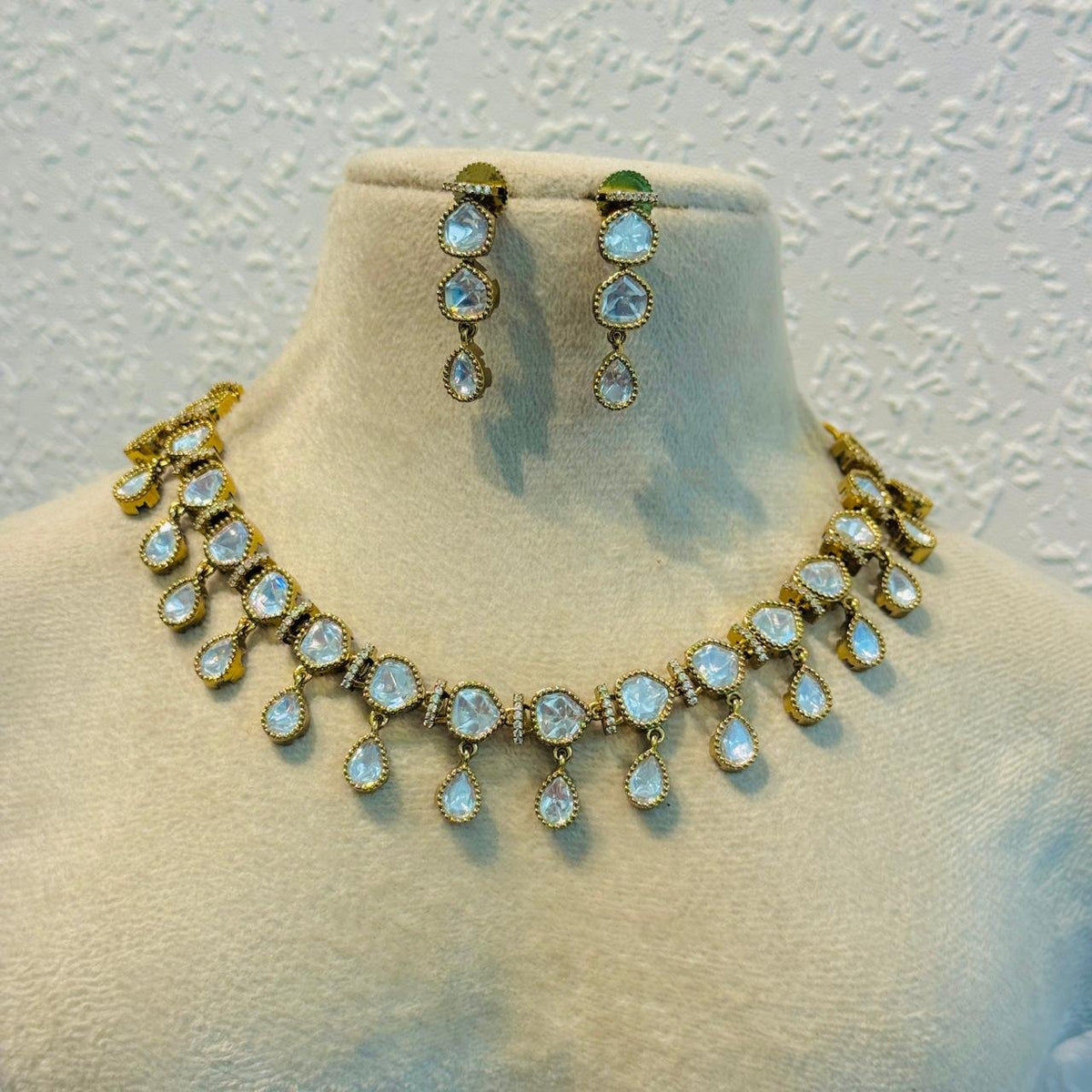
Kundan is a form of jewellery in which flat, polished glass stones (traditionally uncut gemstones, now replaced with high-quality glass in fashion jewellery) are set into a gold-tone metal frame using a process called kundan setting. The stones are pressed into a lac (resin) base within the metal framework, which holds them securely without claws or prongs.
The result is a smooth, flat surface of stones flush with the metal, creating a characteristic look: clean lines, rich colour, and a regal flatness that is distinct from the raised stone settings used in other jewellery styles.
Traditional kundan uses real, uncut diamonds and gold. In artificial or fashion kundan jewellery online, the same visual style is achieved using glass stones and gold-tone or brass base metal. The aesthetic is largely identical; the materials are not.
What sets genuine craft-quality kundan apart from mass-produced versions:
- Even, flush stone settings with no gaps or misaligned stones
- Clean solder lines on the metal framework
- Consistent colour and clarity in the glass stones
- Meenakari enamel work on the reverse side (back of the piece), which is a hallmark of quality kundan craftsmanship
Explore the full kundan jewelry range to see how these details appear across different pieces.
Why Kundan Jewellery Has Remained Relevant for Centuries
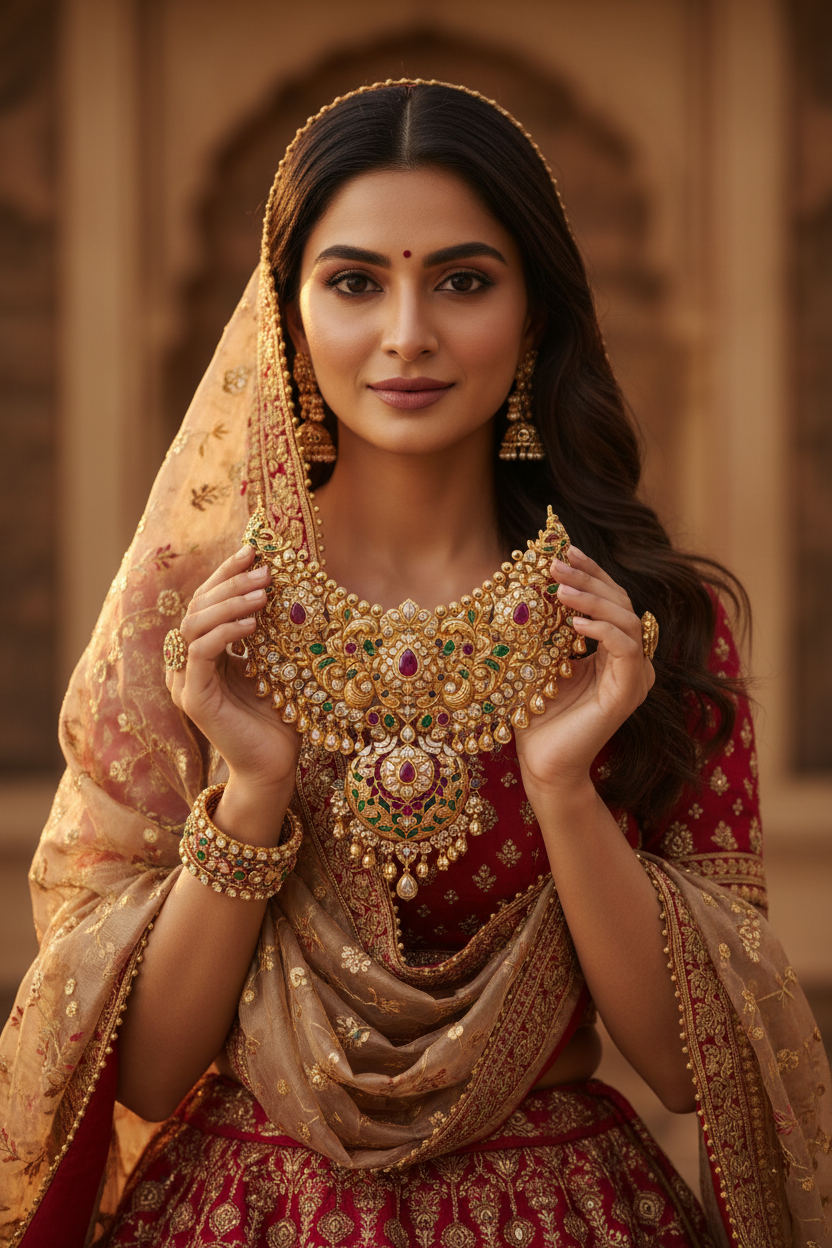
Kundan jewellery has lasted as a preferred choice across centuries for a reason that has nothing to do with trend cycles. Its visual character is definitive. The flat, polished stones in rich red, green, and white, set within a structured gold-tone frame, signal a very specific kind of dressed occasion. It does not look casual, understated, or ambiguous. It looks like a woman who is dressed intentionally for something significant.
That clarity of visual language is exactly why it works so well for:
- Bridal ceremonies where traditional grandeur is expected
- A wedding guest looks where elegance matters more than fashion-forwardness
- Festive occasions like Diwali, Navratri, and Karva Chauth
- Cultural events, classical performances, and formal functions
It also works across age groups. A young woman in a lehenga and a senior woman in a silk saree can both wear kundan without the style feeling out of place on either.
Types of Kundan Jewellery Available Online
The category covers a wide range of individual pieces and sets. Here is what you will typically find:
Necklace sets: The most prominent kundan pieces. They range from short chokers (14 to 16 inches) to long rani haars (24 to 32 inches). Many sets come with matching earrings. Layered necklace combinations that pair a short kundan choker with a longer chain are particularly popular for bridal looks.
Earrings: Jhumka-style earrings with kundan detailing are widely worn. Drop earrings and chandbali earrings (crescent-moon shaped) in kundan settings are among the most searched styles.
Maang tikka: A forehead ornament that completes a traditional or bridal look. Kundan maang tikkas are commonly worn with bridal sets and festive outfits.
Haath phool: A hand ornament that connects a bracelet to finger rings via decorative chains. Typically worn by brides or in heavily dressed traditional looks.
Bangles and kadas: Kundan-set bangles in gold-tone metal, often sold in sets of two or four.
How to Style Kundan Jewellery: Practical Principles
Match your outfit's weight: Kundan jewellery is visually heavy. It belongs on equally heavy fabrics: silk sarees, bridal lehengas, brocade suits, and velvet. Wearing a full kundan set with a light cotton outfit creates an imbalanced look.
Let the jewellery lead: If you are wearing a full kundan necklace set, keep your outfit's neckline clean and your blouse relatively simple. The jewellery is the focal point; the outfit supports it.
Coordinate colours deliberately: Kundan stones come in red, green, white, blue, and multicoloured options. Match or complement the stone colour to your outfit's embroidery or border, not to the main fabric colour.
Avoid mixing jewellery traditions: Kundan and oxidised jewellery, or kundan and contemporary minimal pieces, do not sit naturally together. Within a single look, stay within one design tradition.
For bridal occasion shopping, the bridal collections page features coordinated kundan and traditional sets designed to work together as complete looks.
Caring for Kundan Jewellery Specifically
Kundan pieces require a degree of care that goes beyond standard storage advice, because the stones are held with a lac base rather than metal prongs.
Specific care guidance:
- Never expose kundan pieces to water. The lac base can soften if it gets wet, which destabilises the stone settings
- Store flat, not hanging. Hanging puts stress on the stone settings over time
- Keep each piece separately wrapped in soft cloth or a pouch
- Avoid applying perfume while wearing kundan jewellery; the chemicals in fragrance can affect both the stone finish and the metal plating
- Do not press stones hard or try to re-seat them at home if they shift; take the piece to a skilled jeweller
For fashion jewellery pieces with kundan detailing, these same care principles apply.
Frequently Asked Questions
Q1. Is kundan jewellery in artificial ranges the same quality as traditional kundan?
Artificial kundan jewellery uses glass stones in place of uncut gemstones and base metal instead of gold. The visual style is closely replicated, but the materials and longevity are different. Quality varies significantly between sellers.
Q2. How do I know if the kundan setting is well-made?
Look for stones that are flush with the metal frame with no visible gaps. Check product images for consistency in stone colour and size. Reviews with customer photos are the most reliable quality indicator.
Q3. Can Kundan jewellery be worn daily?
Kundan pieces are best reserved for occasions rather than daily wear. The lac base that holds the stones is not designed to withstand the friction and moisture of daily use.
Q4. What is the difference between kundan and polki jewellery?
Polki uses uncut natural diamonds set in gold. Kundan uses flat glass stones. In artificial fashion jewellery, both styles are replicated using glass and base metal. They look visually similar but are distinct craft traditions.
Q5. Which occasions are most suited to kundan jewellery?
Weddings (as a bride or guest), festive occasions such as Navratri and Diwali, formal cultural events, and classical dance performances are the most appropriate occasions for kundan jewellery.