


Indian Jewellery Online Europe: The Complete Buying Guide for the Indian Diaspora Across the Continent
Europe is home to one of the most geographically spread Indian diaspora communities in the world. Unlike the concentrated South Asian populations of the UK or the USA, Indian families across Europe are distributed across dozens of cities: Frankfurt, Amsterdam, Paris, Zurich, Stockholm, Brussels, Milan, and beyond. What they share, regardless of which European city they call home, is the same need for authentic Indian ethnic jewellery for weddings, Diwali, Navratri, Eid, cultural programs, and family celebrations.
The challenge has always been access. A South Asian jewellery market in London is not available to an Indian family in Munich. A specialist store in Southall does not help an NRI woman in Lyon or Rotterdam. For Indian diaspora shoppers across mainland Europe, shopping for Indian jewellery online is not simply a convenient option. It is the primary and often only realistic way to access the full range of Indian ethnic accessories.
This guide is written for that shopper: someone living in continental Europe who wants to understand which styles to buy, how to plan purchases around the Indian event calendar, and what to check before placing an international order.
Why the Indian Diaspora Across Europe Shops Online for Jewellery
Physical Indian jewellery retail in mainland European cities is limited to a small number of specialist shops concentrated in areas with significant South Asian populations. Outside of a few pockets in cities like Amsterdam's Bijlmer neighbourhood or Paris's La Chapelle district, finding genuine variety in Indian ethnic jewellery requires either a dedicated specialist market or online access.
Online shopping resolves the access problem in three consistent ways.
Current Indian trends are accessible directly: Online Indian D2C brands reflect what is currently popular at weddings and festivals in India, not stock bought years ago that reflects older trends.
Occasion-based navigation works better online: Good Indian jewellery stores organise collections by bridal, festive, everyday, and gifting categories, allowing diaspora shoppers to find what they need by event rather than browsing an undifferentiated catalogue.
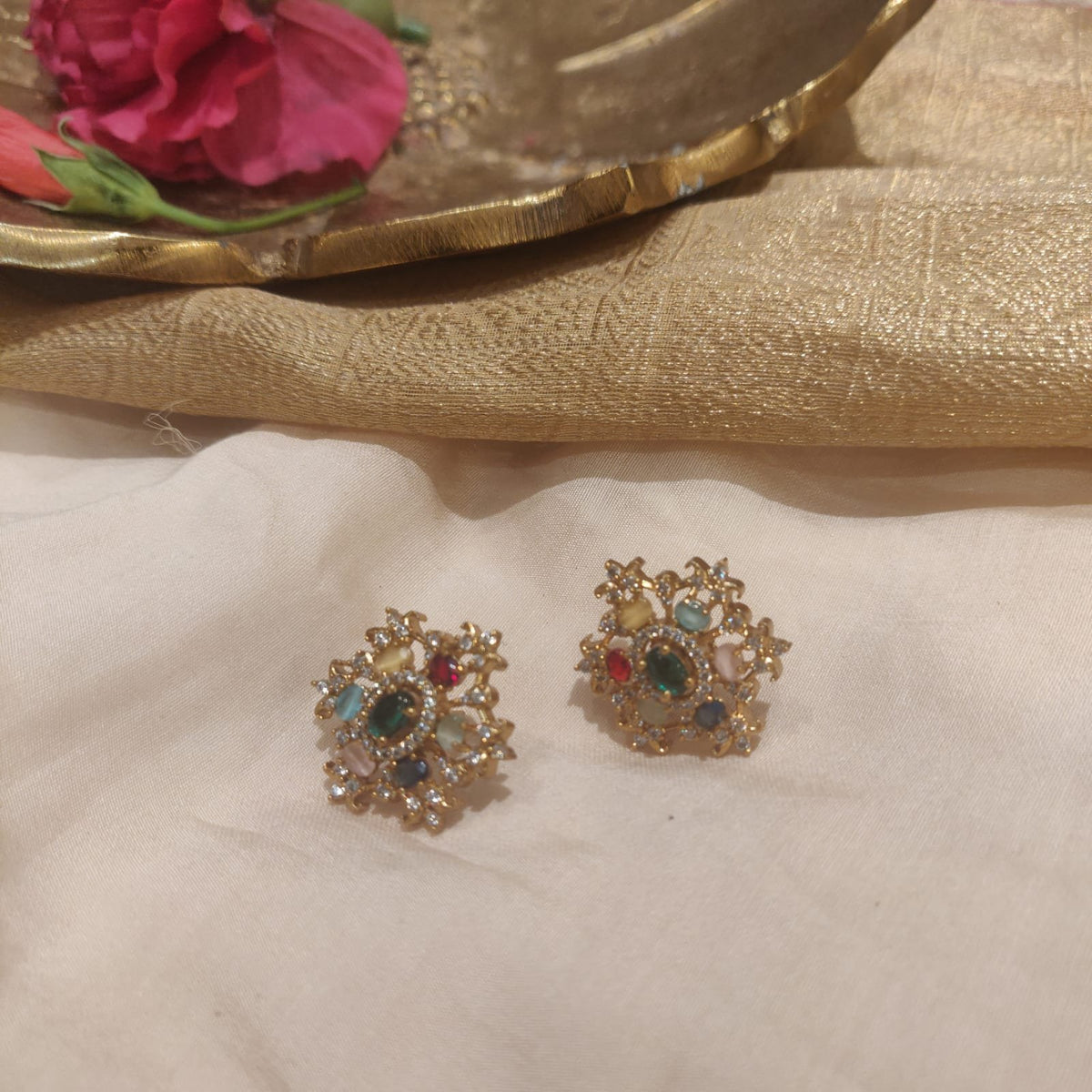
Full style range in a single store: Kundan, temple, meenakari, American Diamond, oxidised, and pearl styles are accessible together rather than requiring multiple specialist visits.
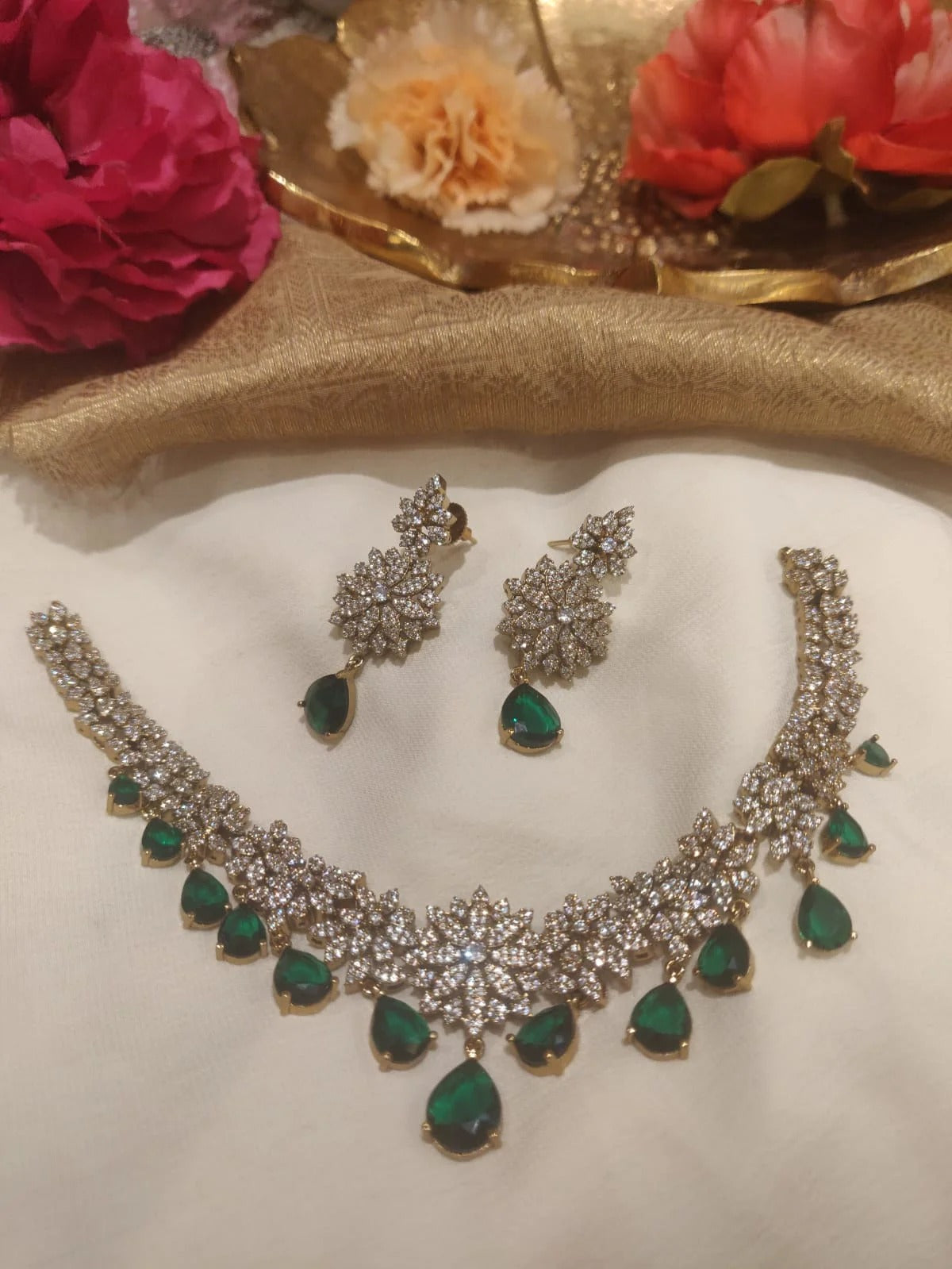
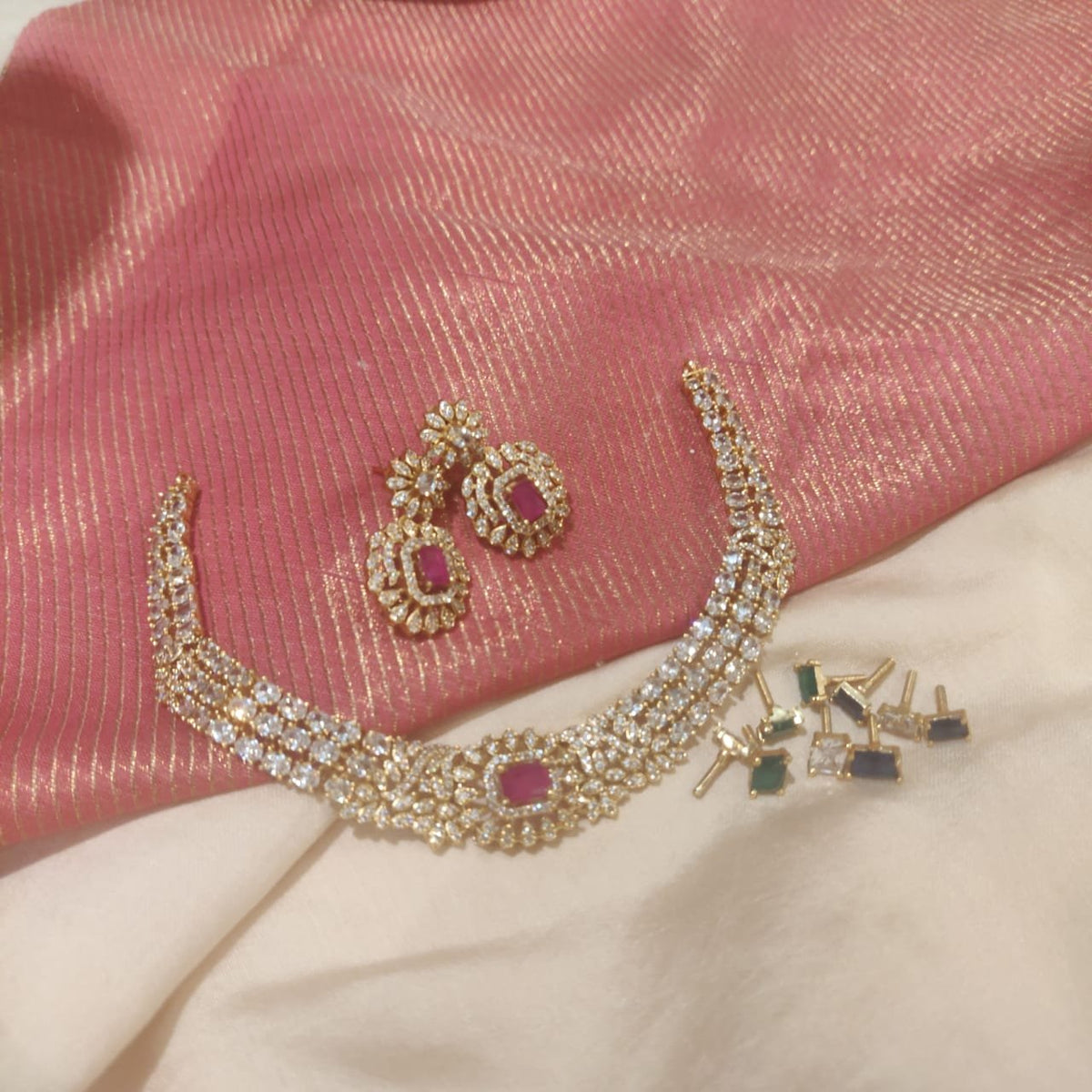
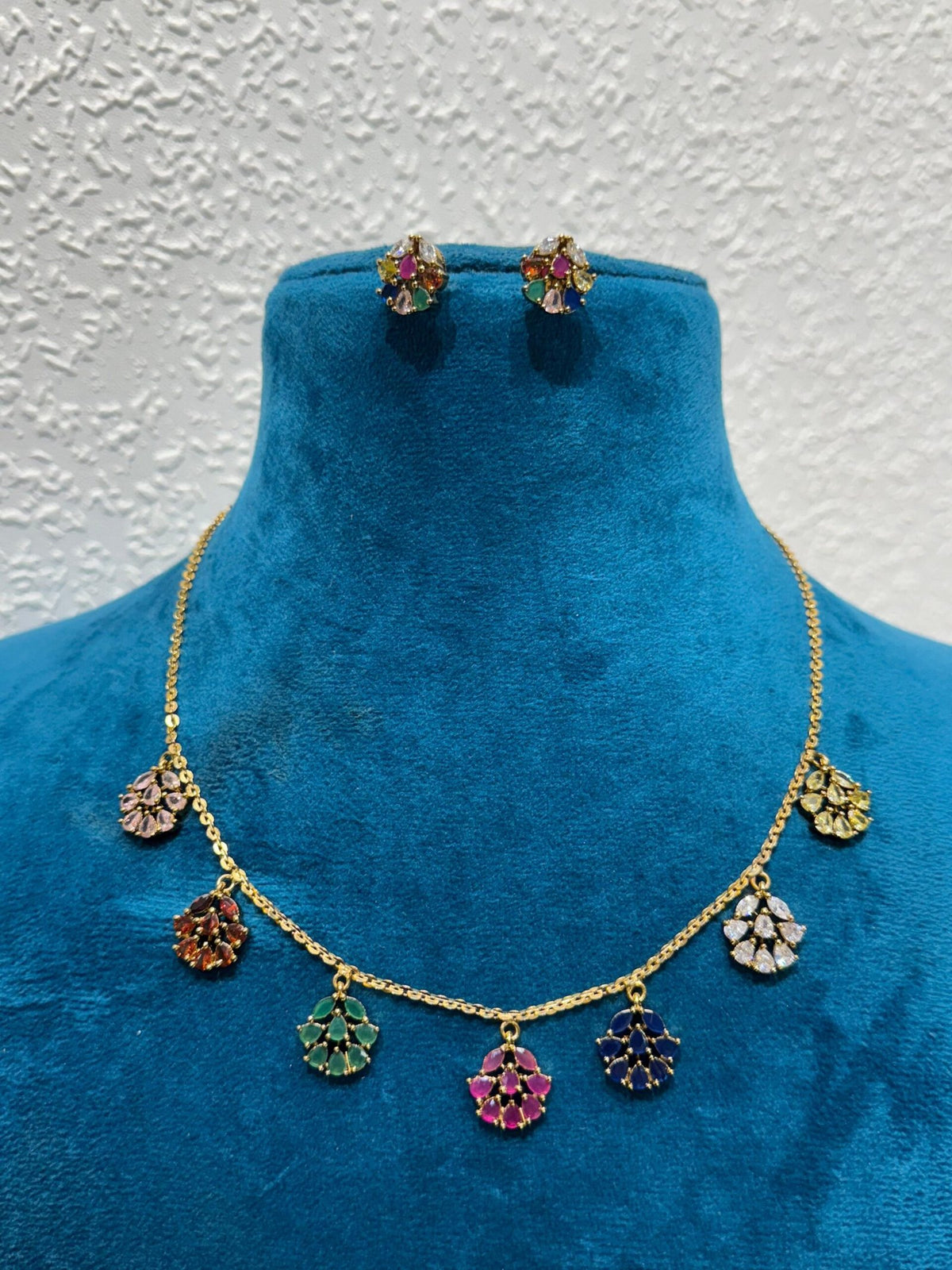
Explore fashion jewellery online for a complete catalogue of Indian ethnic jewellery styles with international shipping to European addresses.
The Indian Jewellery Styles with the Strongest Demand Across Europe
Kundan Sets
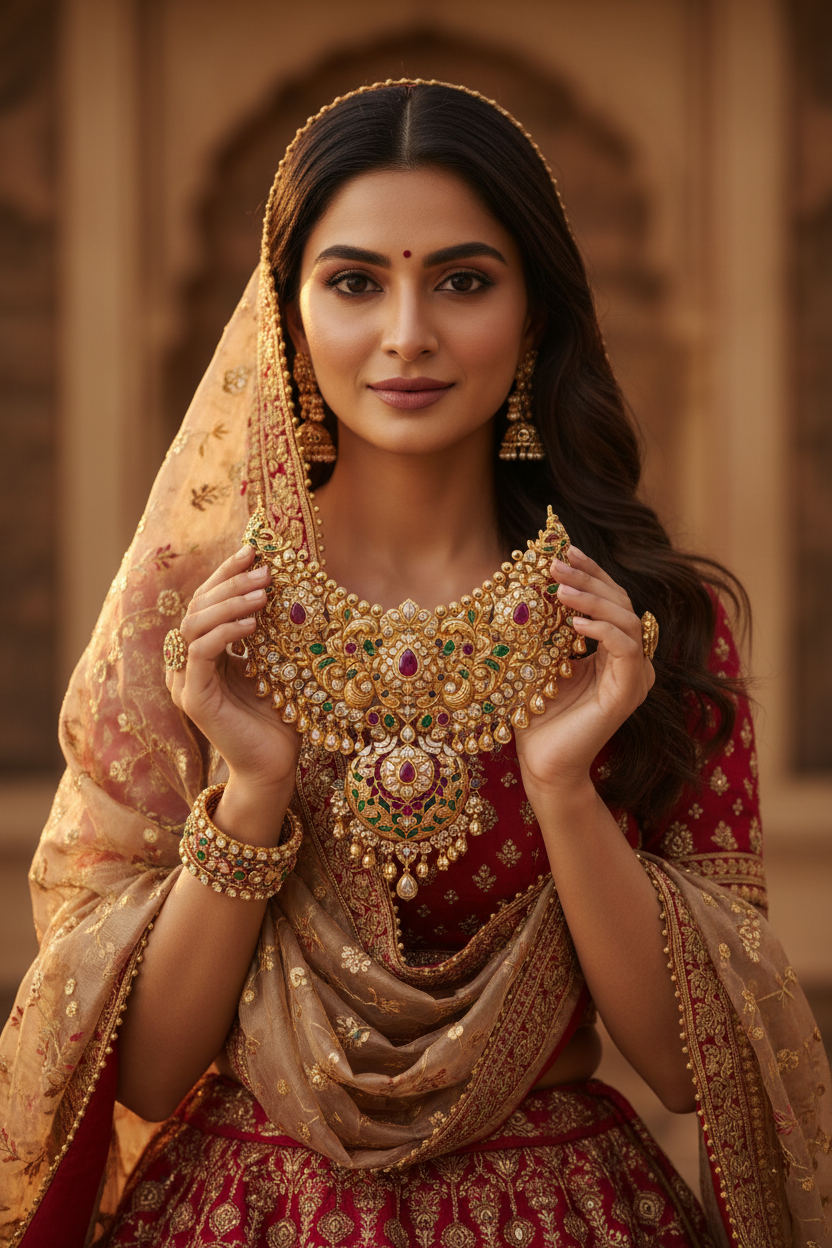
Kundan remains the dominant bridal jewellery choice for Indian families across Europe. Its flat stone settings in gold-toned bases produce the elaborate, photogenic aesthetic associated with Indian wedding ceremonies. Full Kundan bridal sets, including necklace, earrings, and maang tikka, are the most frequently purchased pieces ahead of the European Indian wedding seasons.
The visual weight and formality of Kundan communicate occasion and cultural identity in a way that lighter styles cannot. For diaspora brides who want their European wedding to look and feel authentically Indian, Kundan is the natural starting point.
Temple Jewellery
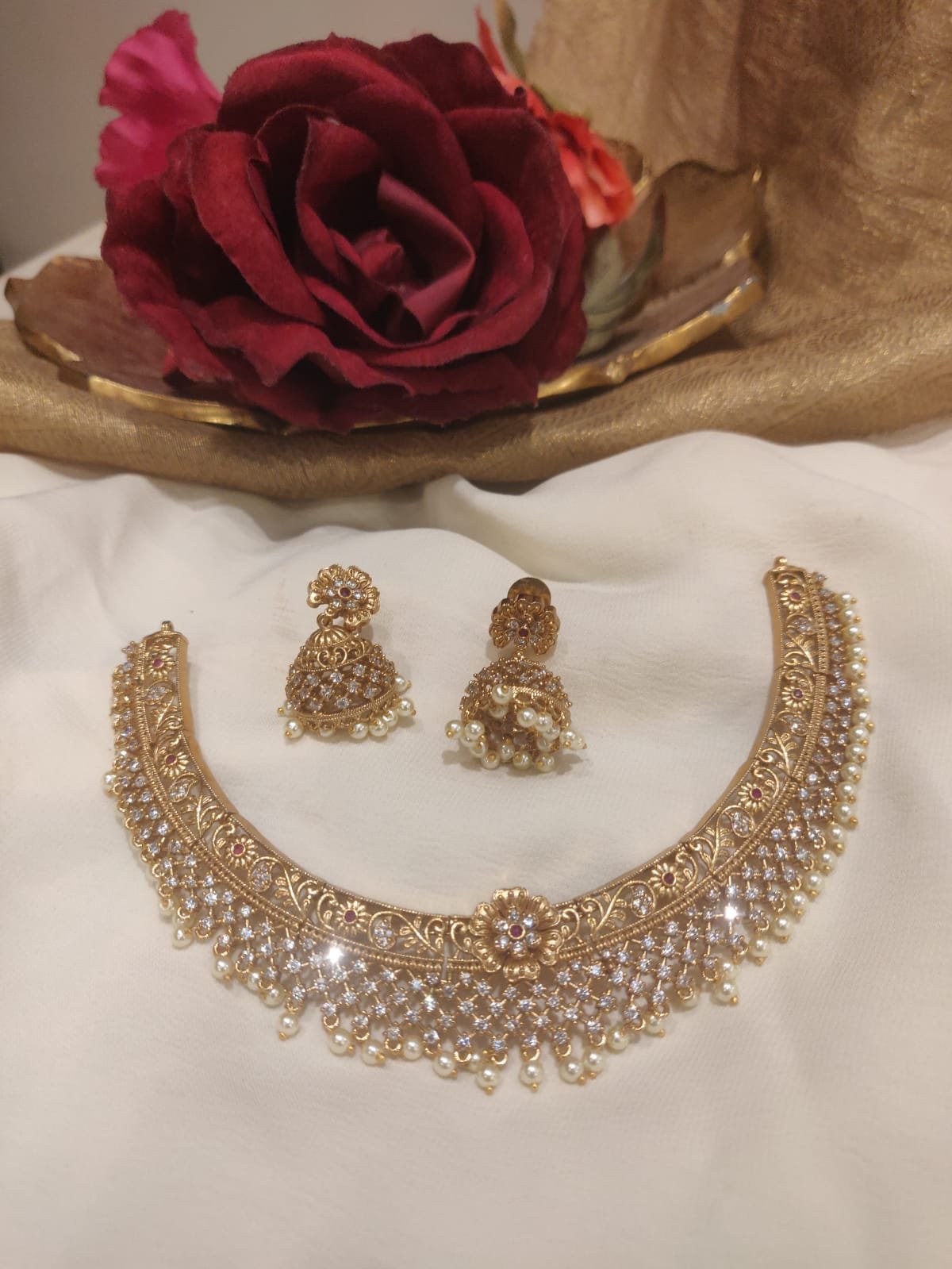
South Indian communities across Europe, particularly Tamil and Telugu families in Germany, France, Switzerland, and the Netherlands, maintain a consistent demand for temple jewellery. Deity motifs, layered harams, and jimiki earrings define this style. Temple jewellery is also increasingly chosen by non-South Indian brides as a distinctive alternative to the more widely seen Kundan look.
American Diamond Sets
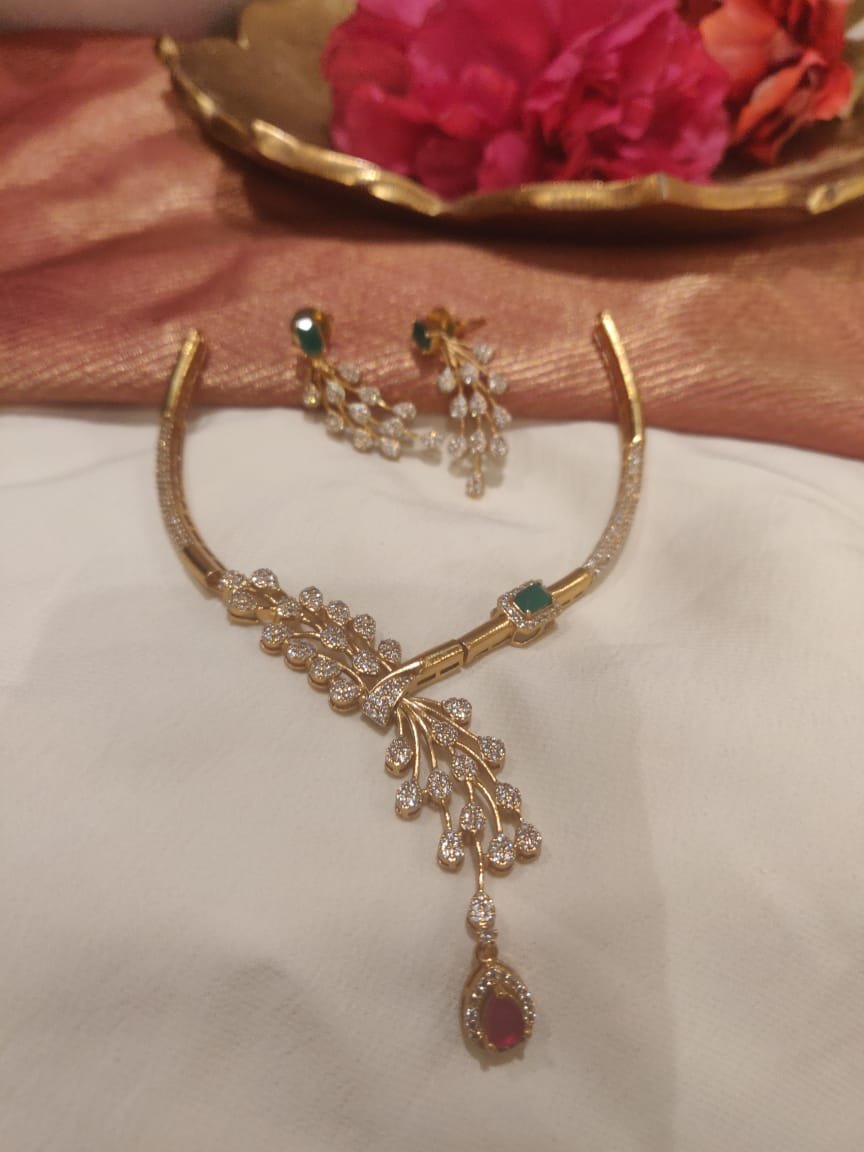
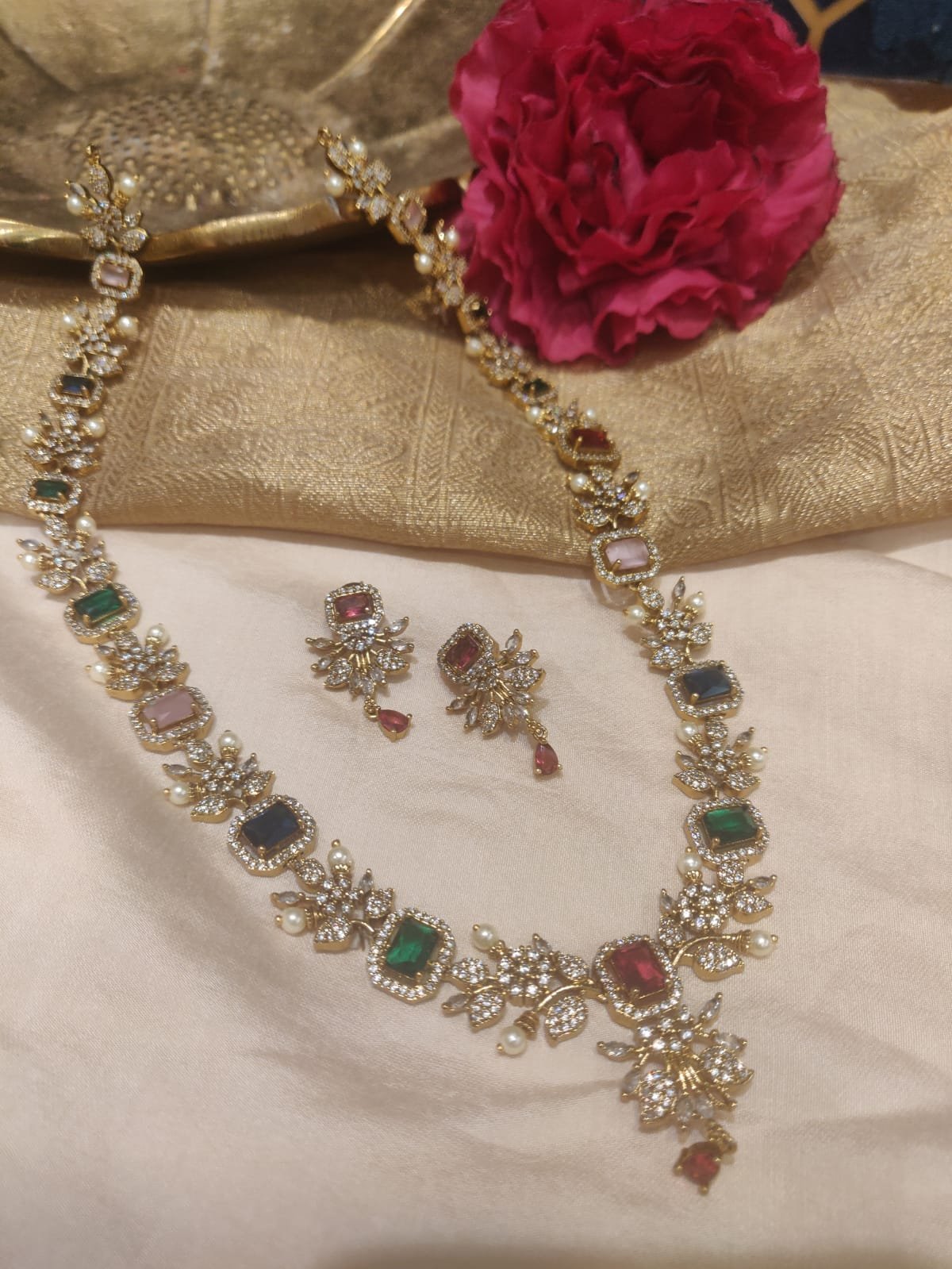
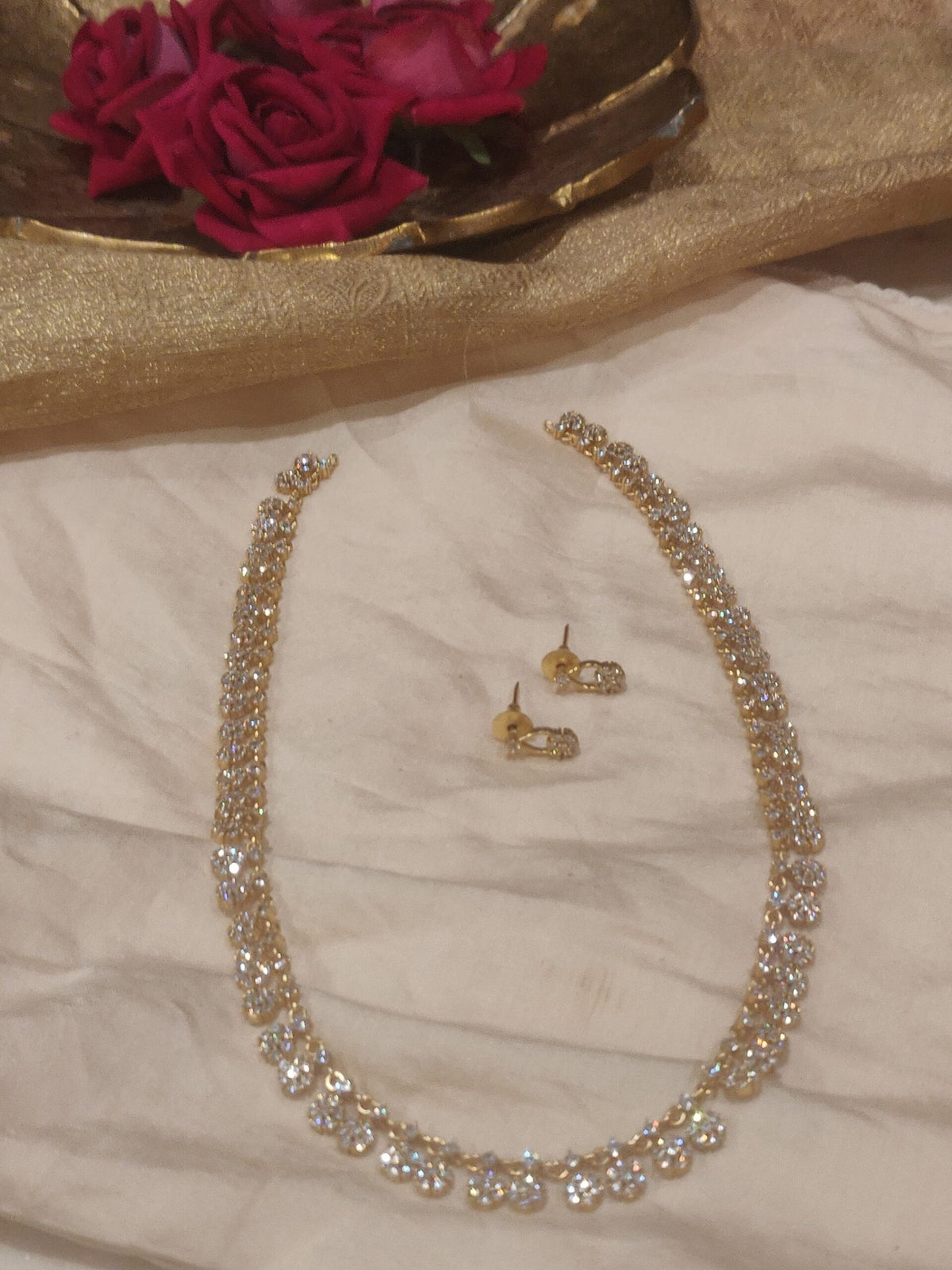
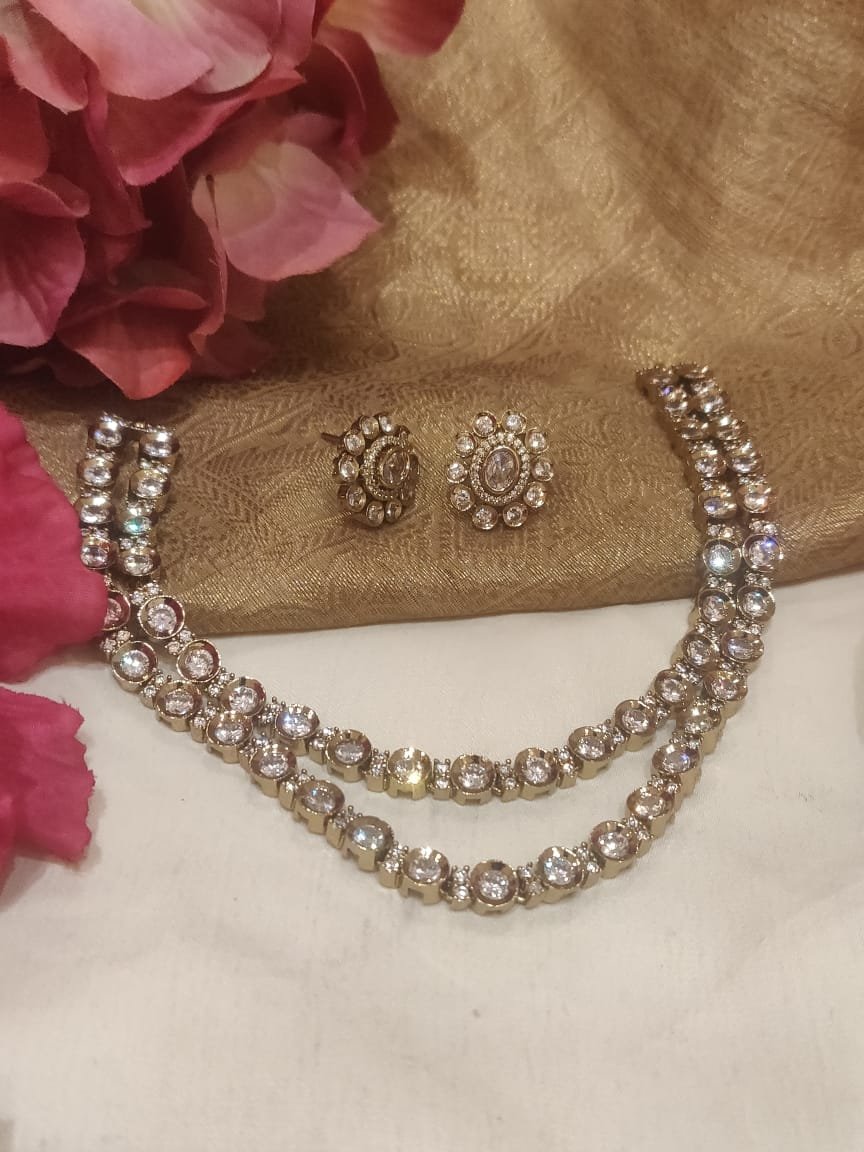
AD jewellery provides visual drama with a contemporary feel. It is particularly popular for sangeet events, and reception looks across European Indian weddings, where a lighter and more modern aesthetic often suits the venue and setting.
Pearl Combinations
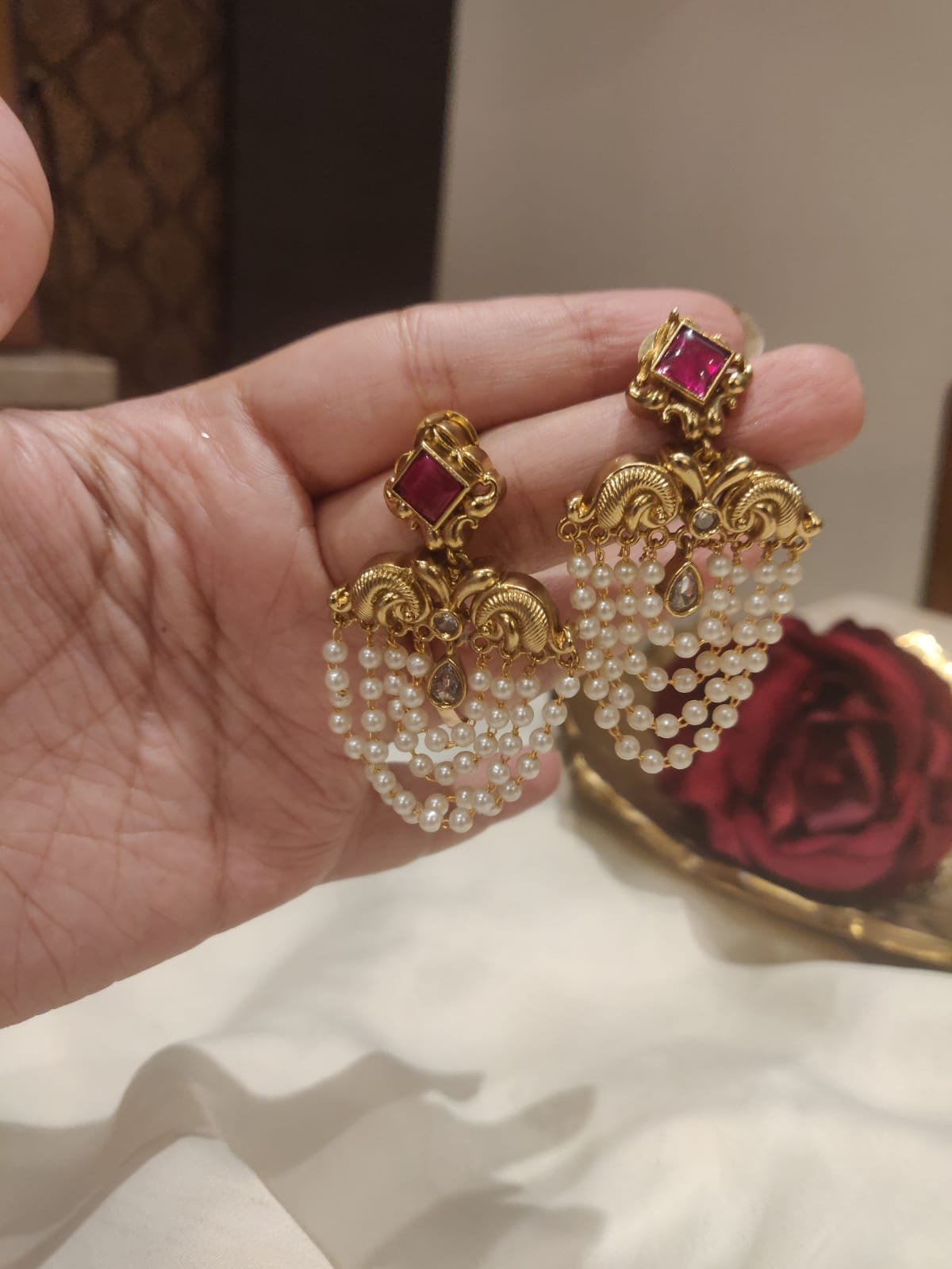
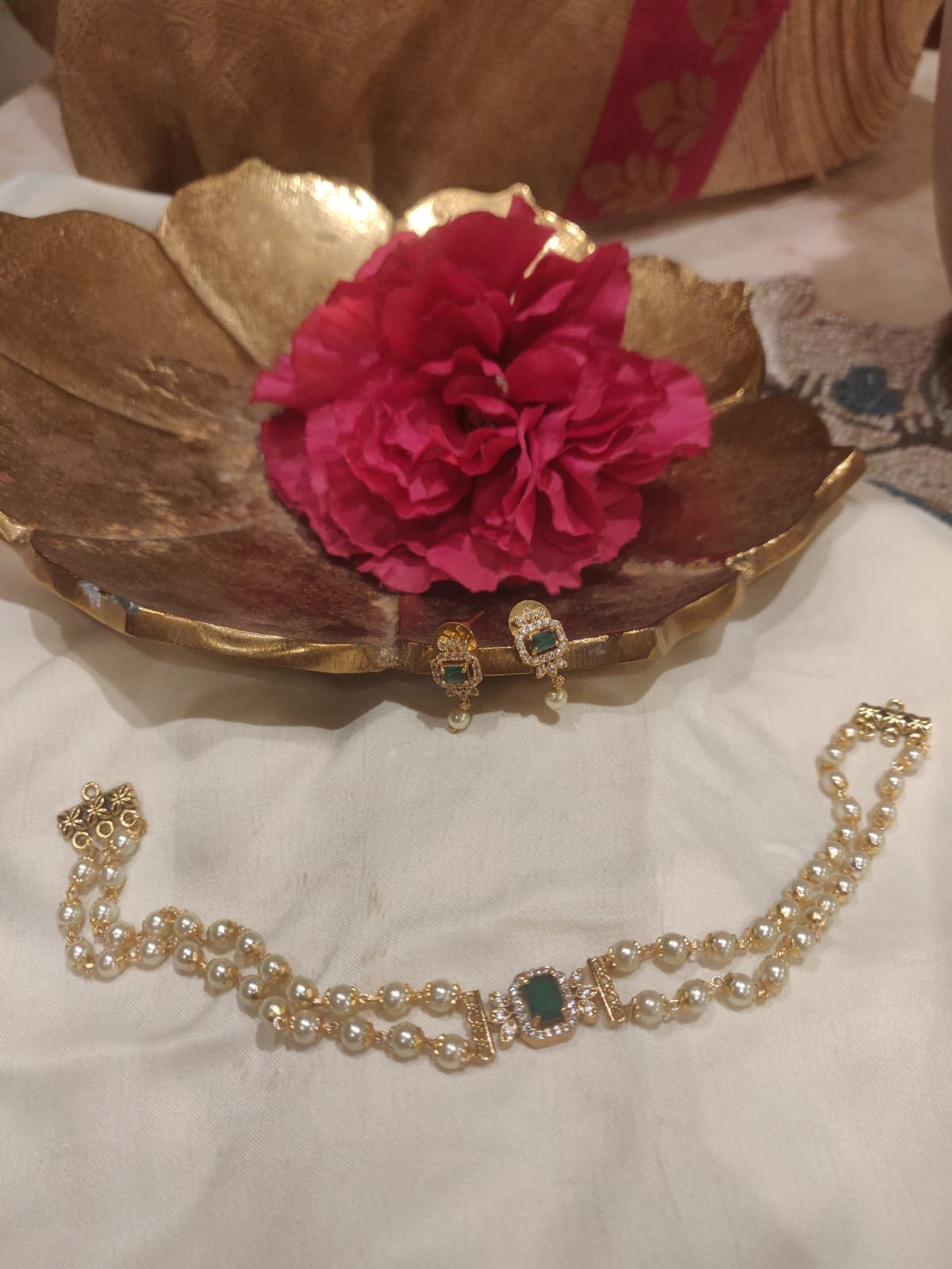
Pearl necklace and earring combinations bridge traditional and contemporary aesthetics. They work across wedding receptions, cultural programs, saree occasions, and semi-formal events, making them one of the most practically useful investments in a European NRI woman's jewellery wardrobe.
A pearl necklace and earring set covers more occasions with a single purchase than almost any other Indian jewellery style.
The Indian Event Calendar Across Europe: When People Shop
Understanding when the demand peaks helps you plan purchases without last-minute shipping pressure.
Spring and early summer (April to June): The Indian wedding season in Europe concentrates in spring and early summer. Frankfurt, Amsterdam, Paris, and Zurich all see significant Indian wedding activity during this period. Bridal and wedding guest jewellery should be ordered at minimum eight weeks ahead.
September to October: Navratri drives festive jewellery purchases across the European Indian community. Garba events in European cities attract significant attendance and call for colourful festive jewellery in gold tones and stone accents.
October to November: Diwali celebrations in European cities produce consistent demand for bangles, jhumkas, and festive necklace sets. Order Diwali jewellery by mid-September to avoid delays.
Year-round: Raksha Bandhan, Eid, birthday gifting, and baby shower purchases create demand for earrings and bangle sets across all months.
For bangles that complete festive and bridal looks across the European Indian event calendar, browse traditional gold bangle designs.
Practical Guide: Buying Indian Jewellery Online from Europe
Shopping for Indian jewellery from mainland Europe requires more planning than shopping from within India. The following checklist covers the practical steps worth completing before placing any order.
Shipping confirmation:
-
Confirm the brand ships to your specific European country
-
Note the estimated delivery window to your country
-
Identify whether the brand uses a tracked or untracked international shipping method
Customs and import duties:
-
European Union imports from outside the EU are subject to customs duties and VAT above the de minimis threshold
-
As of 2021, the EU removed the EUR 22 VAT exemption, meaning all imports from outside the EU are now subject to VAT regardless of value
-
Orders above EUR 150 may also attract customs duties, depending on the product category
-
Check the European Commission's customs website or your national customs authority for the current applicable rates before placing large orders
Order timing:
-
For bridal purchases: order twelve weeks ahead, minimum
-
For wedding guest jewellery: order six to eight weeks ahead
-
For festive purchases: order six weeks before the event date
Product checks before purchasing:
-
Multiple product images showing different angles
-
Stone setting close-ups visible in product photography
-
Accurate dimensions for necklaces and earring drops
-
Confirmation of set inclusions in the product description
Building a Practical Indian Jewellery Wardrobe for European Life
The practical reality of Indian diaspora life in Europe is that you attend fewer Indian events per year than you would living in India. This makes the collection-building approach more efficient than reactive purchasing.
A practical starting point for European NRI women:
Every day tier:
-
One medium gold-toned jhumka set
-
One simple necklace and earring combination for semi-formal occasions
-
One or two bangle sets in gold tone
Occasion tier:
-
One full bridal or heavy festive set for major events and weddings
-
One statement earring pair for sangeet or reception looks
-
One complete festive set for Navratri and Diwali
Gifting tier:
-
Two or three small earring or bangle sets for birthdays, Raksha Bandhan, and Diwali gifting
Emporia Jewels organises its Indian jewellery collections by occasion type, making it practical for European shoppers to navigate by event rather than browsing an unstructured catalogue.
Explore designer jewellery online for curated Indian jewellery sets with detailed product information suited to international buyers across Europe.
Frequently Asked Questions
Q1: Can I get Indian jewellery delivered to mainland Europe?
Yes. Several Indian D2C brands, including Emporia Jewels, offer international shipping across European countries. Check the brand's website for current delivery zones and timelines.
Q2: Are there customs duties on Indian jewellery ordered to the EU?
Yes. All imports into the EU from outside the EU are now subject to VAT, and orders above EUR 150 may attract additional customs duties. Check your national customs authority or the European Commission website for current applicable rates.
Q3: How early should I order Indian bridal jewellery for a European wedding?
Order at least ten to twelve weeks before your wedding ceremony to account for international shipping, transit delays, and any issues that need to be resolved before the event.
Q4: What Indian jewellery styles are most popular among European Indian diaspora shoppers?
Kundan sets, temple jewellery, American Diamond sets, pearl combinations, and jhumkas are consistently the most purchased styles across European Indian communities.
Q5: What occasions drive Indian jewellery purchases in Europe?
Indian wedding seasons in spring and early summer, Navratri in autumn, Diwali in October and November, Raksha Bandhan, Eid, and personal gifting occasions are the primary purchase drivers.
Q6: Is Indian fashion jewellery suitable for Indian weddings held in European venues?
Yes. High-quality fashion jewellery is widely used by brides and guests at Indian weddings in European venues and is a culturally accepted and practical choice