

How to Style Oxidized Jewelry: The Modern Indian Buyer's Complete Pairing Guide
Oxidized jewelry sits at the intersection of heritage craft and contemporary fashion. Its darkened silver finish, achieved through controlled tarnishing, creates contrast that polished metals simply cannot replicate. This guide gives you concrete pairing rules, outfit formulas, and care decisions so every piece you wear lands with intention.
Understanding Oxidized Jewelry Before You Style It
What the Oxidation Process Actually Does to Metal
Oxidized jewelry is typically sterling silver or German silver treated with potassium sulfide or liver of sulfur, which accelerates surface tarnishing to create a deliberate blackened patina. The darkened recesses highlight engraved motifs, tribal patterns, and floral textures in ways that bright-polished silver cannot. This is why oxidized pieces carry such strong visual depth, especially in traditional Indian designs like Rajasthani jhumkas, Kolhapuri necklaces, and Chandbali earrings. Shoppers exploring fancy artificial jewellery will find oxidized finishes among the most texturally rich options available.
Oxidized vs. Antique vs. Blackened: Know the Difference
Many buyers confuse oxidized, antique-finish, and blackened jewelry, but the distinctions matter when shopping online. Antique-finish pieces often use gold-plated bases with a brown-toned patina, while true oxidized jewelry uses silver-toned metal with a grey-to-black surface treatment. Knowing this helps you match the right finish to your outfit palette and avoid mismatched undertones.
|
Finish Type |
Base Metal |
Tone |
Best Outfit Palette |
|
Oxidized Silver |
Sterling / German Silver |
Grey-Black |
Earthy, jewel tones, white |
|
Antique Gold |
Gold-plated brass |
Warm Brown |
Mustard, red, maroon |
|
Blackened Metal |
Brass or copper |
Deep Black |
Monochrome, dark florals |
How to Style Oxidized Jewelry With Different Outfits
Pairing Oxidized Pieces With Traditional Indian Wear
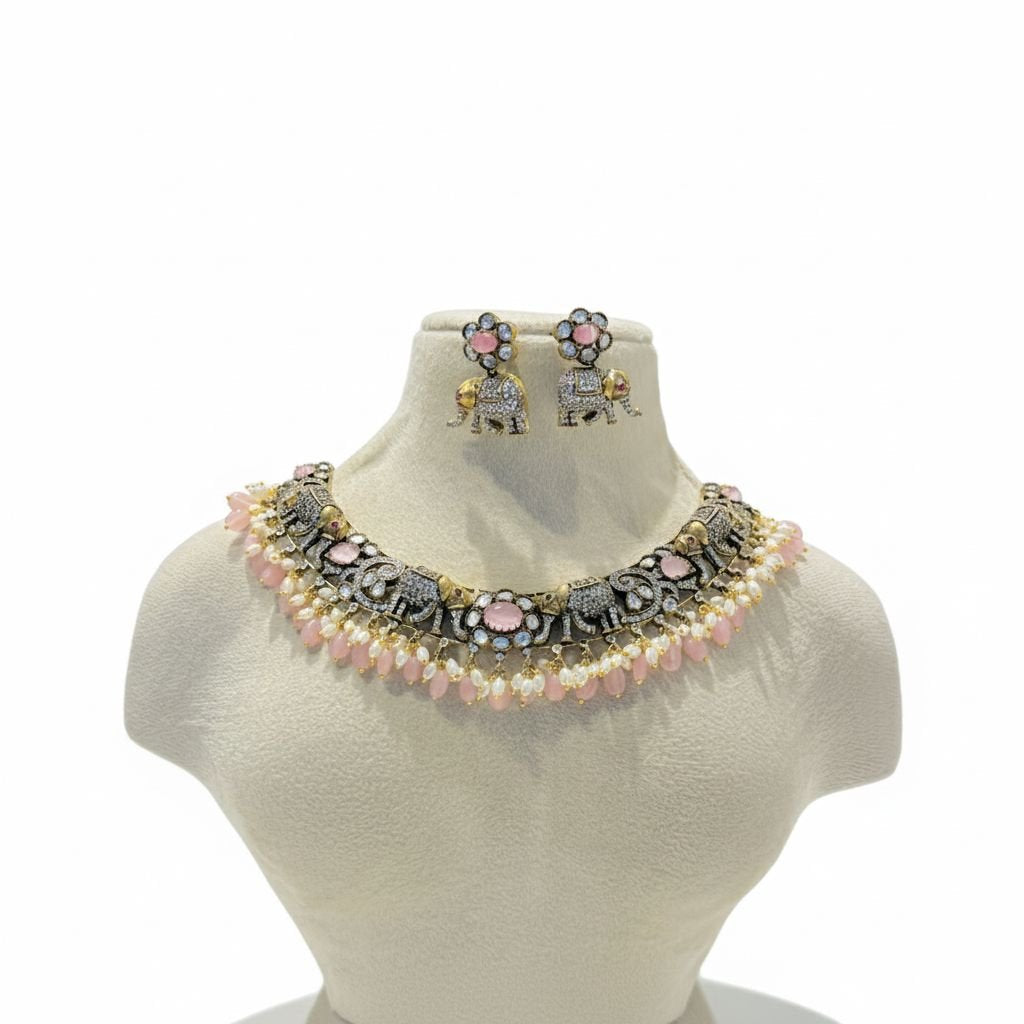
Oxidized jewelry was built for Indian ethnic silhouettes. Heavy oxidized necklaces pair best with low-neck or boat-neck kurtas in solid colors, particularly terracotta, indigo, forest green, and off-white, because the dark metal pops against muted, earthy backgrounds. For sarees, keep the blouse simple and let a statement oxidized choker or layered necklace carry the visual weight, avoiding competition with heavy embroidery at the border. A pearl necklace and earring set in an oxidized finish offers a particularly elegant option for saree styling.
Styling Oxidized Jewelry With Western and Fusion Outfits
The most underused styling move in 2026 is pairing oxidized earrings with minimalist western silhouettes: a white linen shirt, a satin slip dress, or a structured blazer. The contrast between the raw, textured metal and clean fabric creates a high-low tension that reads as intentional and editorial. Stick to one statement oxidized piece per look when going western, since the finish is bold enough to anchor an entire outfit on its own.
-
White or cream outfits: choose oxidized jhumkas or long drop earrings for maximum contrast. For more information, explore the Traditional gold bangle designs.
-
Denim looks: a single oxidized cuff or stacked bangles adds bohemian structure without over-accessorizing.
-
Printed fabrics: keep oxidized jewelry small-scale so patterns and metal do not compete.
-
Monochrome black outfits: layer oxidized necklaces of varying lengths for tonal depth.
The Layering and Proportion Rules That Actually Work
How to Layer Oxidized Necklaces Without Looking Cluttered
Layering oxidized necklaces requires a strict length hierarchy: combine a choker at 14-16 inches, a mid-length piece at 18-20 inches, and a long pendant at 24-28 inches. Because oxidized metal already carries visual weight from its dark finish and textured surface, limit layering to two pieces maximum unless the individual necklaces are very delicate. In practice, three chunky oxidized necklaces stacked together overwhelm the neckline and lose the individual craftsmanship that makes each piece worth wearing. Browsing fashion jewellery online makes it easy to compare lengths and weights before committing to a layered look.
Balancing Earring Size Against Necklace Weight
A reliable proportion rule: heavy oxidized necklace means small or no earrings; statement oxidized earrings mean a minimal or absent necklace. This is not a style opinion but a visual balance principle, since oxidized metal reads heavier than polished silver at the same physical weight due to its matte, light-absorbing surface. Emporia Jewels structures its oxidized collections around this logic, offering coordinated sets where necklace and earring weights are pre-balanced so buyers do not have to guess.
-
Choose your hero piece first: necklace or earrings, not both at full scale.
-
Select the secondary piece at half the visual weight of the hero.
-
Add rings or bangles only if the neckline area is already resolved.
-
Check the full look in natural light before finalizing, since oxidized finishes read differently under artificial lighting.
Caring for Oxidized Jewelry to Preserve Its Styled Look
Cleaning Oxidized Jewelry Without Stripping the Finish
Never use silver polishing cloths or chemical dips on oxidized jewelry, since these products are designed to remove tarnish and will strip the intentional dark patina entirely. Instead, wipe pieces gently with a dry or very slightly damp soft cloth after each wear to remove skin oils and dust. Emporia Jewels recommends this minimal-intervention approach for all its oxidized pieces, and the brand's designer jewellery online product pages include specific care notes so buyers know exactly how to maintain the finish long-term.
|
Care Action |
Safe for Oxidized Jewelry? |
Reason |
|
Dry soft cloth wipe |
Yes |
Removes oils without affecting patina |
|
Silver polishing cloth |
No |
Strips the oxidized surface layer |
|
Mild soap and water (brief) |
Occasionally |
Use only when heavily soiled; dry immediately |
|
Ultrasonic cleaner |
No |
Vibration loosens patina and stone settings |
|
Airtight storage |
Yes |
Slows re-tarnishing between wears |
-
Apply perfume and hairspray before putting on oxidized jewelry, never after. -
Keep pieces away from rubber bands, which accelerate silver tarnishing through sulfur contact.
-
Re-oxidizing is possible at a jeweler if the patina fades unevenly over time.
Frequently Asked Questions
Can oxidized jewelry be worn daily?
Yes, but daily wear requires removing pieces before water exposure and storing them in airtight pouches to slow patina degradation.
Does oxidized jewelry suit all skin tones?
Oxidized silver's cool grey-black tone complements warm and dusky skin tones especially well, creating strong contrast that makes the jewelry stand out.
How do I know if oxidized jewelry is real silver or German silver?
Check the product description for a hallmark or metal specification; genuine sterling silver will carry a 925 stamp, while German silver is a nickel-copper alloy with no silver content.
Where can I shop oxidized jewelry online in India with verified quality?
Emporia Jewels offers a curated oxidized jewelry collection with detailed metal specifications and care guidance, making it a reliable destination for both traditional and fusion styles.
Can I mix oxidized jewelry with gold jewelry in one look?
Mixing is possible but works best when one metal is dominant, and the other is used as a single accent piece to avoid a visually conflicted finish.