

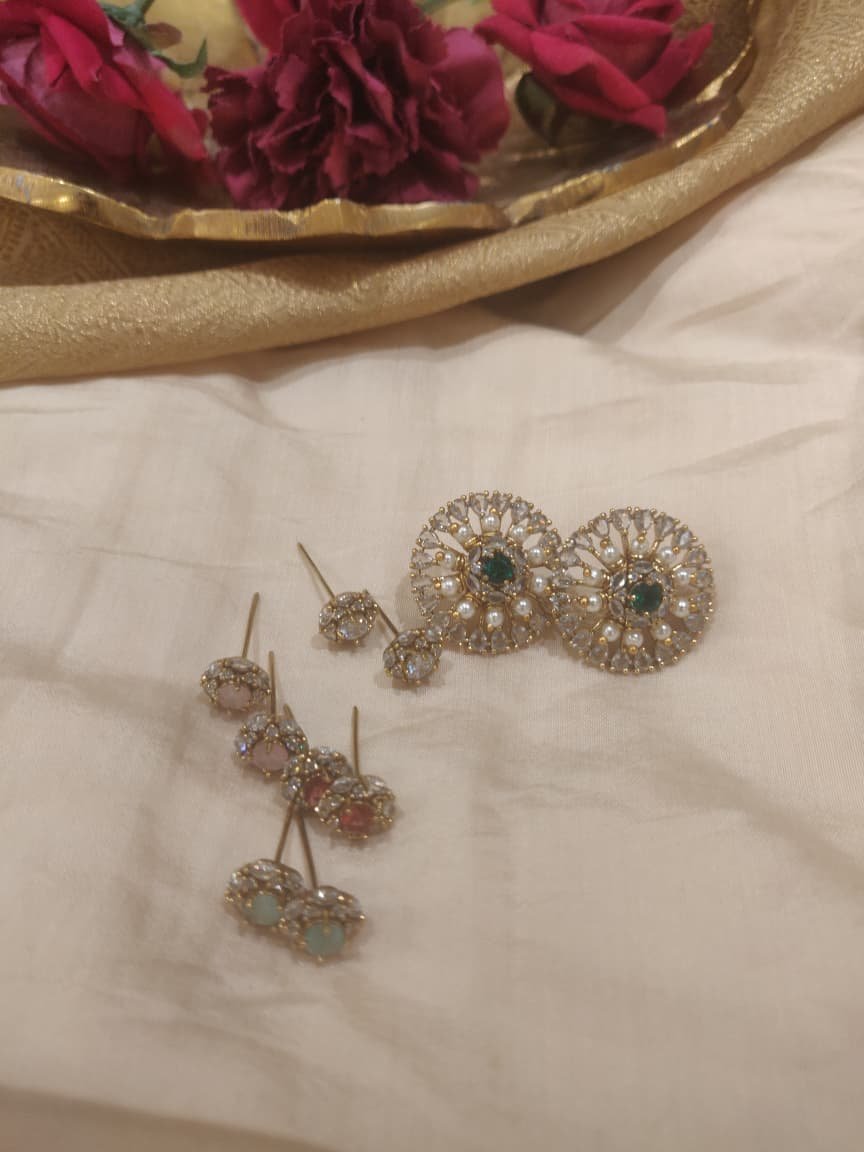
Gold Plated Indian Earrings Australia: What the Finish Really Means and Which Styles Are Worth Buying
The phrase "gold-plated" appears on almost every Indian fashion earring listing you will encounter online. It is one of the most used and least explained terms in the Indian jewellery category. Buyers in Australia see it constantly but rarely understand what it actually means for the piece they are buying: how it looks, how long it lasts, how it should be stored, and which earring styles are worth purchasing in this finish versus those that are not.
This guide fills that gap. We explain what gold plating is, how it differs from other finishes, which Indian earring styles work best in this technique, what quality signals to check before purchasing online, and how to care for gold-plated Indian earrings so they last well in the Australian climate.
What Gold Plating Actually Means on Indian Fashion Earrings
Gold plating is an electroplating process in which a thin layer of gold is bonded to the surface of a base metal. In Indian fashion jewellery, this base metal is most commonly brass, a copper-zinc alloy, or, in some pieces, zinc alloy or white metal.
The key technical facts about gold plating:
-
The gold layer in most Indian fashion jewellery is between 0.5 and 2.5 microns thick
-
The colour, warmth and richness of the gold tone depend on the karat of gold used in the plating solution, with 22-karat plating giving the most traditionally warm Indian gold tone
-
The plating bonds to the base metal surface, but is a separate layer that sits above it
-
Over time, the plating layer can wear through in areas of high contact, revealing the base metal beneath
This is not a flaw of the product. It is the nature of the finish, and it is managed effectively with proper care and handling.
Why Gold Plating Is the Right Finish for Indian Fashion Earrings
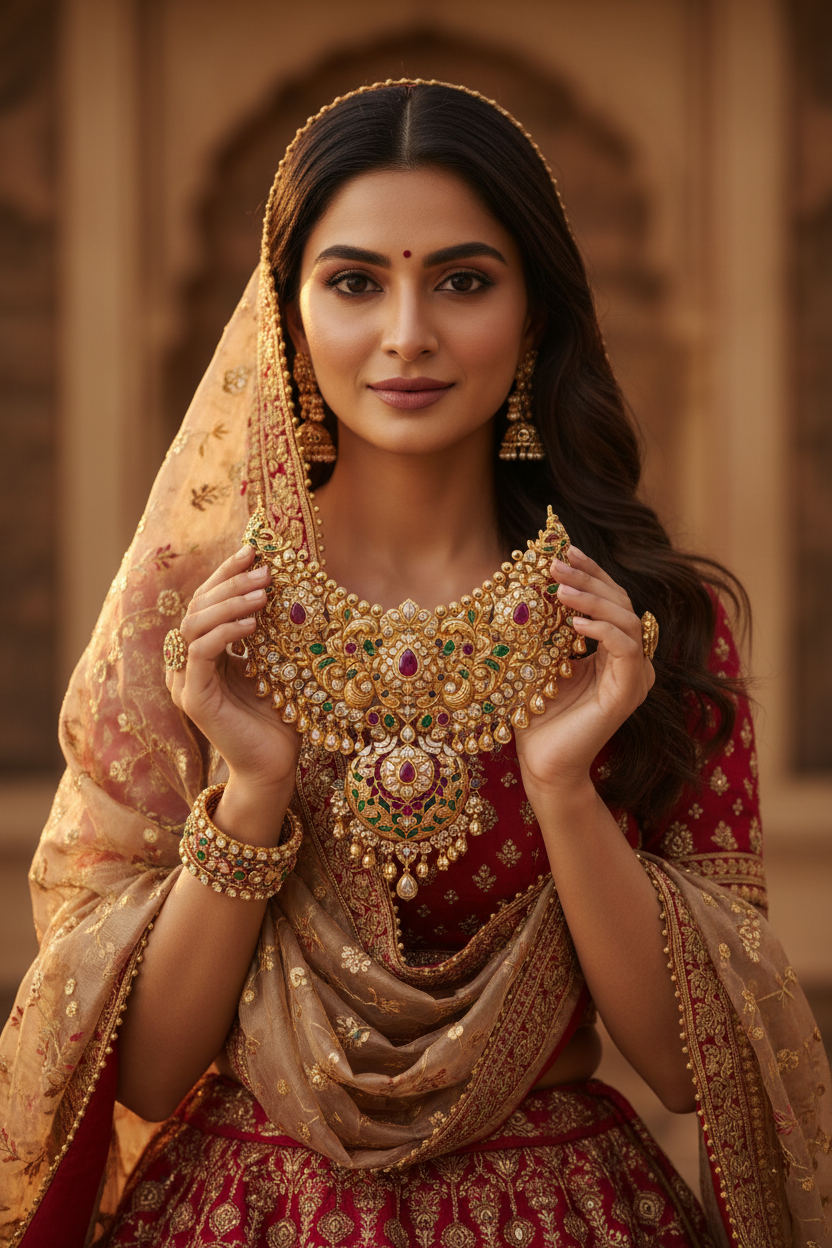
Gold plating is the standard finish for Indian ethnic jewellery for a specific reason: it most accurately replicates the warm, rich yellow tone of 22-carat gold that defines the traditional Indian jewellery aesthetic.
Silver-toned finishes are used in oxidised and contemporary ethnic styles, but for traditional Indian looks involving Kundan, temple jewellery, meenakari, and classic jhumkas, gold tone is the expected and appropriate finish. Gold plating achieves this tone consistently and affordably.
For Australian buyers, this matters because Indian event and wedding aesthetics in the diaspora community mirror what is considered appropriate in India. A silver-toned jhumka at a traditional Indian wedding reception in Melbourne is an unusual choice. A gold-toned one is the default.
Which Indian Earring Styles Come in Gold-Plated Finishes?
Almost every traditional Indian earring style uses a gold-plated finish. The most popular include:
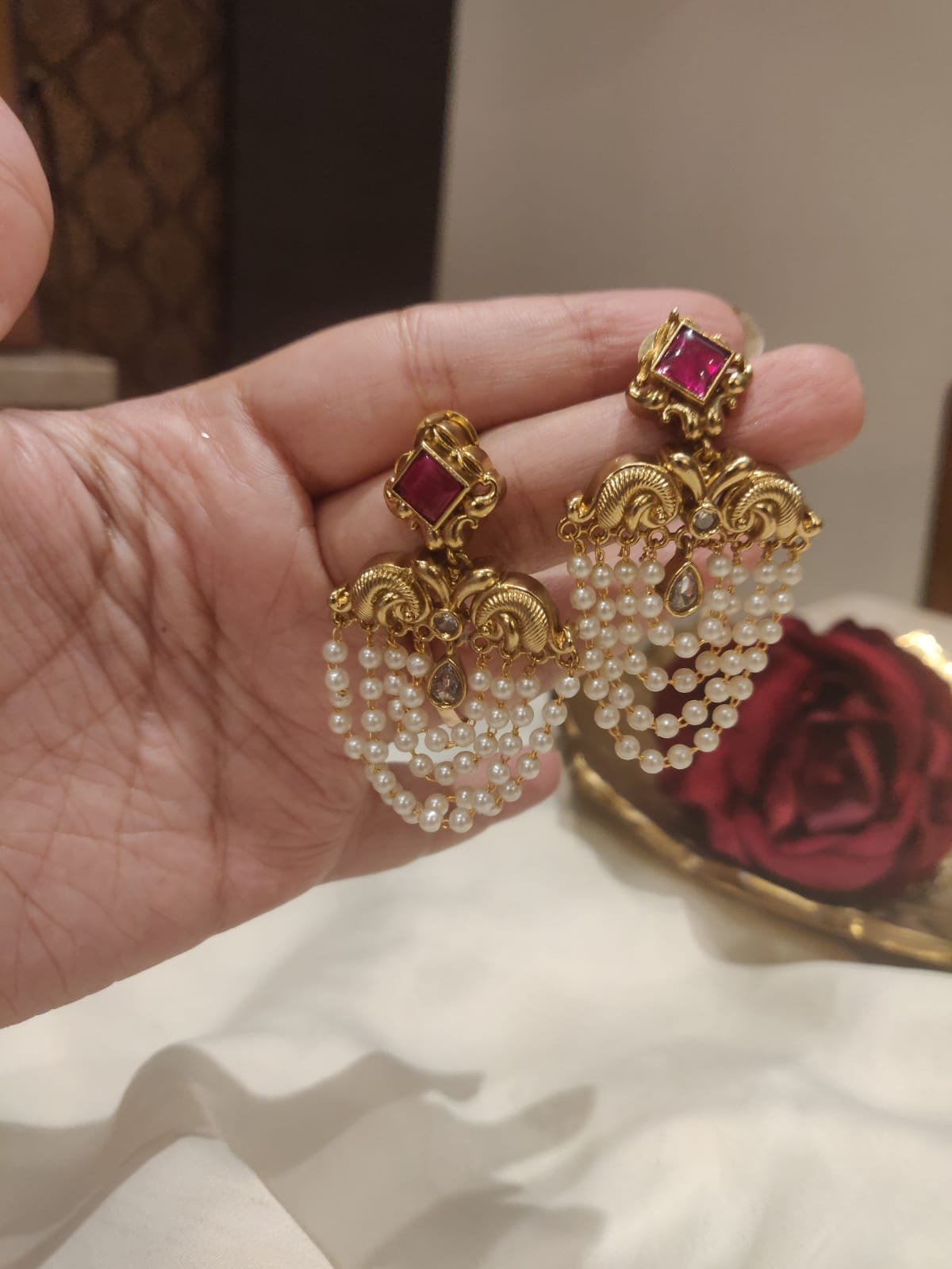
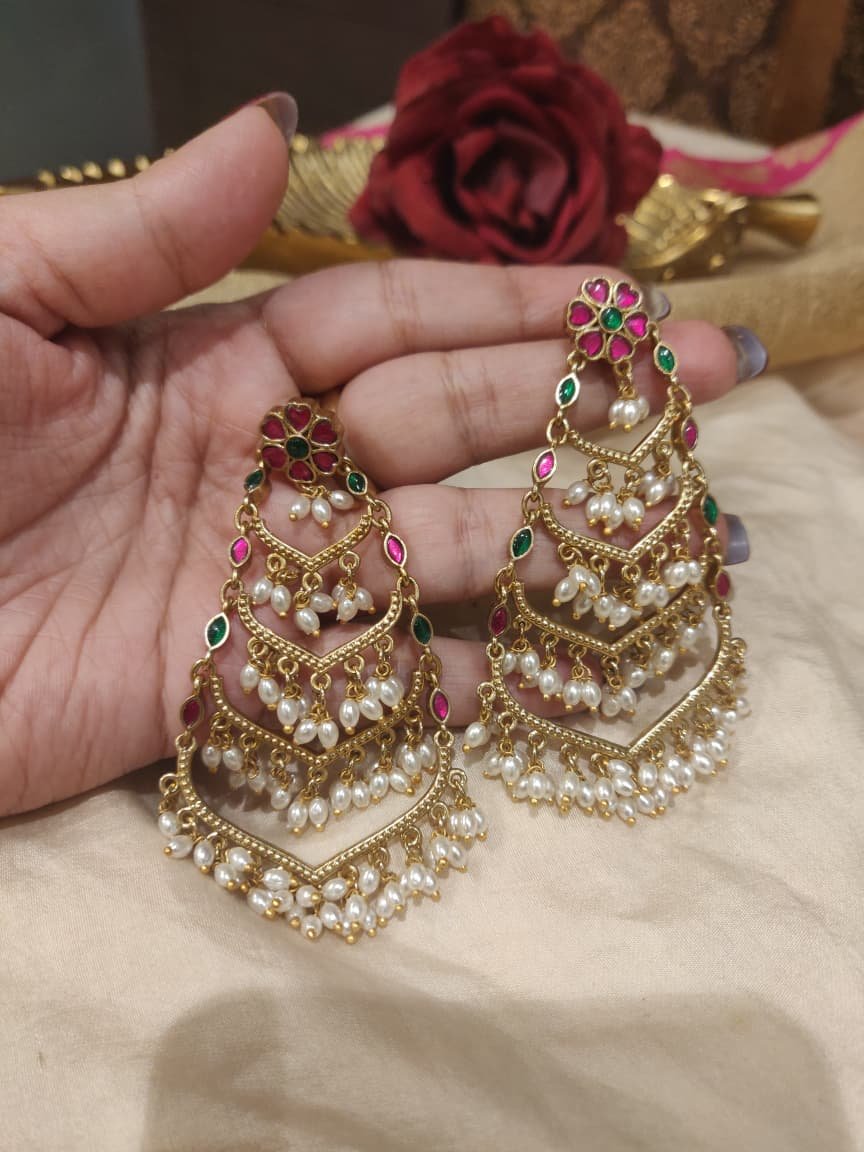
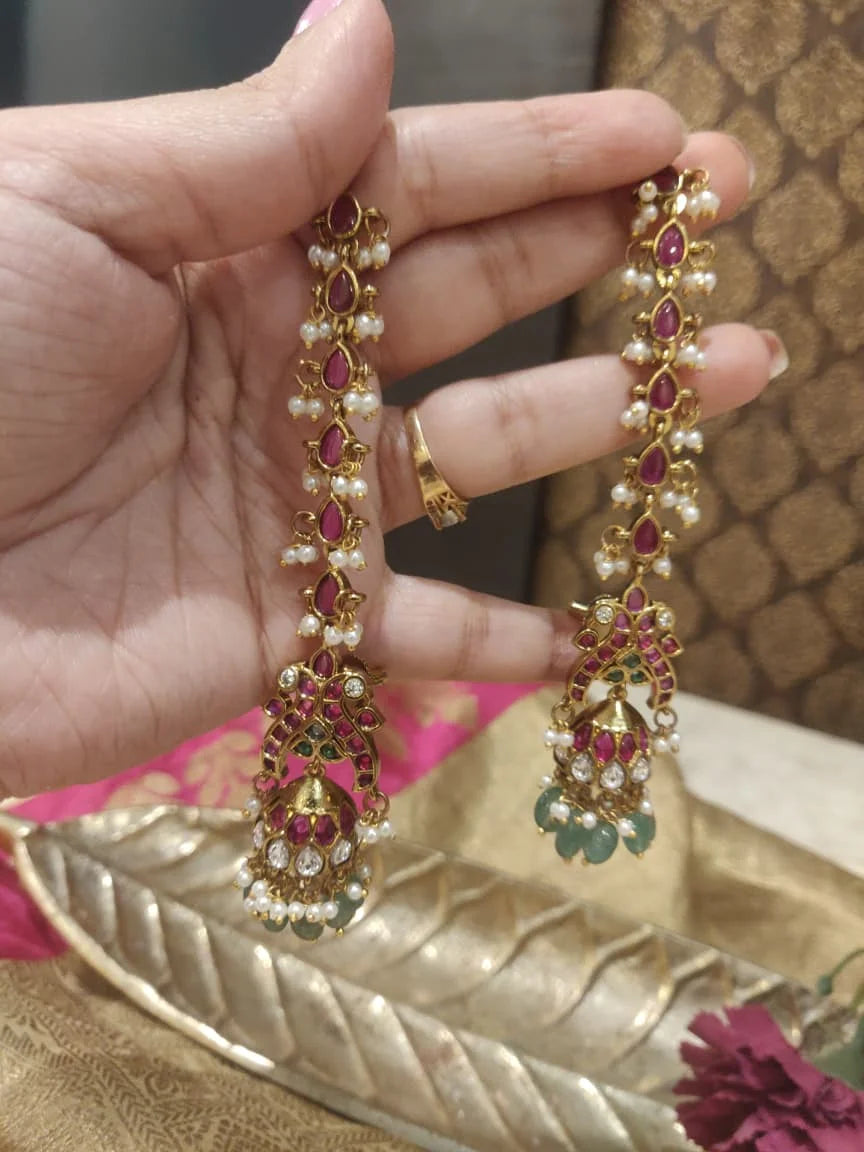
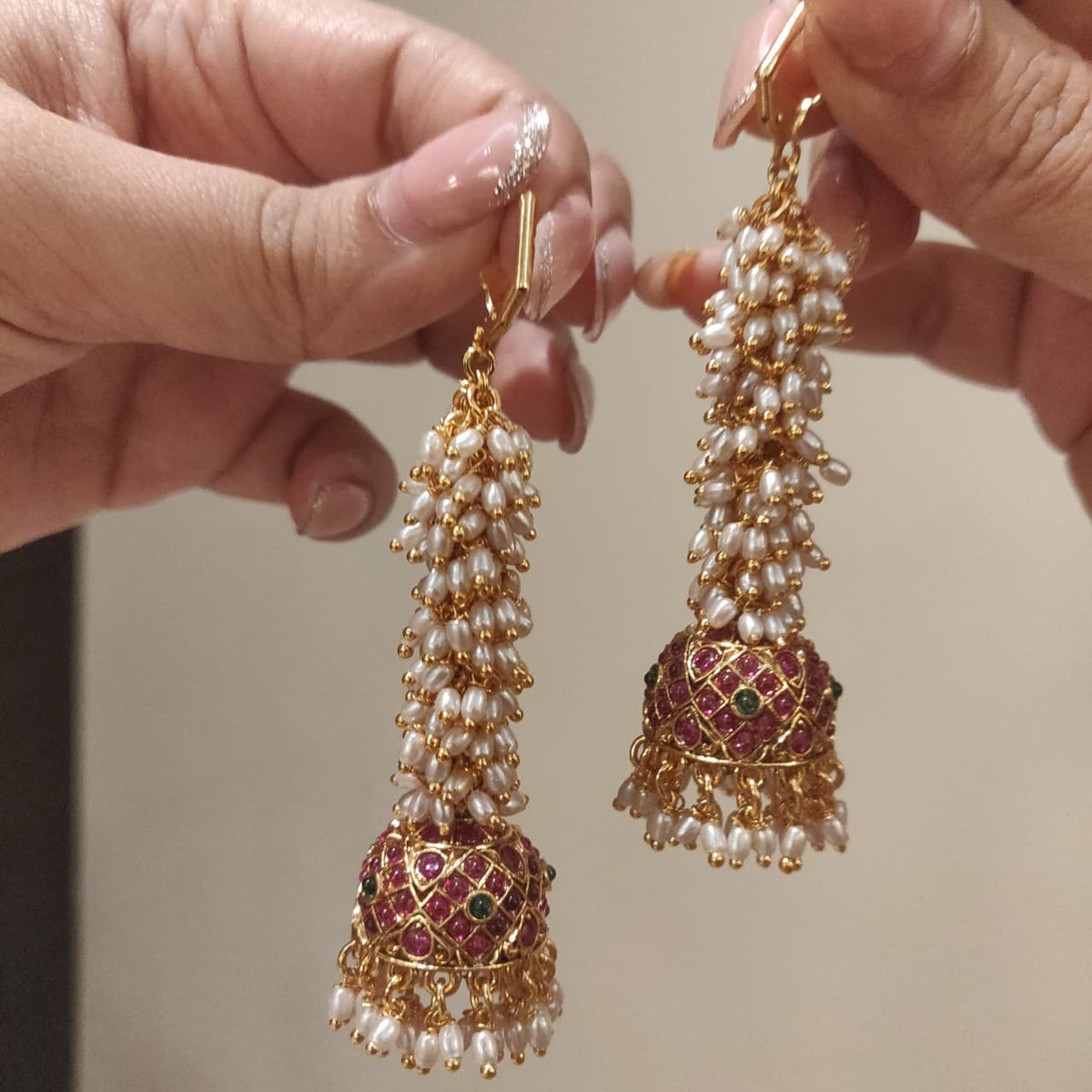
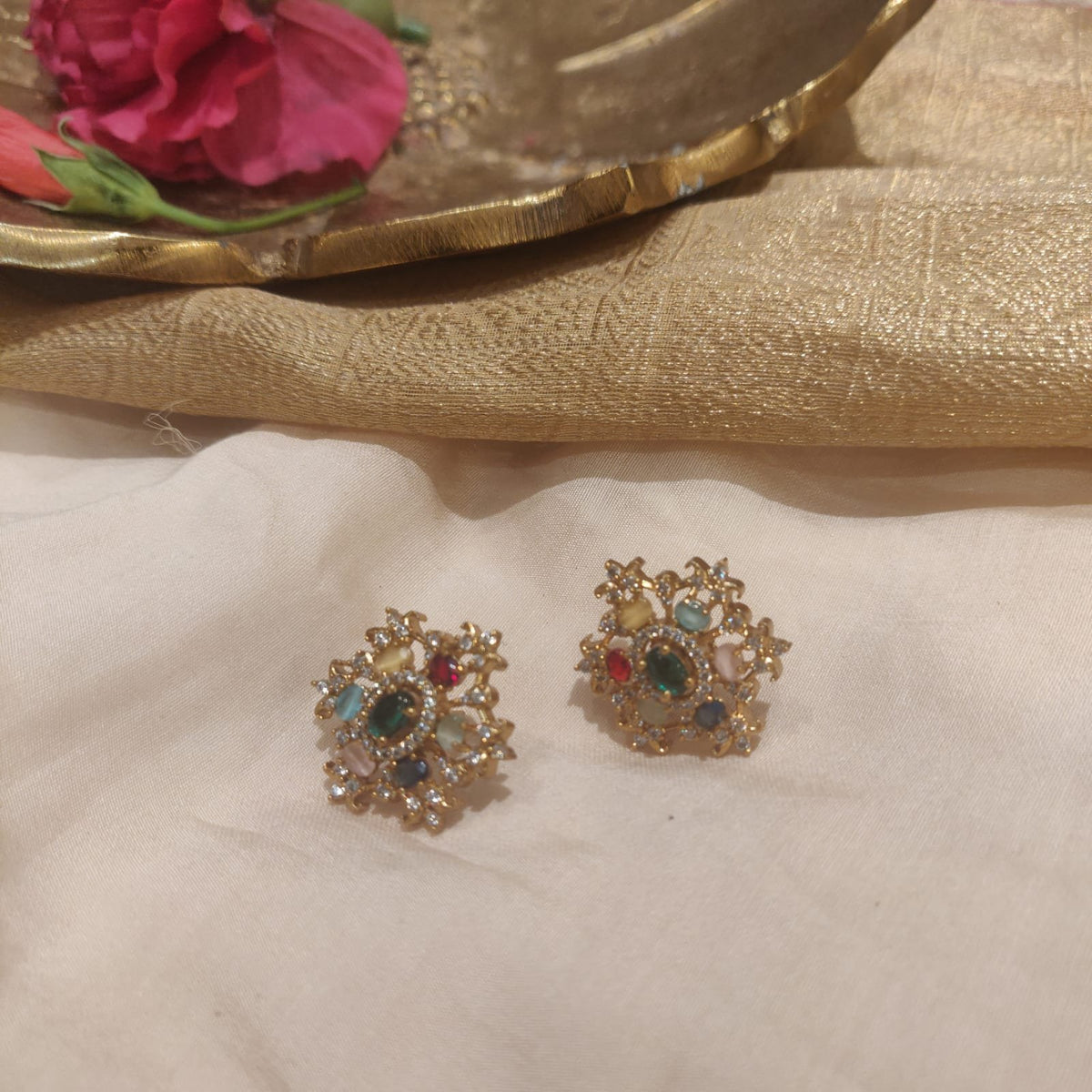
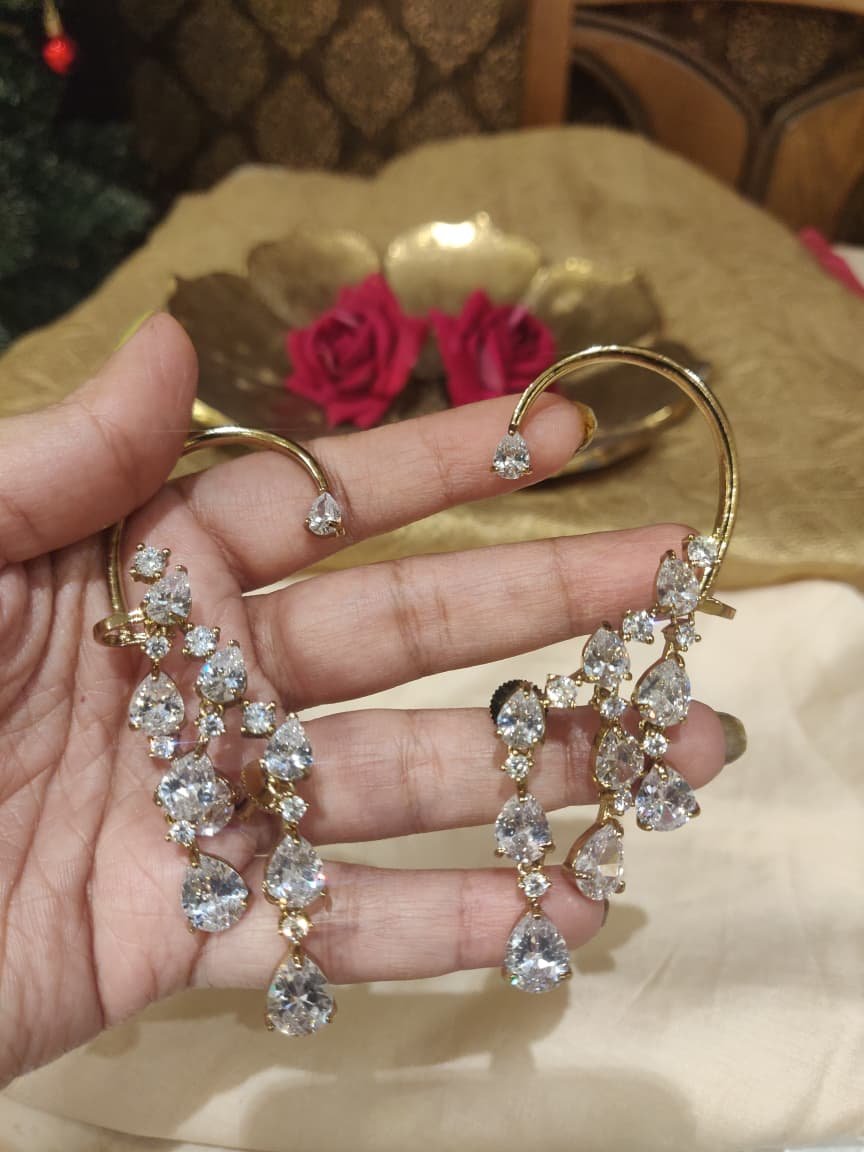
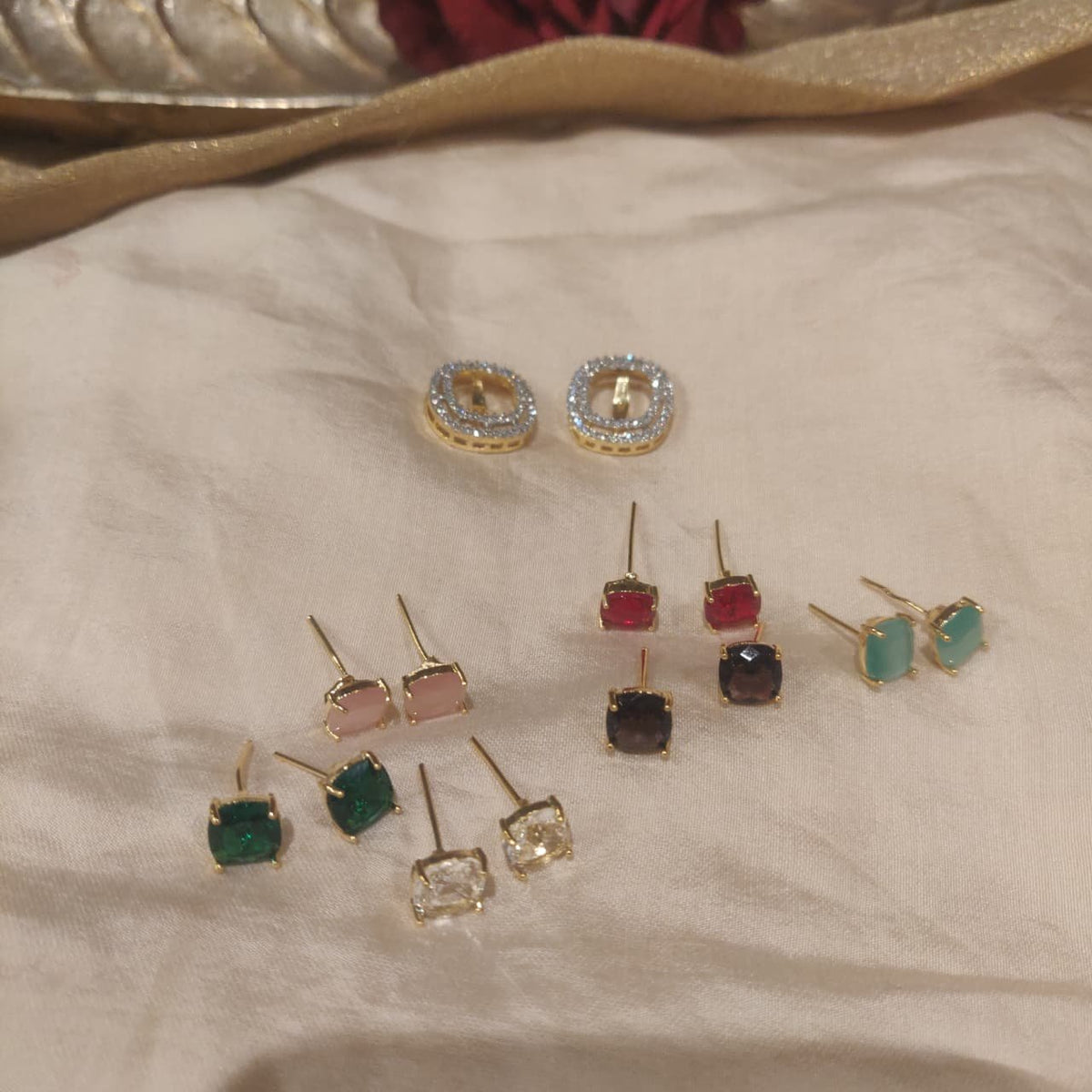
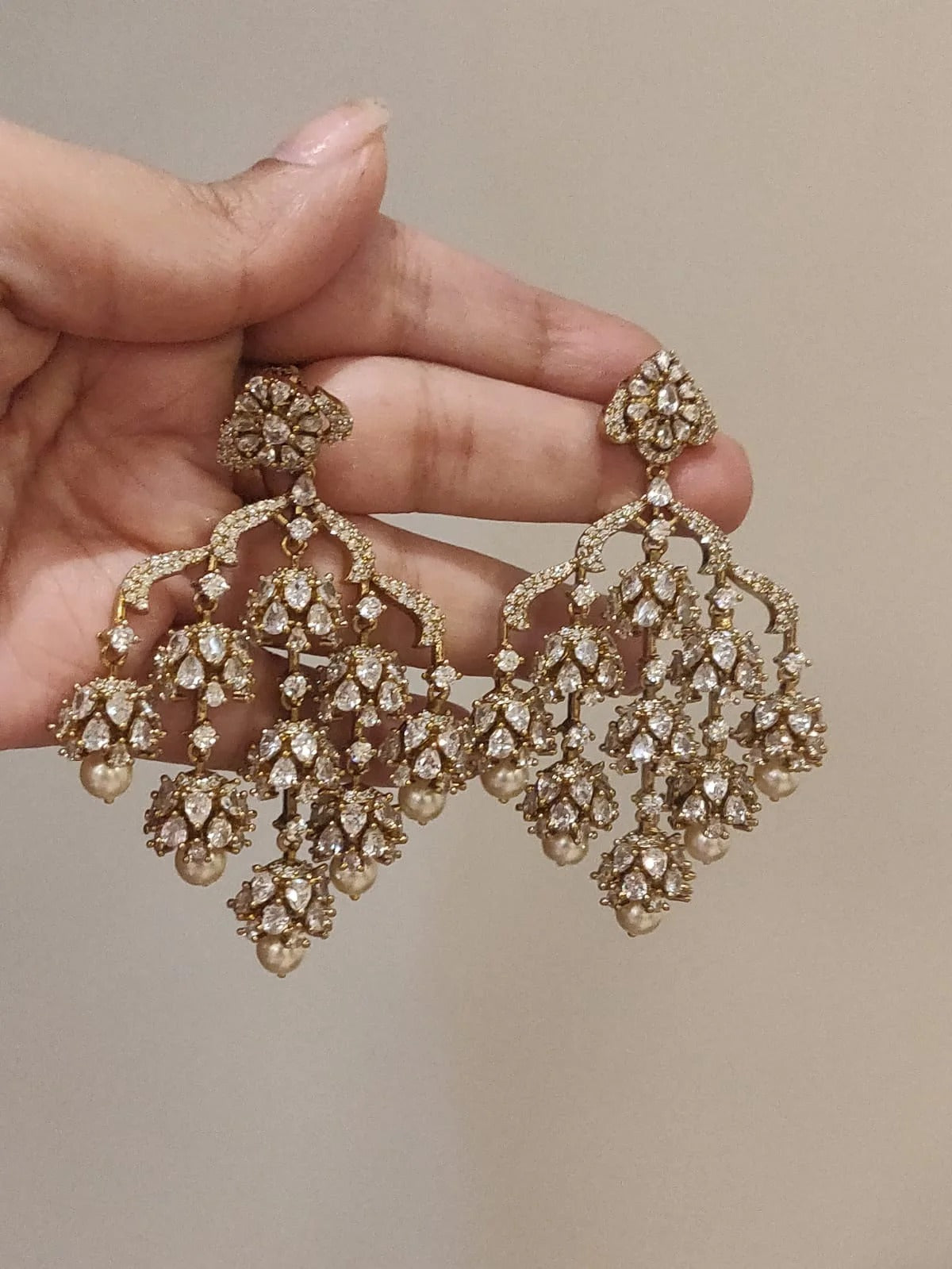
Jhumkas: The most universally worn gold-plated Indian earring. Small everyday jhumkas through to large chandelier styles all use gold-toned plating as their standard finish.
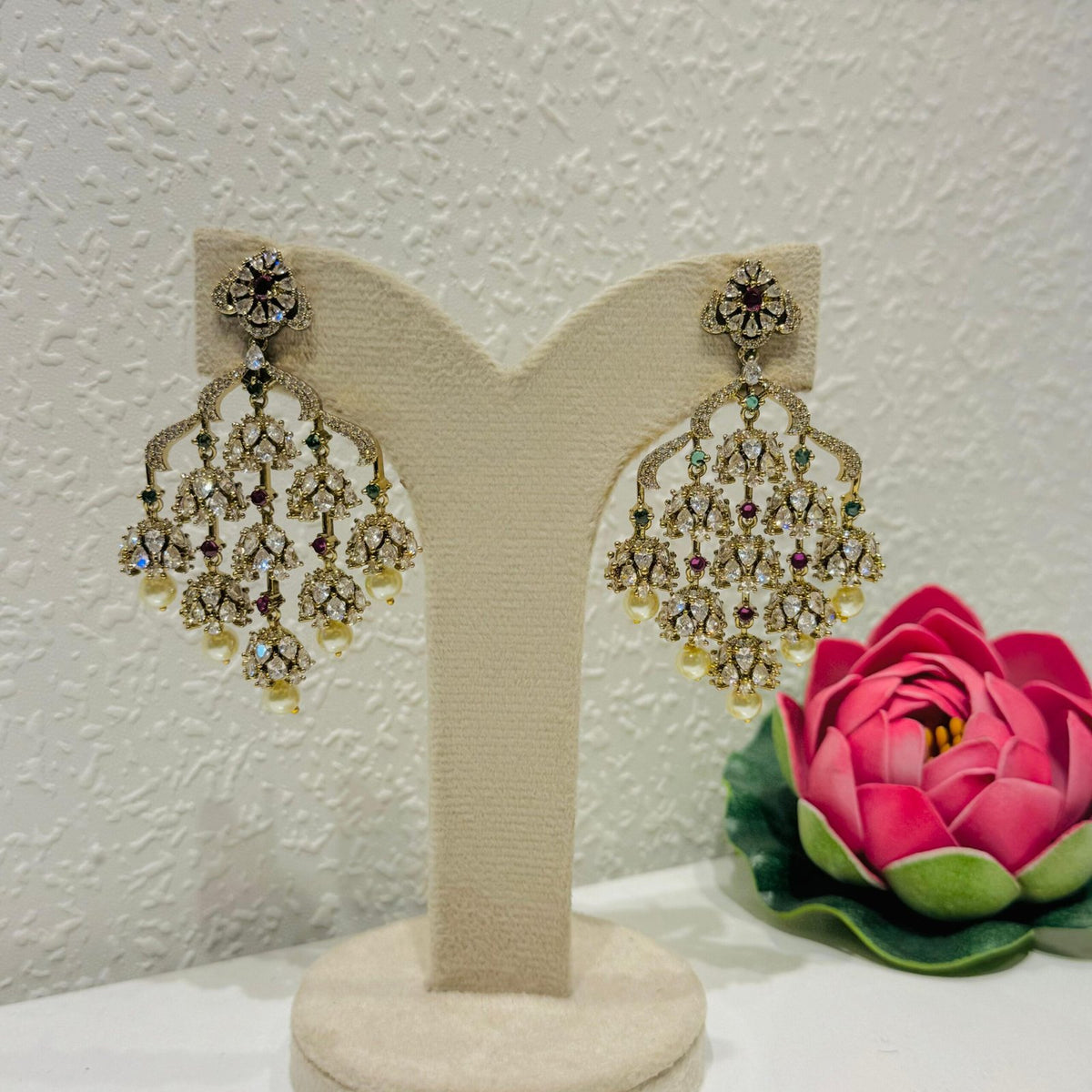
Kundan earrings: Kundan-style earrings use gold plating as the framework that surrounds and defines each stone setting. The warm gold border between stones is characteristic of this technique.
Temple jewellery earrings (jimikis): South Indian temple-style drop earrings use a rich, consistent gold plating that replicates the 22-carat gold of traditional temple jewellery.
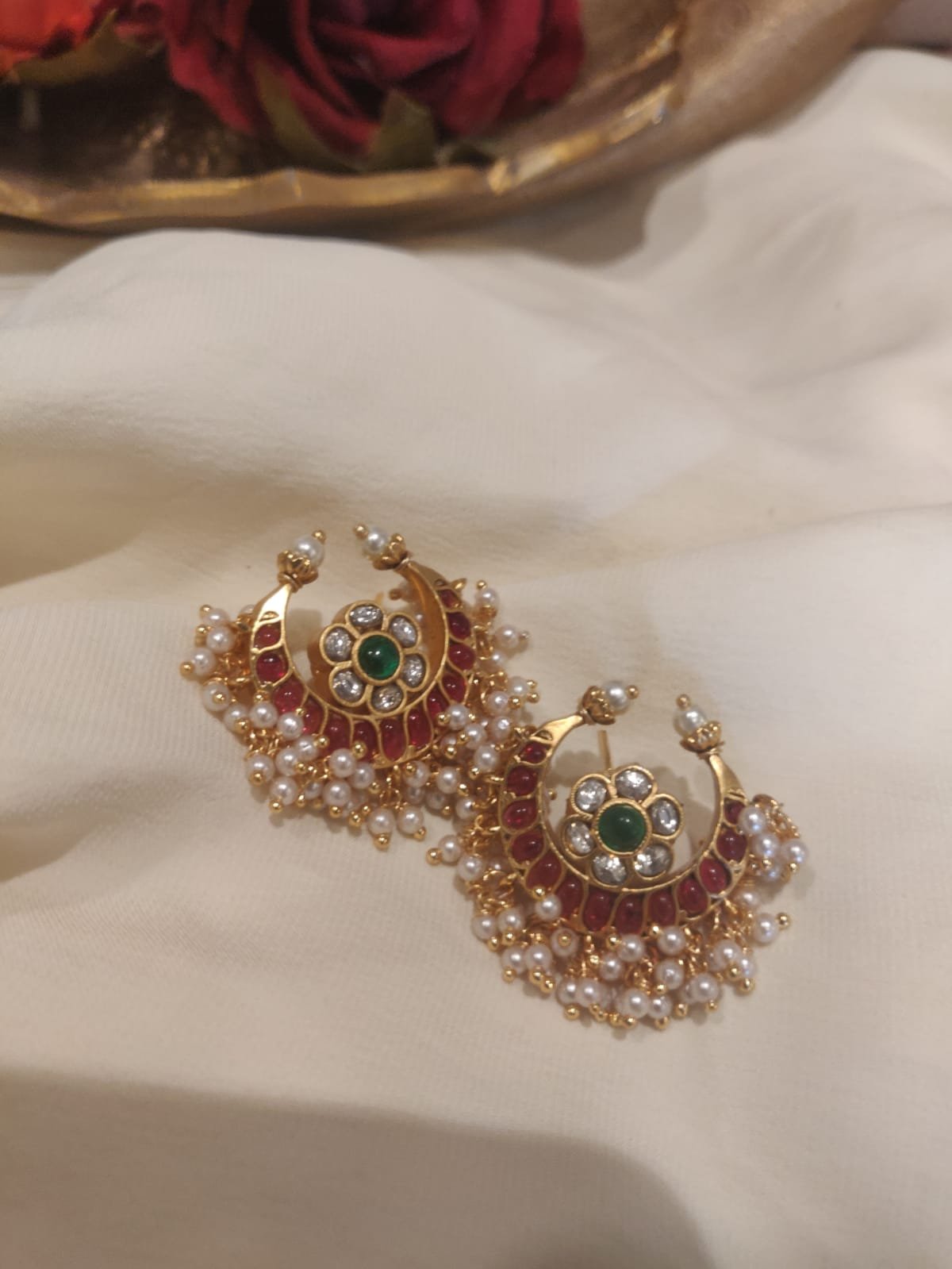
Chandbali earrings: The crescent structure of chandbali earrings is typically finished in gold plating, often with Kundan or enamel detailing across the surface.
Meenakari earrings: Meenakari enamel work is applied over a gold-plated base. The combination of vivid enamel colours against the warm gold background is what defines the meenakari aesthetic.
For the full range of gold-plated Indian earring styles available with delivery to Australia, explore fancy artificial jewellery.
Quality Signals to Check When Buying Gold-Plated Earrings Online from Australia
You cannot hold the piece before purchasing. These visual signals matter.
Tone consistency: The gold plating should appear uniform across the entire surface of the earring in product images. Dull patches, uneven colour, or visible transition zones between plated and unplated areas indicate inconsistent quality.
Finish on joints and seams: The back of an earring, the joint between the dome and bell in a jhumka, and the closure area are the points most likely to reveal plating quality. If close-up images are available, check these areas.
Stone border definition in Kundan styles: In Kundan earrings, the gold kundan border around each stone should be thin, clean, and even. Thick, irregular borders indicate rushed craftsmanship.
Earring back and closure quality: The earring post, hook, or screw-back should be finished to the same standard as the front of the piece. A poorly finished back on an otherwise good-looking earring reduces overall durability.
Explore designer jewellery online for gold-plated Indian earring sets with detailed product images and quality curation suited to Australian buyers.
Caring for Gold-Plated Indian Earrings in the Australian Climate
Australia's climate varies significantly by region. Sydney and Brisbane are humid. Melbourne and Adelaide have more temperate conditions. Perth is dry. These differences affect how gold-plated jewellery ages.
In humid climates (Sydney, Brisbane, tropical north Queensland):
-
Store jewellery in airtight zip-lock pouches with a small silica gel packet to control moisture
-
Avoid wearing gold-plated earrings during outdoor events in direct heat and humidity
-
Wipe earrings with a dry, soft cloth immediately after wearing
In temperate or dry climates (Melbourne, Adelaide, Perth):
-
Standard soft pouch storage is sufficient in lower-humidity environments
-
The plating tends to last longer in drier conditions
Universal care rules for all climates:
-
Remove earrings before showering, swimming, or any water exposure
-
Apply perfume and hair products before putting on earrings, not after
-
Store each pair separately to prevent surface contact and scratching
For gold-plated bangle sets that pair with earrings across festive and wedding occasions, browse traditional gold bangle designs.
Emporia Jewels carries gold-plated Indian earring collections that span everyday wear through to full bridal looks, with international shipping available to all Australian addresses.
Frequently Asked Questions
Q1: Is gold-plated jewellery the same as solid gold jewellery?
No. Gold plated jewellery has a thin gold layer applied over a base metal. It is not solid gold and does not carry the same material value.
Q2: How long do gold plated Indian earrings last in Australia?
With proper care, including dry storage and avoiding moisture, gold plated earrings typically maintain their finish for one to two years of regular wear.
Q3: Does humidity in Australian cities affect gold plated earrings?
Yes. High humidity in cities like Sydney and Brisbane accelerates plating wear. Storing earrings in airtight pouches with silica gel significantly reduces this effect.
Q4: Can I wear gold-plated Indian earrings every day?
Lightweight gold-plated jhumkas and studs are suitable for daily wear. Heavier Kundan and chandelier styles are better reserved for occasions to preserve the plating finish.
Q5: What is the best way to clean gold plated Indian earrings?
Wipe with a dry soft cloth after each wear. Avoid water, cleaning solutions, and abrasive materials that strip the plating layer.
Q6: Where can I buy gold-plated Indian earrings online with delivery to Australia?
Indian D2C jewellery brands, including Emporia Jewels, offer gold-plated Indian earring collections with international shipping to Australian addresses. Check the website for current delivery and shipping information.