

Choker Necklace Online in India: The Complete Style Guide to Finding Your Perfect Fit
The choker sits closer to the face than any other necklace. That proximity means it contributes more directly to how your overall look reads than a longer chain does. A choker frames the face, defines the neckline, and either lifts or anchors the entire jewellery composition of an outfit. When you get it right, a choker feels like the piece that was always meant to be there. When you get it wrong, no amount of good earrings or styling rescues the look.
Shopping for a choker necklace online in India means navigating an enormous range of styles, materials, and designs. This guide cuts through that and tells you exactly what to look for, what each style does, and how to match it to your face, your neckline, and your occasion.
What Makes a Choker Different From Other Necklaces
A choker necklace typically sits at 14 to 16 inches in length, placing it at or just above the base of the throat. This distinguishes it from princess-length necklaces (17 to 19 inches) and longer chains.
The defining characteristic of a choker is its position. It sits on the neck rather than falling away from it. This creates a different visual effect from any other necklace length: it emphasises the throat, creates a structured visual break between the face and the body, and draws attention upward toward the face.
Because of that close positioning, a choker's weight, width, and design have a direct relationship with how comfortable it is to wear and how flattering it reads.
Every Type of Choker You Will Find Online
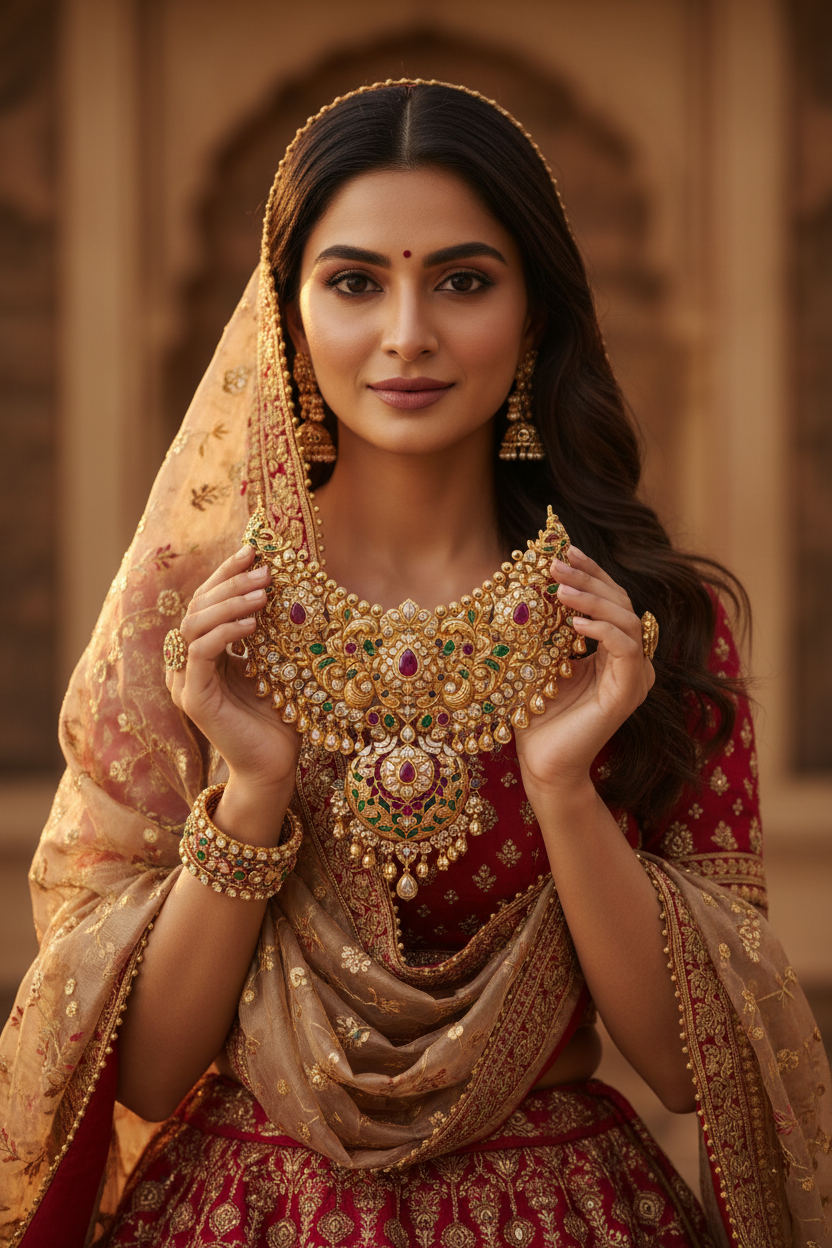
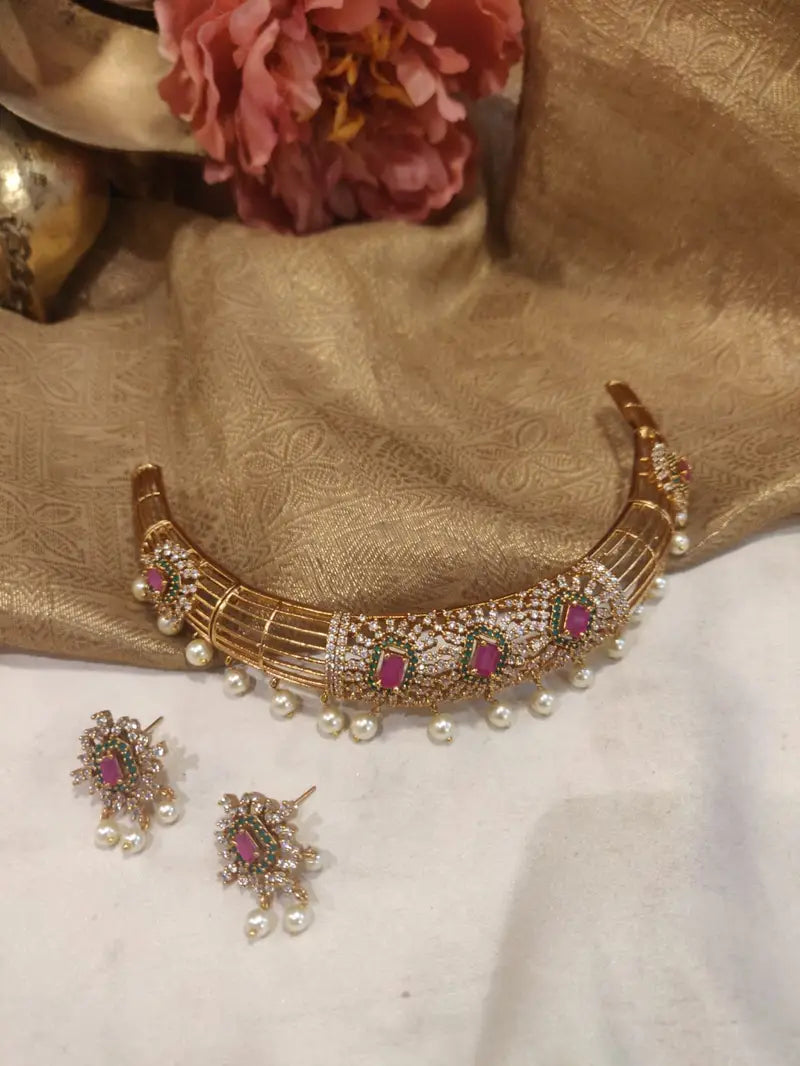
Rigid collar choker: A structured, non-flexible choker in a full ring format. Typically made from metal with stone settings. Common in kundan, temple jewellery, and AD stone styles. Creates a formal, architectural look. Best suited to deep V-necklines and off-shoulder or strapless outfits where the collar of the necklace can sit clearly on skin.
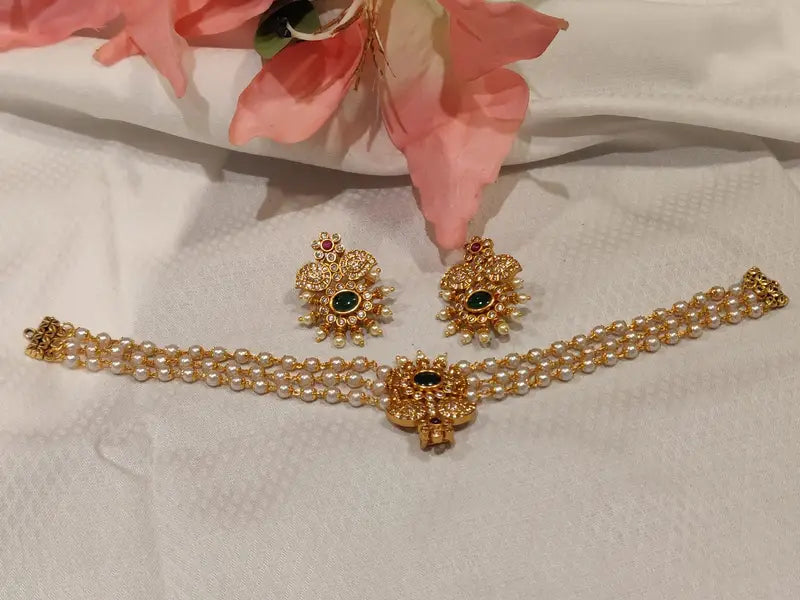
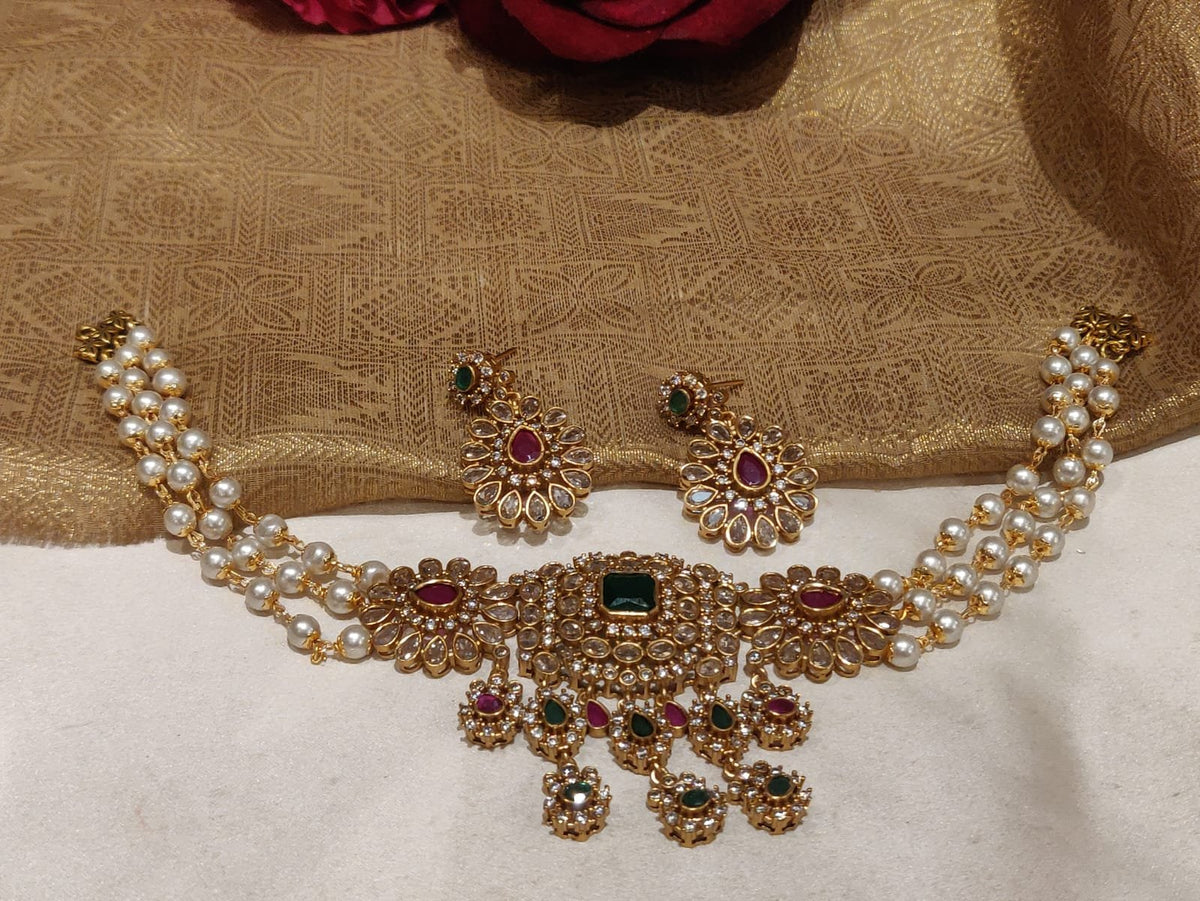
Multi-strand choker: Two or more chains running parallel across the front of the throat. Can be minimal (thin chains) or heavily embellished (stone-set strands). Popular for bridal looks and formal occasions. Requires a clear neckline to sit correctly.
Adjustable chain choker: A single chain with an extension that allows it to be worn at choker length or slightly longer. The most versatile option for everyday and semi-formal wear. Works across outfit types.
Temple jewellery choker: A wide, structured piece in antique gold finish with kemp stones, coin detailing, or deity motifs. Designed to sit flat against the upper chest and create a strong traditional look. Associated with South Indian bridal and festive dressing.
Kundan choker: Flat glass stones set in a gold-tone frame in a structured choker format. The kundan setting creates a regal, formal look. Best for traditional Indian occasions and bridal wear. Explore coordinated options in the kundan jewelry range.
Minimal chain choker: A very fine gold-tone or silver-tone chain worn at the throat. The delicate version of a choker. Works with both Indian and Western outfits and is the most wearable everyday choice.
Matching Chokers to Face Shape
Round face: Avoid very wide or very structured chokers that add horizontal emphasis at the throat. A delicate chain choker or a narrow stone-set choker with some vertical drop detailing works better.
Long face: Chokers are excellent for long faces. A wider or more structured choker adds horizontal emphasis that visually shortens and balances a long face shape. Collar-style and multi-strand chokers work particularly well.
Oval face: The most versatile face shape. Almost every choker style works. Choose based on occasion and outfit rather than facial geometry.
Square face: Curved, flexible chain chokers or multi-strand soft chokers work better than rigid angular collar pieces that echo the angularity of a square jaw. Look for chokers with curved design elements.
Heart-shaped face: Chokers in general suit heart-shaped faces well because they draw attention downward from a wider forehead. Multi-strand and embellished chokers work particularly well here.
Chokers and Necklines: The Pairing Logic
This is the single most important styling decision in choker selection.
Deep V-neckline: A choker sits above the V opening and creates a counter-balance. A rigid collar or a structured kundan choker works well. The exposed neckline between the choker and neckline is a visual feature, not a gap to fill.
Round neckline: Works well with a simple chain choker or a minimal stone-set piece that does not compete with the curved neckline. Avoid chokers that are so wide they overlap the fabric neckline.
Square neckline: A multi-strand or flexible chain choker fits naturally within the geometry of a square neckline. The horizontal emphasis of both the neckline and the choker creates a cohesive look.
High neck (mandarin collar, high-neck blouse): Chokers generally do not work with high necklines because there is no exposed skin for the necklace to sit against. In this case, a matinee or opera-length pendant necklace is the appropriate choice.
Off-shoulder or boat neck: This is where collar-style and rigid chokers are most effective. The clear horizontal expanse of skin at the upper chest and collarbone creates the perfect canvas.
Occasion Guide for Choker Necklaces
Bridal: A full choker set in kundan, temple jewellery, or AD stone setting worn as the primary necklace. Often layered with a longer chain (rani haar or opera-length pendant) for a complete bridal look. The bridal collections page includes coordinated choker sets designed for this purpose.
Wedding guest: A single statement choker in antique gold or kundan finish paired with matching earrings. Let the choker be the primary jewellery statement and keep other pieces minimal.
Festivals: Colourful stone-set chokers in meenakari or kemp finish. A single statement choker changes the entire register of a festive outfit without the commitment of a full jewellery set.
Office and daily wear: A thin chain choker in gold or silver tone. Discreet, professional, and versatile. Works under a blouse collar as easily as it works visible above a neckline.
Casual and fusion wear: Oxidised metal chokers with tribal or geometric detailing. These bridge traditional and contemporary styling naturally.
The fashion jewellery range includes chokers across all these occasion categories in multiple finishes and stone settings.
What to Check in Any Choker Listing Before You Buy
Length and closure mechanism: Confirm the listed length against your own neck measurement. Most adult necks measure 13 to 15 inches in circumference. A 16-inch choker fits most adults at a comfortable, non-tight choker position. An extension chain adds versatility.
Width and profile: Check whether the product listing specifies the width (height) of the choker front. A 2cm wide choker looks very different from a 5cm wide one. This information affects both comfort and visual impact.
Rigidity: Rigid collar chokers do not flex. They must fit your neck correctly from the front, not just at the clasp. Flexible chain chokers are more forgiving. Confirm which one you are buying.
Stone setting quality: For embellished chokers, examine product photographs for even stone placement and consistent finish across the full front width. Inconsistencies are more visible in chokers than in any other necklace style because of how closely they sit to the face.
Clasp quality: A choker must fasten securely because it sits close to the throat, and any failure of the clasp is immediately noticeable. Box clasps and secure lobster clasps are both appropriate. Avoid thin spring-ring clasps on heavier embellished pieces.
The handcrafted jewelry range includes choker-style pieces where the craft quality of both the front panel and the clasp mechanism is given appropriate attention.
Frequently Asked Questions
Q1. What is the standard length of a choker necklace?
Most choker necklaces are 14 to 16 inches in length. This places them at or just above the base of the throat on most adults. Many chokers include an extension chain allowing adjustment between 14 and 18 inches.
Q2. Can a choker necklace be worn with a high-neck blouse?
Generally, no. Chokers require bare skin to sit against. With high-neck blouses, a longer pendant necklace or a statement earring works better than a choker.
Q3. How do I measure whether a choker will fit my neck?
Measure the circumference of your neck at its narrowest point using a soft measuring tape. Add one to two inches to this measurement for a comfortable choker fit. Most adults need a choker of 15 to 17 inches for comfortable wear.
Q4. What is the difference between a choker and a collar necklace?
A collar necklace is a rigid, structured ring that sits close to the base of the neck. A choker is a broader term covering any necklace worn at 14 to 16 inches, including both rigid and flexible styles.
Q5. Can I layer a choker with longer necklaces?
Yes. Choker and longer necklace layering is a well-established styling approach. Choose pendants or longer chains that fall at clearly different lengths (20 inches and above) so the layers are visually distinct rather than crowded.