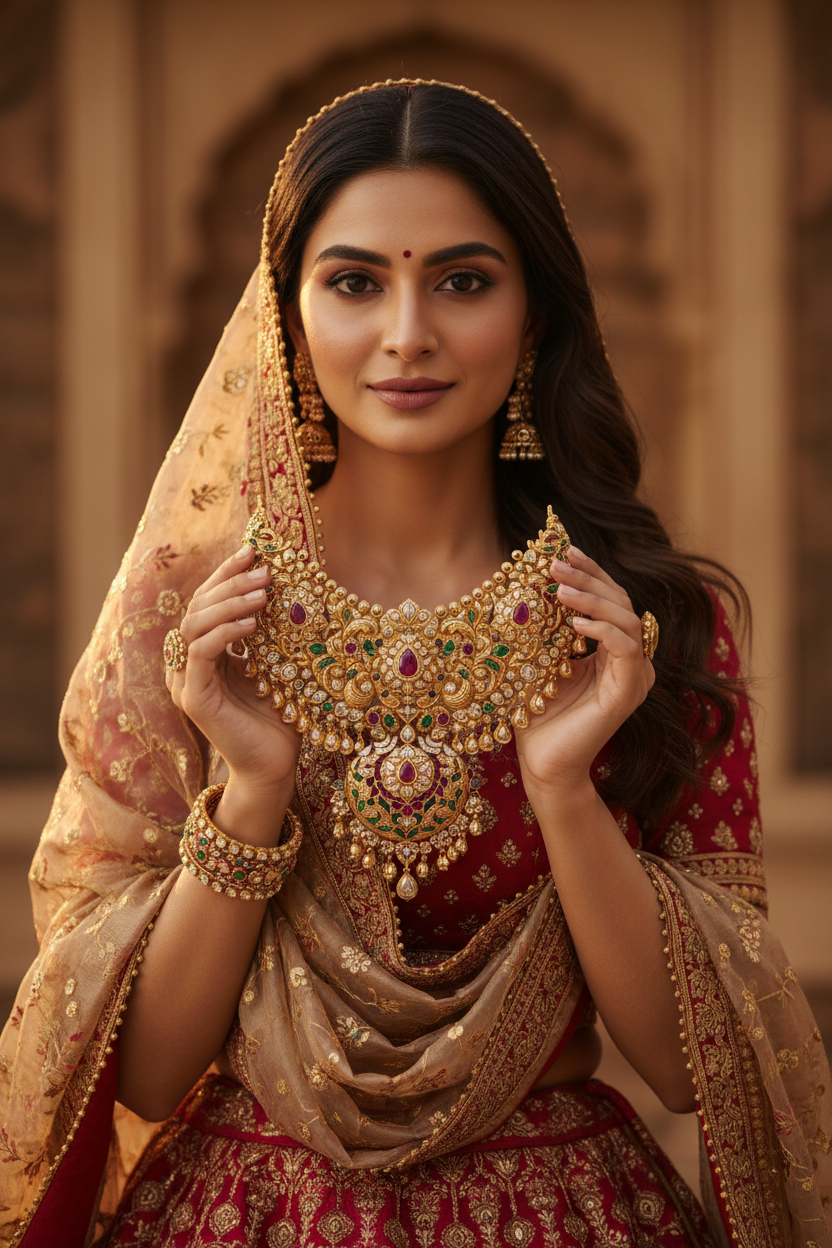


Bridal Imitation Jewellery: The Complete Bride's Guide to Choosing Sets That Look Expensive Without the Price Tag
Bridal imitation jewellery has moved far beyond a budget compromise. Today's brides are choosing it deliberately, selecting kundan chokers, polki-finish necklaces, and AD stone maang tikkas that photograph beautifully and survive a full wedding schedule without the anxiety of wearing lakhs worth of fine jewellery. Whether you're browsing fashion jewellery online or visiting a dedicated bridal store, the options today are genuinely impressive.
Understanding Bridal Imitation Jewellery: Categories, Finishes, and What They Actually Mean
The Core Categories Every Bride Should Know
Bridal imitation jewellery spans several distinct construction types, and confusing them leads to mismatched expectations. Kundan sets use a lac base with glass stones set in gold-foil-lined cells, producing a flat, regal look associated with Rajasthani and Mughal bridal aesthetics. Polki-finish imitation pieces replicate the uncut diamond look using foil-backed glass or resin, while American diamond (AD) jewellery uses cubic zirconia stones in silver-toned or gold-toned settings for a sparkling, contemporary effect.
Finish Types and Their Visual Impact on Wedding Day
The base metal finish determines how a piece reads under different lighting, which matters enormously for wedding photography. Gold-plated brass gives warm, traditional depth and suits lehenga reds and deep greens; silver-toned or rhodium-plated bases complement pastels and contemporary bridal outfits. Oxidised finishes work best for mehendi and haldi ceremonies rather than the main wedding look, where heavier gold or kundan finishes carry more visual authority. A well-chosen pearl necklace and earring set in a rhodium finish, for instance, pairs beautifully with pastel reception outfits.
|
Category |
Base Material |
Stone Type |
Best Occasion |
Typical Price Range (INR) |
|
Kundan Bridal Set |
Lac / Brass |
Glass / Foil-backed |
Main wedding ceremony |
1,500 - 8,000 |
|
Polki-Finish Set |
Brass / Alloy |
Resin / Glass |
Reception / Sangeet |
1,200 - 6,000 |
|
AD Stone Set |
Brass / Alloy |
Cubic Zirconia |
Cocktail / Reception |
800 - 5,000 |
|
Temple Jewellery Set |
Brass / Copper |
Ruby / Emerald glass |
South Indian ceremonies |
1,000 - 7,000 |
|
Oxidised Bridal Set |
Brass / German Silver |
Beads / Enamel |
Mehendi / Haldi |
500 - 3,000 |
How to Evaluate Bridal Imitation Jewellery Before You Buy
Physical Inspection Criteria That Separate Good Pieces from Poor Ones
The most reliable quality check for imitation bridal jewellery is stone setting tightness. Press lightly on individual stones with a fingernail; any movement indicates weak adhesive or poor prong work that will worsen under the heat and humidity of a wedding day. Weight is a secondary signal: well-constructed kundan and polki sets have a solid, even heft, whereas very light pieces often use thin alloy that bends easily.
Reading Online Product Listings Accurately
When shopping for fancy artificial jewellery online, the phrase "gold-plated" without a micron thickness specification tells you very little about longevity. Reputable listings specify at least 1-micron gold plating for bridal pieces; anything described only as "gold-toned" is likely a lacquer coat that fades faster. Check whether the product description distinguishes between brass base and alloy base, since brass holds plating longer and is the preferred substrate for bridal-grade imitation jewellery.
-
Stone uniformity: All stones in a set should match in colour tone and cut consistency.
-
Clasp and hook quality: Lobster clasps and screw-back earring posts hold more securely than simple fish-hook wires for heavy bridal pieces.
-
Symmetry check: Hold the necklace flat and look for even stone distribution on both sides of the centrepiece.
-
Colour fastness: Enamel or meenakari sections should show no visible cracking or peeling in product close-up images.
-
Return policy: Confirm the seller accepts returns for manufacturing defects, not just size issues.
Building a Complete Bridal Imitation Jewellery Set for Each Wedding Function
The Unique Advantage Brides Rarely Discuss: Owning Multiple Sets
Because imitation bridal sets cost a fraction of fine jewellery, a bride can own a distinct set for every function. A bride who allocates INR 15,000 to 20,000 across five functions can wear a different complete look each day, directly impacting wedding album variety. Stores offering designer jewellery online make this multi-set strategy practical by offering coordinated collections rather than isolated pieces.
-
Identify the number of functions and the dominant outfit colour for each.
-
Select a hero set for the main ceremony first, then build supporting sets around it.
-
Confirm that earring styles match face shape: chandelier jhumkas for round faces, long drops for square jawlines.
-
Order all sets at least three weeks before the wedding to allow time for replacements if a piece arrives damaged.
-
Store each set in a separate soft-lined box to prevent stone scratching during transit and storage.
|
Wedding Function |
Recommended Style |
Key Pieces |
Suggested Finish |
|
Main Wedding |
Full Kundan / Polki |
Necklace, Maang Tikka, Nath, Jhumkas, Haath Phool |
Gold-plated |
|
Reception |
AD Stone / Polki |
Choker, Drop Earrings, Bracelet |
Rhodium / Gold |
|
Sangeet |
Coloured Stone Set |
Layered Necklace, Chandbali, Maang Tikka |
Gold-plated |
|
Mehendi |
Oxidised / Beaded |
Bangles, Anklets, Light Earrings |
Oxidised Silver |
|
Haldi |
Minimal / Floral |
Floral Jewellery or Simple Studs |
Any lightweight |
Caring for Bridal Imitation Jewellery Before, During, and After the Wedding
Pre-Wedding Storage and Handling Practices
Bridal imitation jewellery is most vulnerable in the weeks before the wedding when it is being tried on repeatedly. Store each piece in an airtight zip-lock bag or a fabric-lined jewellery box to prevent tarnishing from humidity. Avoid spraying perfume, hairspray, or setting spray directly onto any piece, since alcohol-based products accelerate plating degradation and loosen adhesive-set stones. For more information, explore the Traditional gold bangle designs.
-
Avoid water contact: Remove all imitation jewellery before bathing, swimming, or any water-related rituals.
-
Last on, first off: Put jewellery on after applying all makeup and skincare products.
-
Individual storage: Never pile multiple pieces together; stone-to-stone contact causes chipping.
-
Silica gel packets: Place one small packet in each storage box to absorb ambient moisture.
Frequently Asked Questions
What is the difference between kundan and polki-finish bridal imitation jewellery?
Kundan uses glass stones set in gold-foil-lined lac cells for a flat, traditional look, while polki-finish imitation pieces use foil-backed glass or resin to replicate the rough, uncut diamond appearance of real polki jewellery.
How much should a bride budget for a complete bridal imitation jewellery set?
A full bridal set covering the main ceremony, including necklace, earrings, maang tikka, nath, and haath phool, typically ranges from INR 3,000 to INR 12,000 depending on the complexity of the design and the quality of the base metal and stones.
Can bridal imitation jewellery cause skin reactions?
Some alloy-based pieces may cause reactions in people with metal sensitivities, so brides with sensitive skin should look for brass-base pieces with thick plating and test a piece on the wrist for a few hours before the wedding day.
How early should a bride order bridal imitation jewellery online?
Ordering at least three to four weeks before the first wedding function allows adequate time for delivery, quality inspection, and replacement if any piece arrives with a manufacturing defect.
Is bridal imitation jewellery suitable for outdoor or destination weddings?
It can work well for outdoor weddings if brides choose pieces with secure clasps and avoid prolonged sun and humidity exposure, which can accelerate tarnishing on plated finishes.