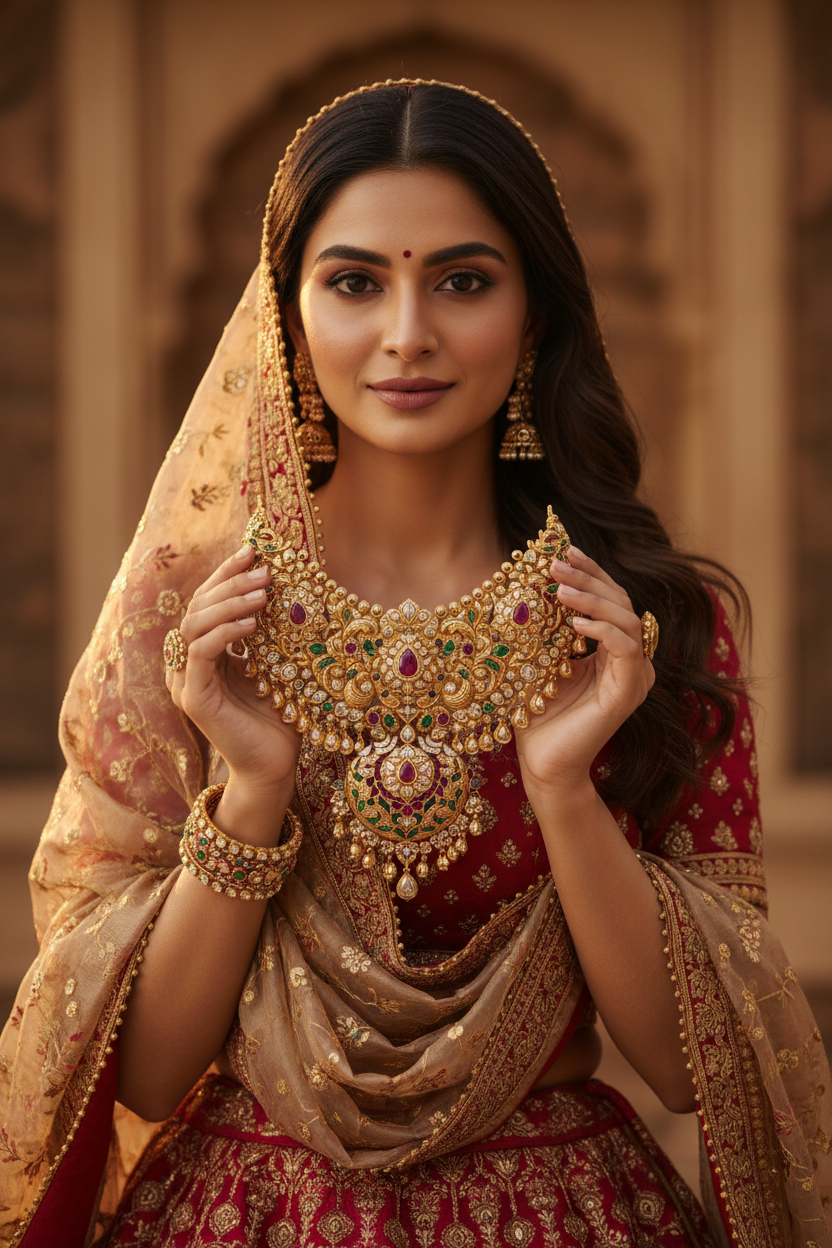


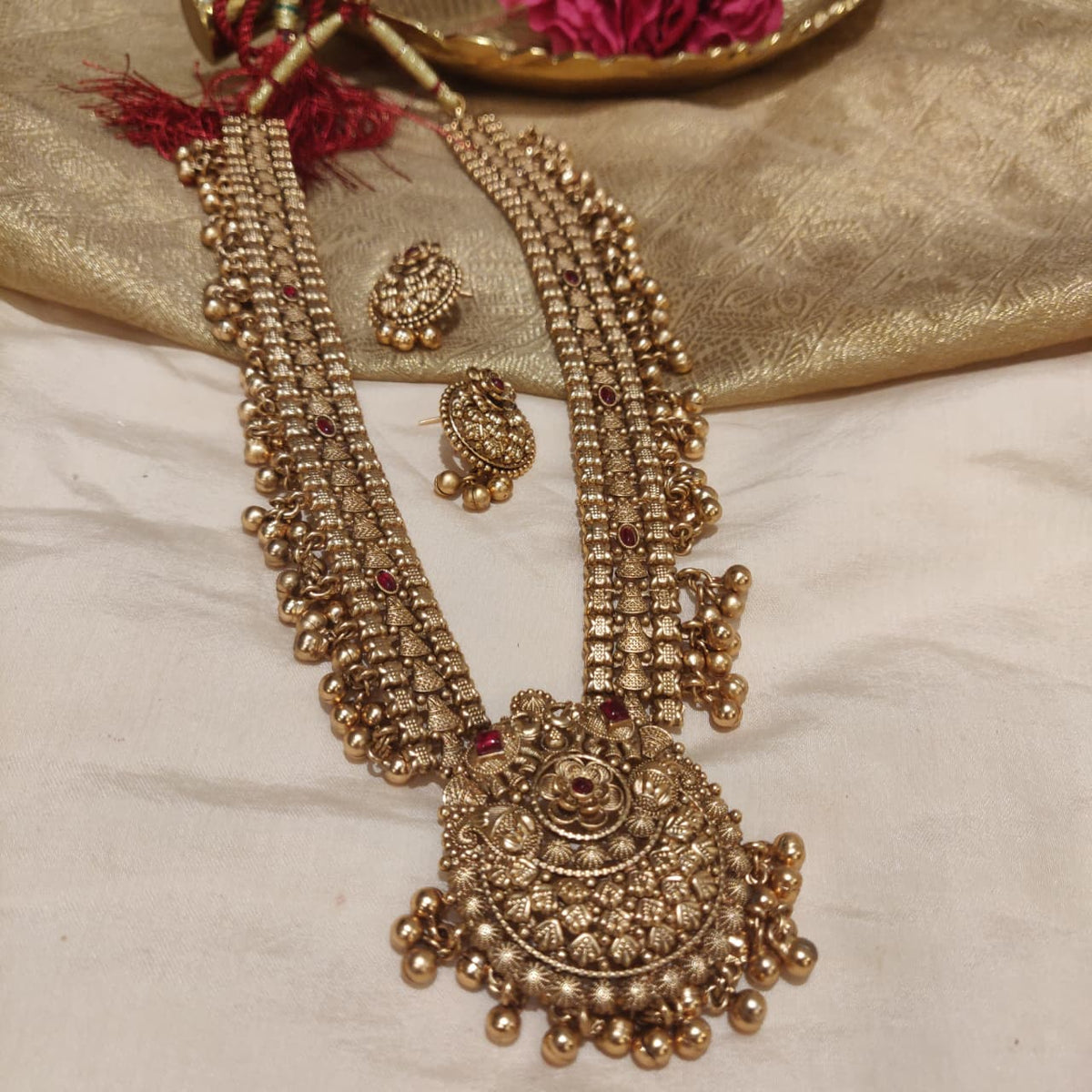
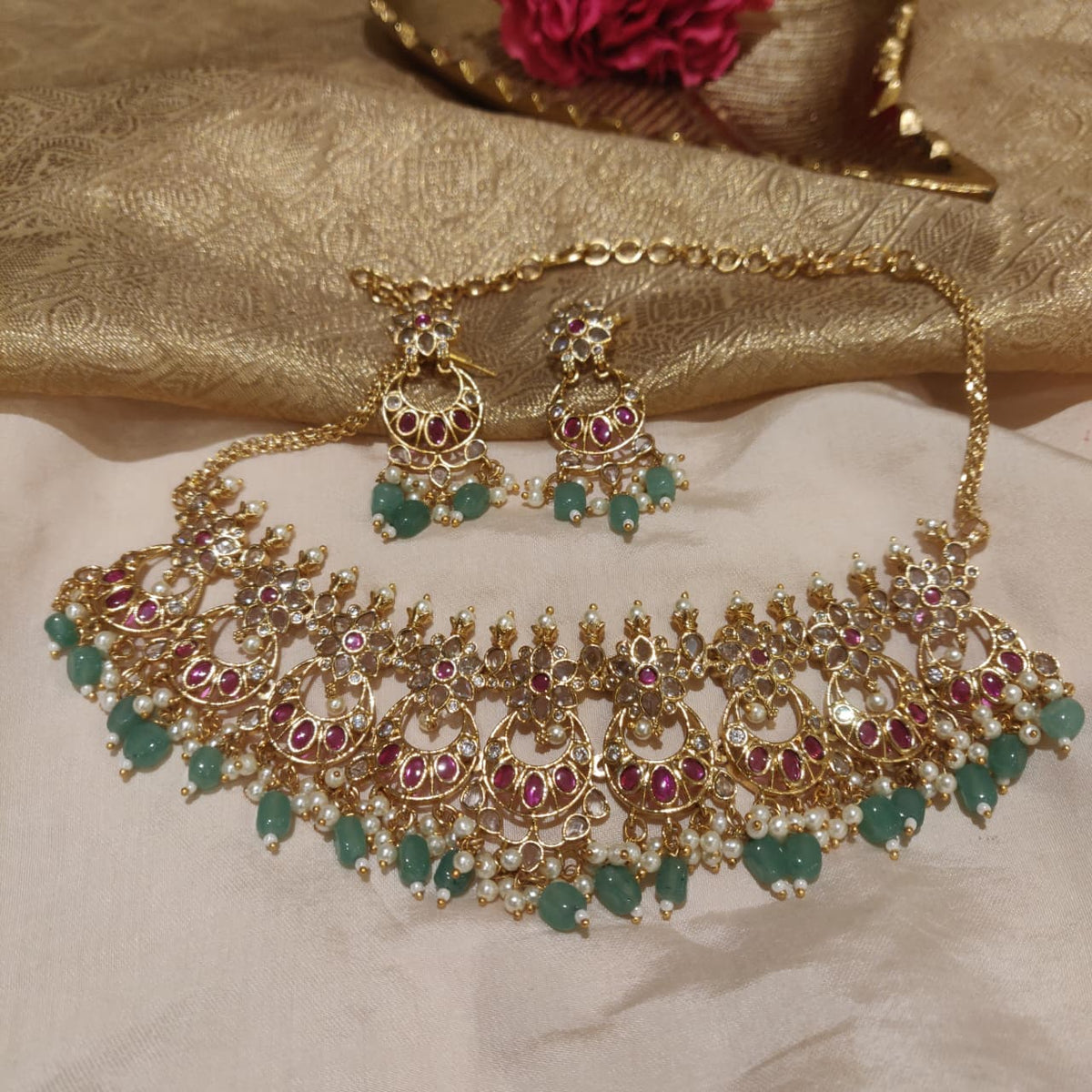


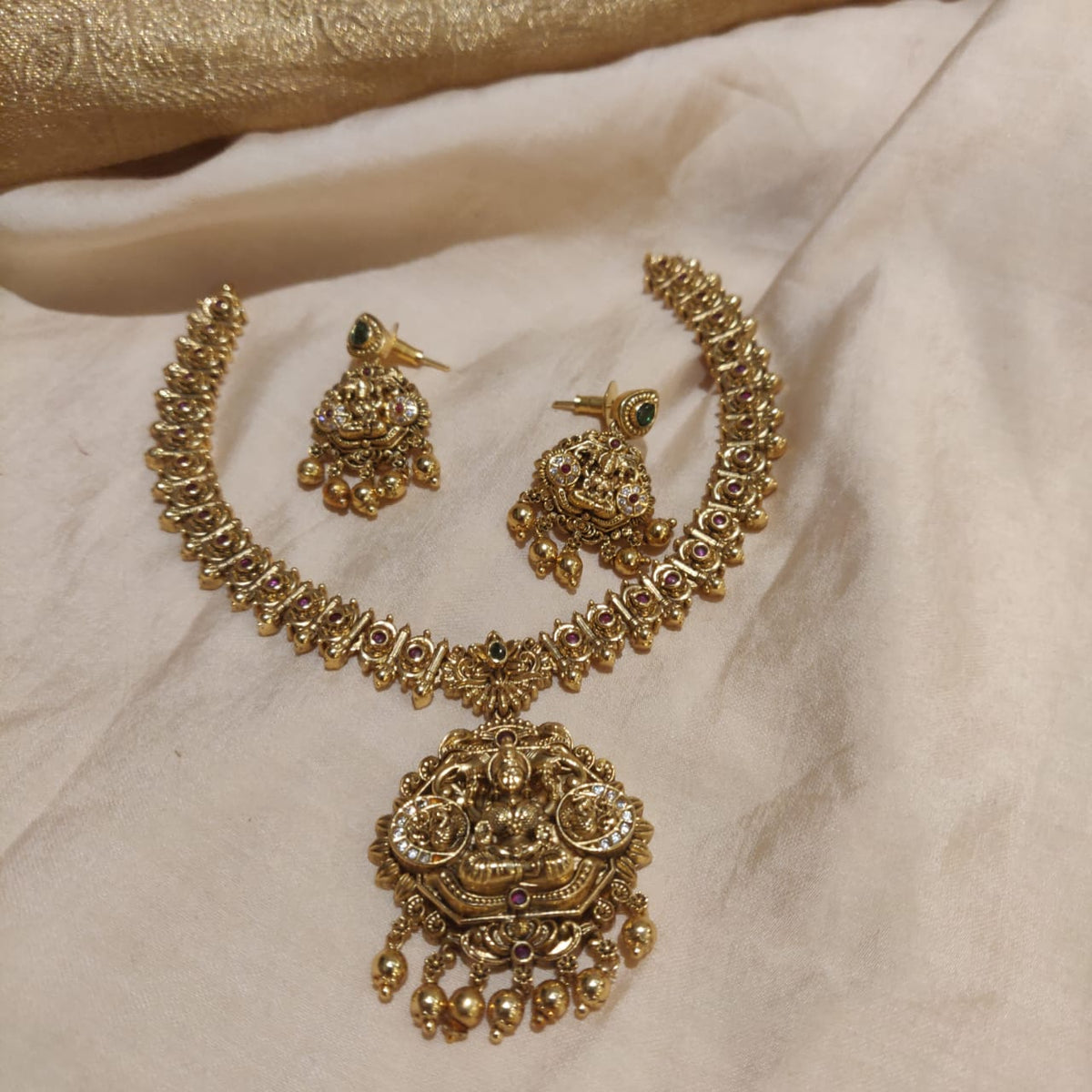
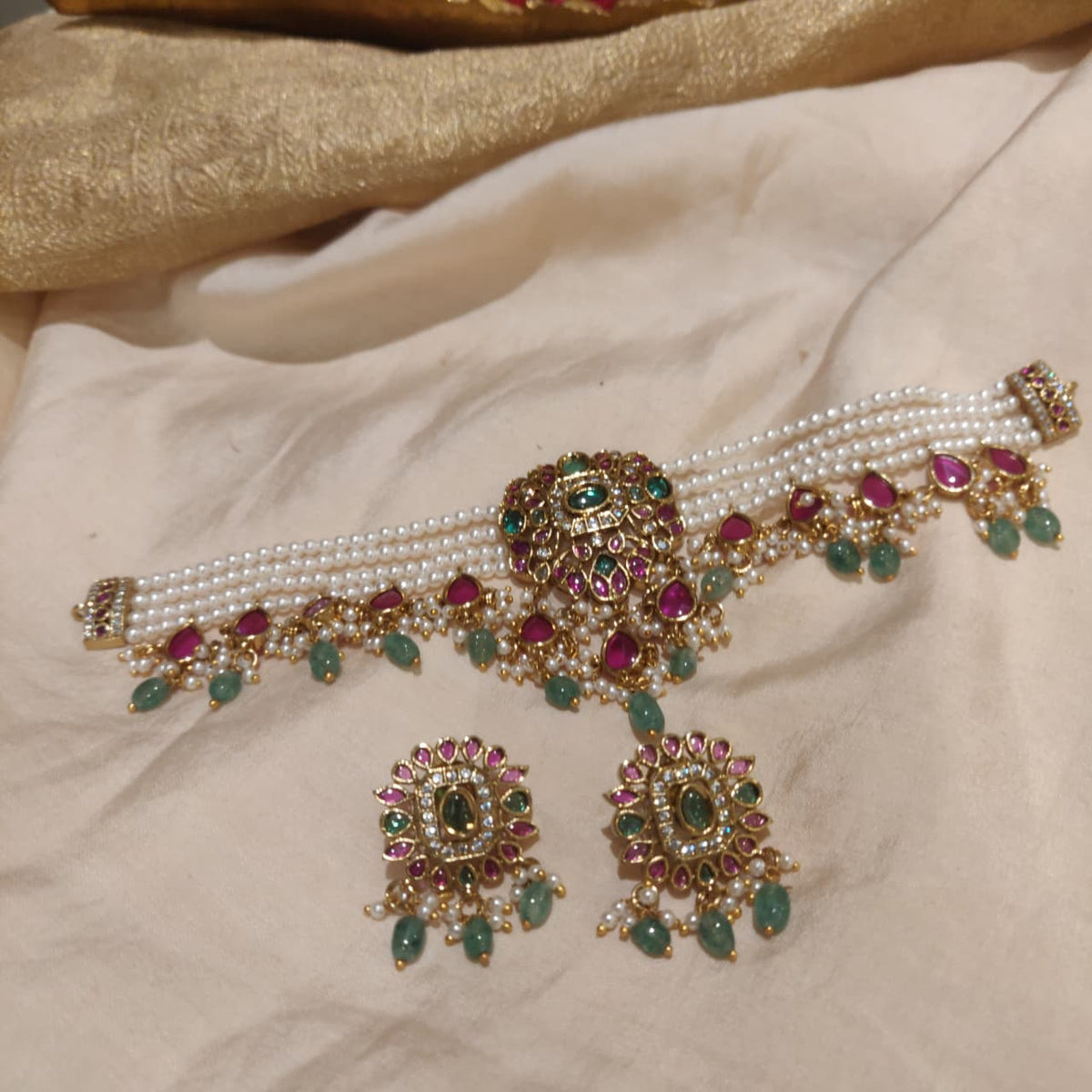
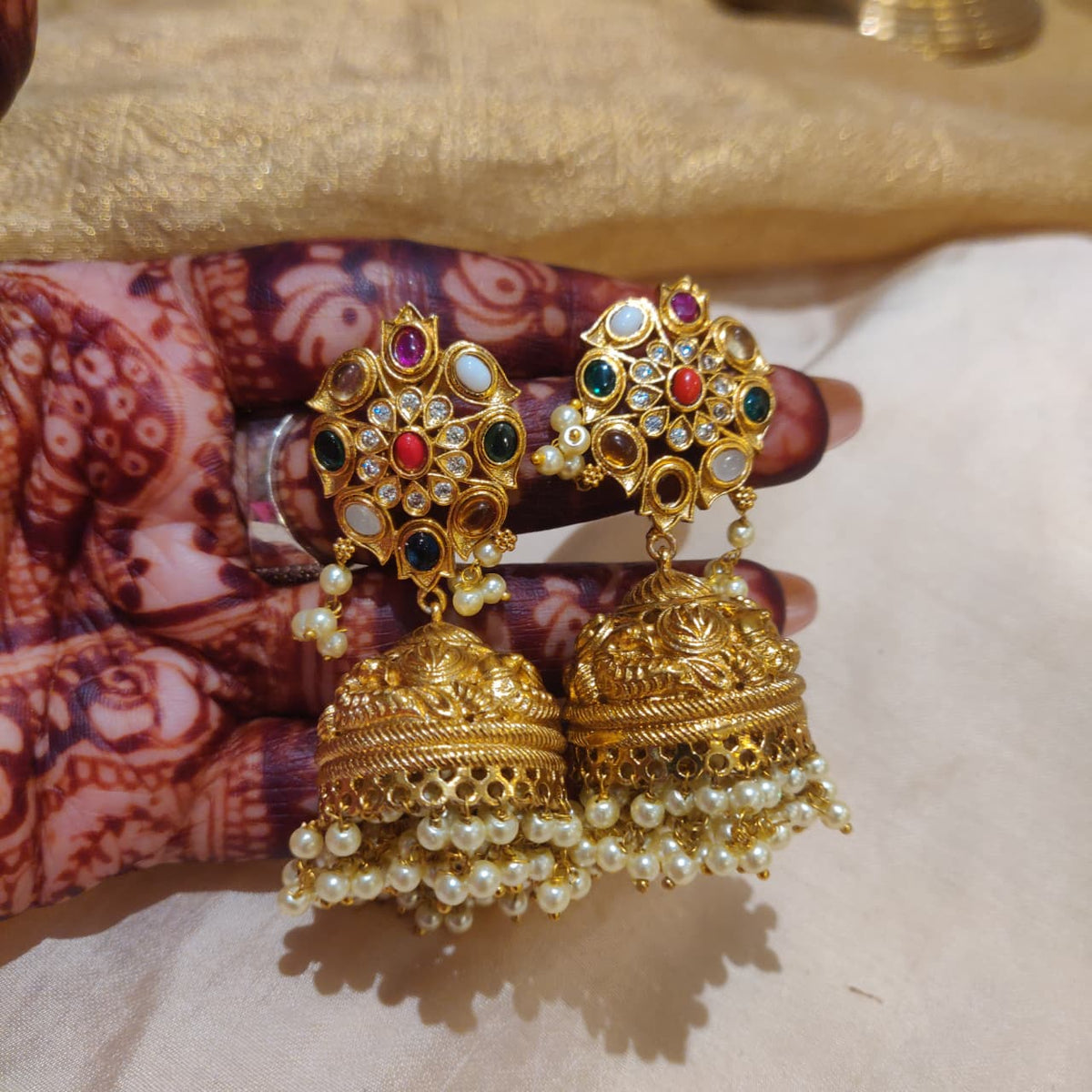

Artificial Bridal Jewellery Sets With Price: What You Really Pay For and How to Budget Smartly
Picture a bride sitting with her laptop, a cup of chai, and a spreadsheet with seven columns: haldi, mehendi, sangeet, wedding, reception, and two family dinners. Every column needs jewelry. And every search she types, from "bridal set" to "artificial bridal jewellery sets with price," shows her a range so wide it is hard to know what is fair.
Why does one Kundan-style bridal set cost much more than another that looks similar in photos? What should be included at each price level? And where is it worth spending more?
This guide breaks down what drives the price of artificial bridal jewellery sets, how to compare them, and how to build a budget that covers every function. Since prices change with collections and seasons, always check the live price on each product page before you plan.
What Is Included in an Artificial Bridal Jewellery Set?
The first reason prices vary is that "set" means different things on different listings.
The Three-Piece Set
-
Necklace
-
Pair of earrings
-
Maang tikka
This is the most common bridal set and the easiest to compare.
The Five-Piece Set
-
Necklace
-
Earrings
-
Maang tikka
-
Nath (nose ring)
-
Haathphool or a pair of bangles
The Full Bridal Set
-
Choker plus a long necklace (rani haar)
-
Earrings with sahare (ear chains)
-
Maang tikka or matha patti
-
Passa or jhoomar
-
Nath
-
Haathphool
-
Bangles or kadas
-
Kamarbandh (waist belt)
-
Payal (anklets)
A full set can cost several times more than a three-piece set simply because it includes more pieces. When comparing artificial bridal jewellery sets by price, always compare the number of pieces first.
7 Factors That Decide the Price of a Bridal Set
1. Stone Type
-
Glass Kundan-style stones
-
Polki-style stones with an uncut look
-
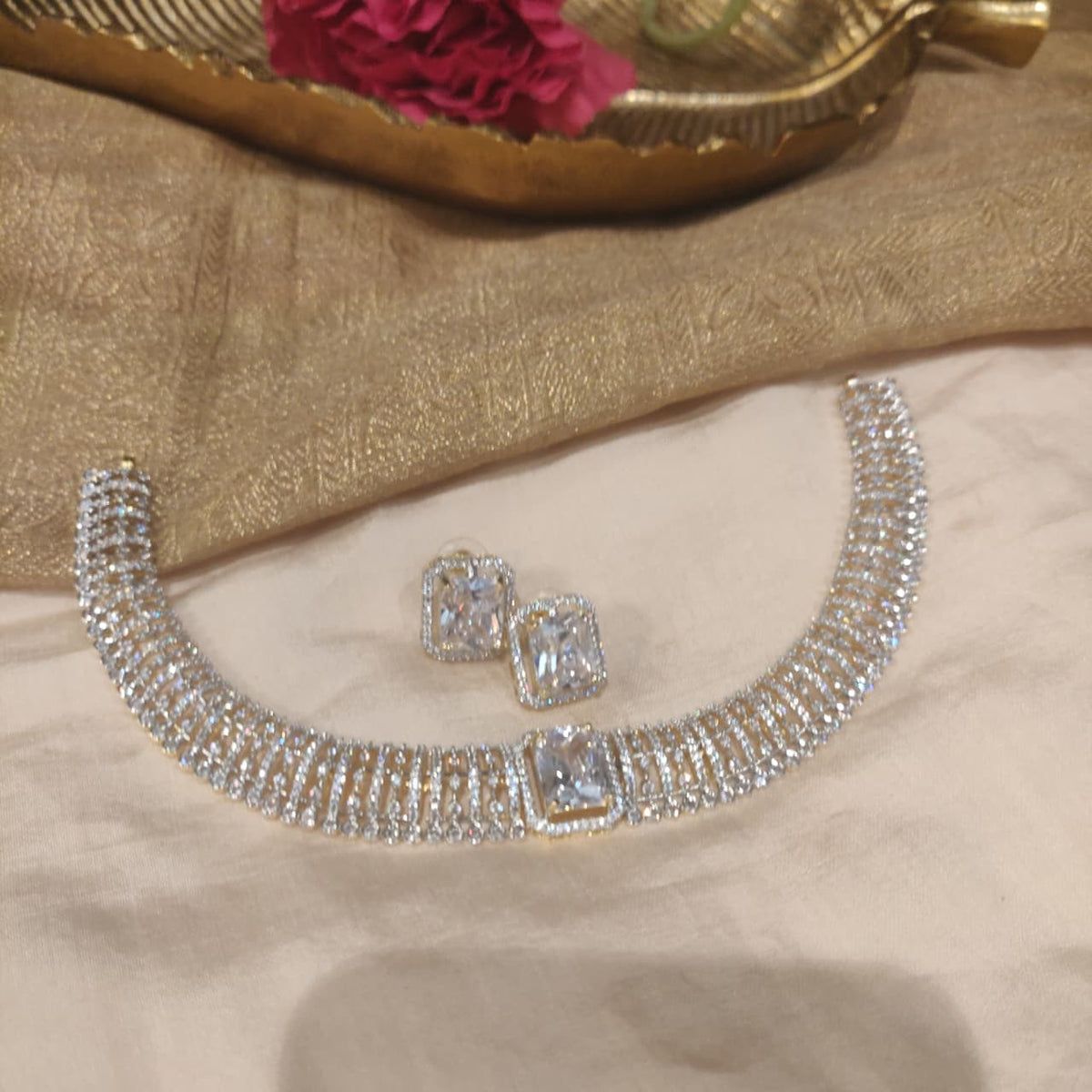
Cubic zirconia (American diamond)
-
Simulated pearls and beads
Sets with many precisely cut CZ stones or polki-style stones often cost more than simpler glass-stone designs.
2. Finish and Plating
Gold-toned, antique gold, matte, rose gold-toned, and rhodium finishes vary in cost. Multi-step finishes, like antique gold combined with meenakari, take more work.
3. Number of Pieces
As covered above, a full set naturally costs more than a three-piece set.
4. Size and Layers
A two-layer or three-layer rani haar uses more material and work than a single choker.
5. Hand-Finishing
Sets with detailed hand-finishing, such as hand-set stones, hand-strung pearls, or hand-tied threads, usually cost more because they take longer to make.
6. Design Detail on the Reverse
Some bridal sets have meenakari or detailed work on the back. This adds to the price, but it also shows a more finished piece.
7. Packaging
Bridal sets in sturdy, velvet-lined boxes protect the jewelry better and often cost slightly more. Good packaging also makes the set easier to store between functions.
Comparing Bridal Set Tiers
Instead of fixed numbers, think about price in three tiers. Here is what you usually get at each level.
Essential Tier
-
Usually a three-piece set
-
Single-layer necklace
-
Glass stones or simple pearls
-
Standard gold-toned finish
-
Best for: Mehendi, haldi, smaller functions, and close family members
Mid-Range Tier
-
Three to five pieces
-
Layered necklace or choker plus earrings
-
Better stone setting and more detailed designs
-
Antique, matte, or mixed finishes
-
Best for: Sangeet, engagement, and reception
Premium-Look Tier
-
Full or near-full bridal set
-
Multiple layers and statement pieces
-
Polki-style, Kundan meena, or detailed AD work
-
Neat reverse-side finishing
-
Best for: The main wedding ceremony
For the reception, many brides choose a contemporary design. The designer jewellery online collection at Emporia Jewels includes pieces that suit modern reception outfits.
How to Build Your Bridal Jewellery Budget
Use this simple plan.
Step 1: List every function. Write down each event and its outfit.
Step 2: Mark the hero function. This is usually the wedding ceremony. It gets the biggest share of the budget.
Step 3: Choose a tier for each function.
-
Wedding ceremony: Premium-look tier
-
Reception: Mid-range tier
-
Sangeet or engagement: Mid-range tier
-
Mehendi and haldi: Essential tier
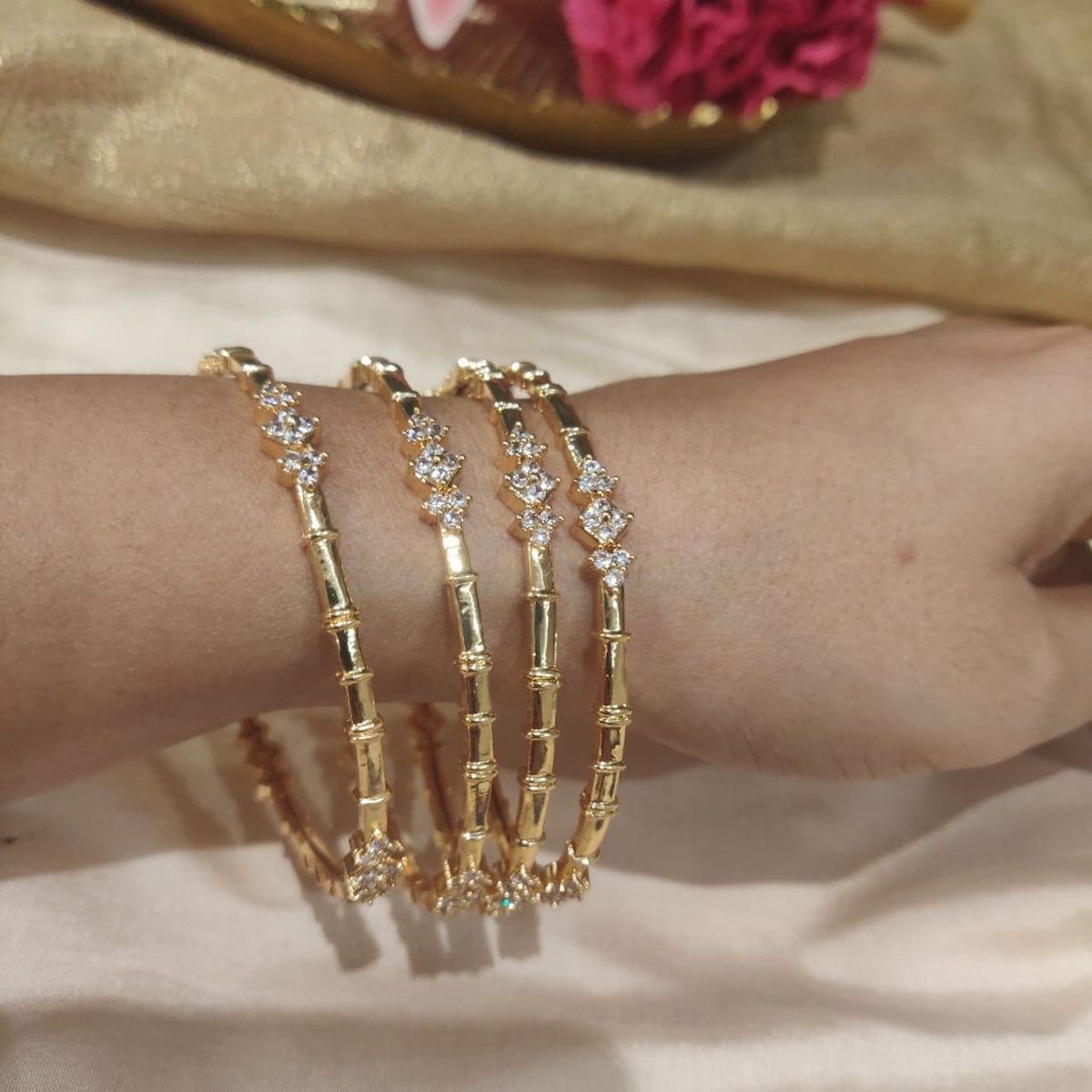
Step 4: Plan shared pieces. Bangles, earrings, and some necklaces can be reused across functions. A good set of traditional gold bangle designs can work with several outfits, which saves money.
Step 5: Keep a buffer. Set aside a small amount for last-minute needs like extra earrings or a backup maang tikka.
Reading the Price on a Product Page
Before you add a bridal set to your cart, check:
-
What is included: Count the exact pieces in the set.
-
Dimensions: Check necklace length, earring length, and tikka size.
-
Finish: Note whether it is gold-toned, antique, matte, or rhodium.
-
Stone type: Kundan-style, polki-style, AD, or pearls.
-
Closure type: Adjustable dori threads, hooks, or clasps.
-
Photos: Check close-ups of stones and the back of the piece.
-
Policies: Read the store's current return and exchange policy.
Emporia Jewels lists the price and product details on each listing, so you can compare sets clearly before deciding.
Cost Per Wear: The Smarter Way to Judge Value
Price alone does not tell you value. Use this simple formula:
Cost per wear = Price of the set ÷ Number of times you will wear it
A set you wear only once can be more expensive per wear than a slightly costlier set you wear at your wedding, your cousin's wedding, two festivals, and a family function.
Ask yourself before buying:
-
Can I wear this necklace without the tikka at other events?
-
Can these earrings work alone with a saree?
-
Will these bangles match my other outfits?
Where to Spend More and Where to Save
Spend More On
-
The main wedding necklace, since it appears in almost every photo
-
Earrings, since they frame your face in close-ups
-
Comfort features, like adjustable closures and lighter weight
Save On
-
Haldi jewelry, since turmeric can stain pieces
-
Pieces that are hidden under the dupatta, like some back details
-
Small accessories you may not wear again
For lighter functions like mehendi, a pearl necklace and earring set gives a fresh, elegant look without stretching the budget. For colorful sangeet looks, explore the fancy artificial jewellery range.
Your Budget Formula
Here is the short version to save on your phone. Count the pieces before comparing prices. Choose a tier for each function. Put the biggest share into the wedding necklace and earrings. Reuse bangles and earrings where you can. Then divide each set's price by how many times you will wear it. That is how to judge artificial bridal jewellery sets with price, not just by the number on the tag, but by the value they bring to your whole wedding.
Frequently Asked Questions
Why do artificial bridal jewellery sets vary so much in price?
Prices depend on the number of pieces, stone type, finish, size, hand-finishing, and packaging.
What is included in a basic bridal set?
A basic set usually includes a necklace, a pair of earrings, and a maang tikka.
Where can I see current bridal set prices?
Check the live price on each product page, since prices can change with collections and seasons.
Should I buy one expensive set or several smaller sets?
Most brides do better with one premium-look set for the wedding and lighter sets for other functions.
How do I compare two bridal sets fairly?
Compare the number of pieces, dimensions, stone type, finish, and close-up photos before comparing price.
Which bridal pieces are worth spending more on?
The main necklace and earrings are worth prioritizing, since they appear in most wedding photos.