

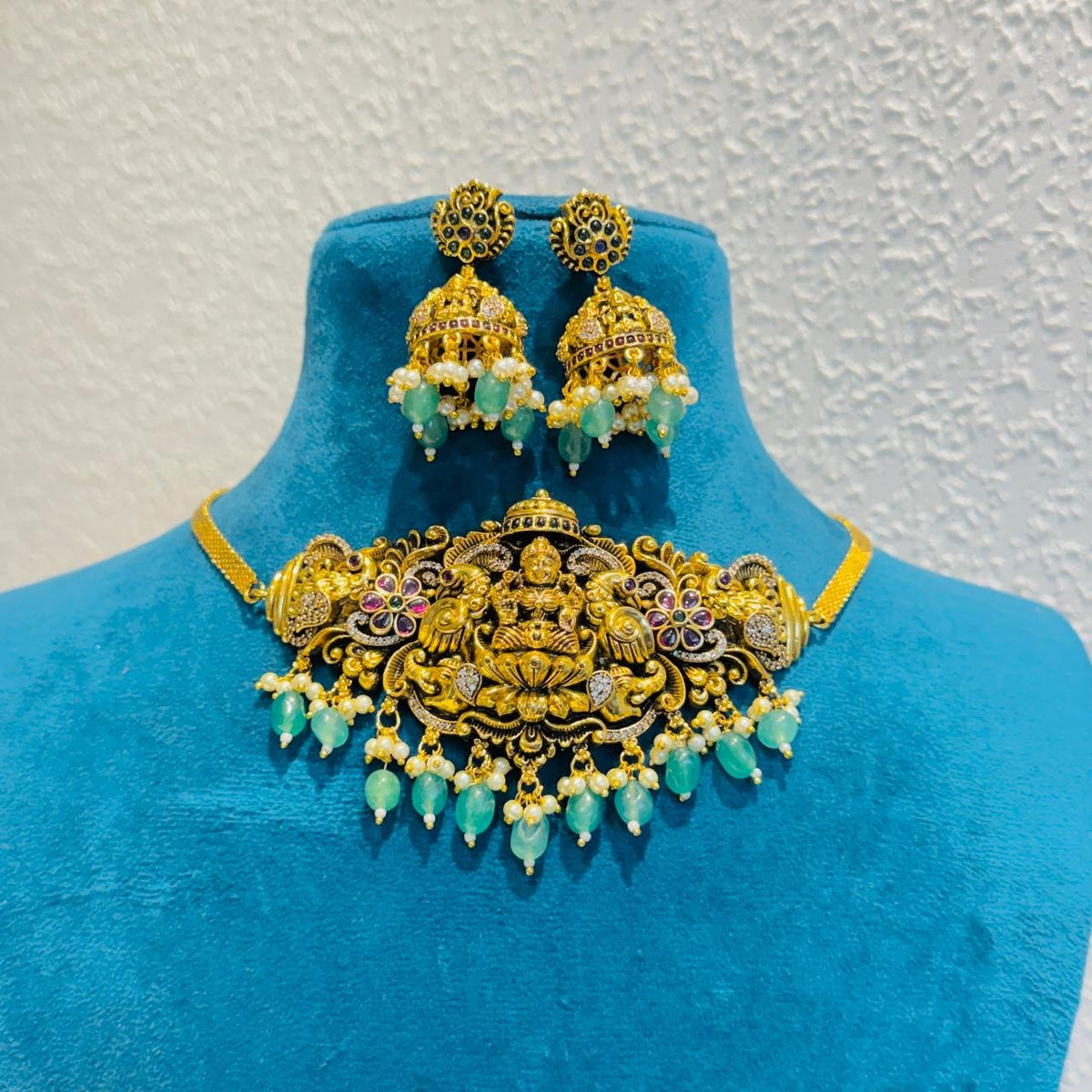
Temple Jewellery UK: The South Indian Craft Tradition That Belongs at Every Ethnic Occasion
There is a category of Indian jewellery that carries more cultural weight than almost anything else in the ethnic accessories market. It does not shout for attention through oversized stones or extravagant layering. Instead, it communicates through motif, through craft history, and through a visual language that is unmistakably rooted in South Indian temple tradition.
Temple jewellery has been worn in South India for over a thousand years. Its origins lie in the ornaments crafted for temple deity idols in Tamil Nadu, which over centuries moved into the wardrobes of classical dancers, then South Indian brides, and eventually into mainstream Indian ethnic fashion. For UK-based Indian diaspora women, it represents a direct connection to a craft tradition that does not have a Western equivalent. No other jewellery style carries quite the same combination of cultural specificity, visual richness, and occasion versatility.
The UK's South Asian population includes substantial Tamil, Telugu, Kannada, and Malayali communities, particularly concentrated in London, Leicester, Birmingham, and Manchester. For these communities, temple jewellery is not an occasional purchase. It is a regular, culturally central one. This guide is written for that buyer and for anyone else who wants to understand, wear, and shop for temple jewellery from the UK with confidence.
What Defines Temple Jewellery? The Visual Language Explained
The Motifs That Make It Immediately Recognisable
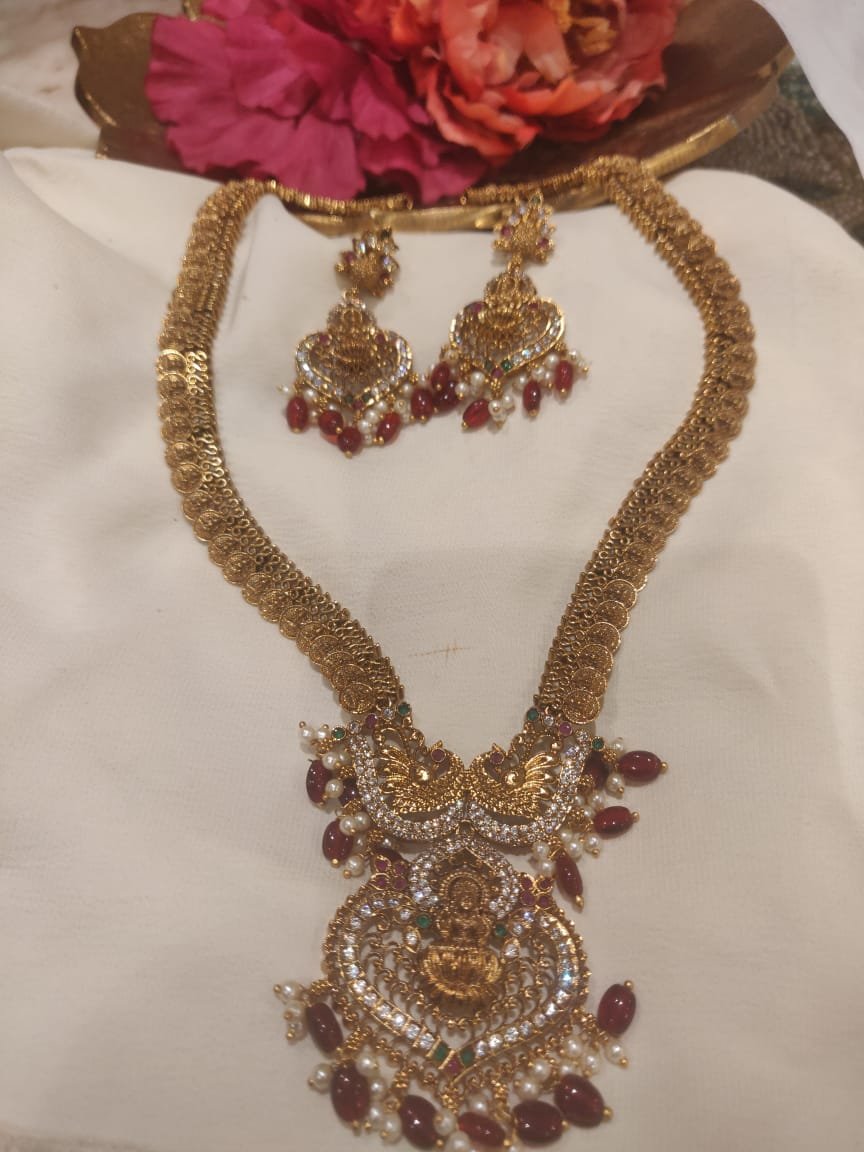
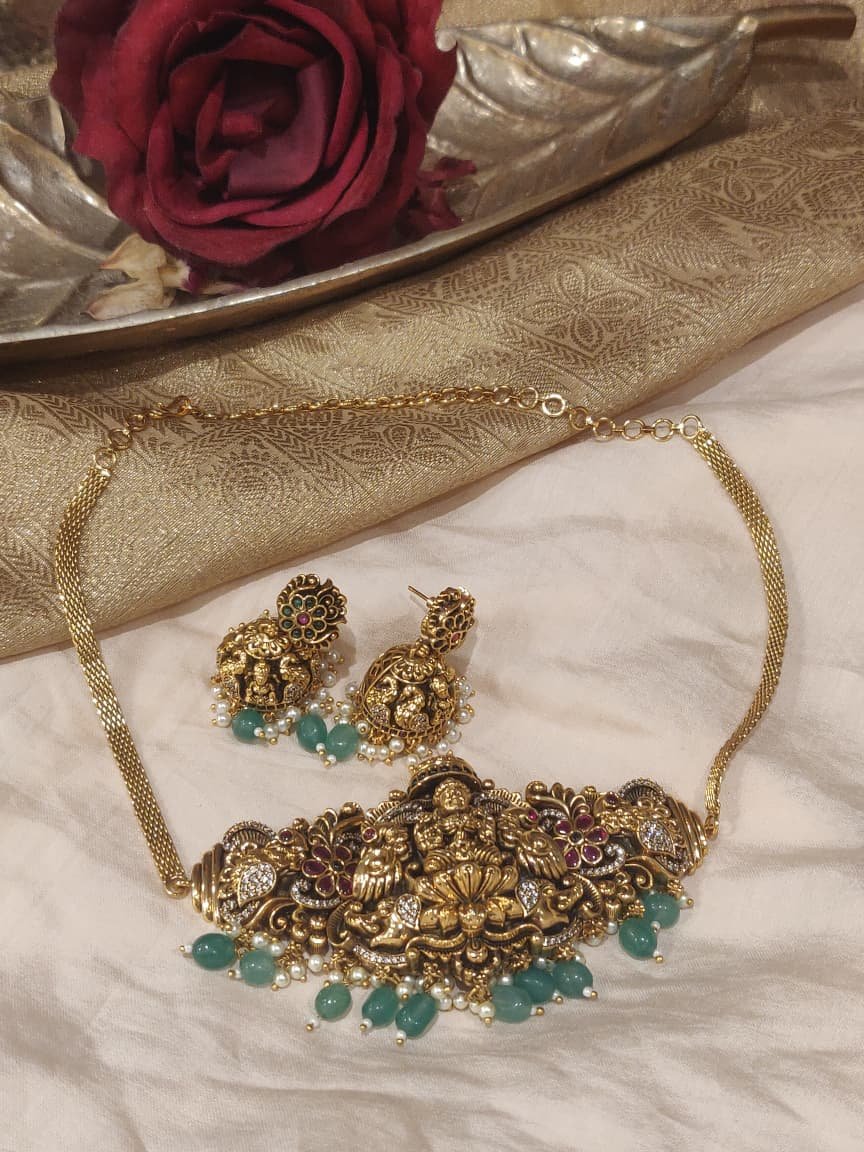
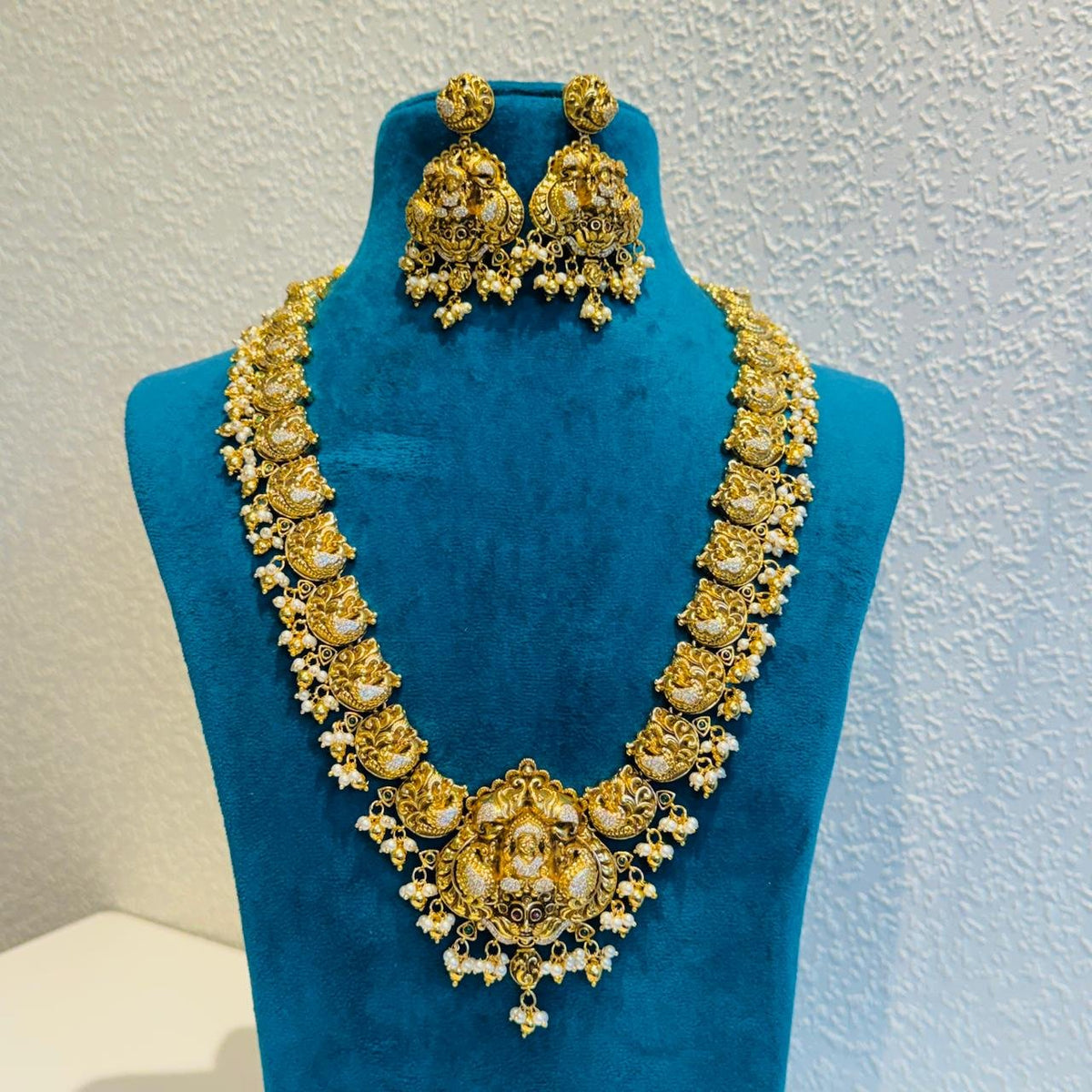
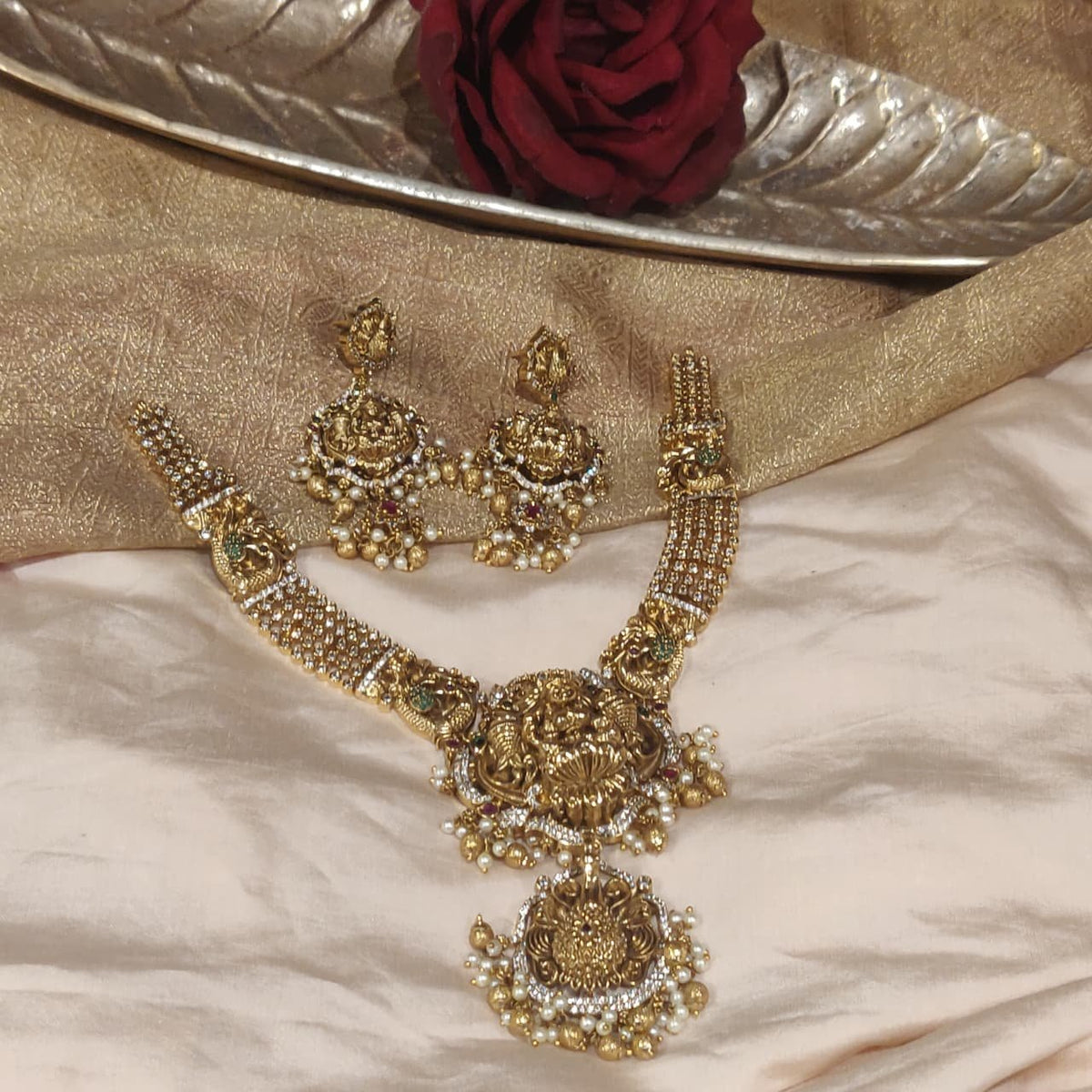
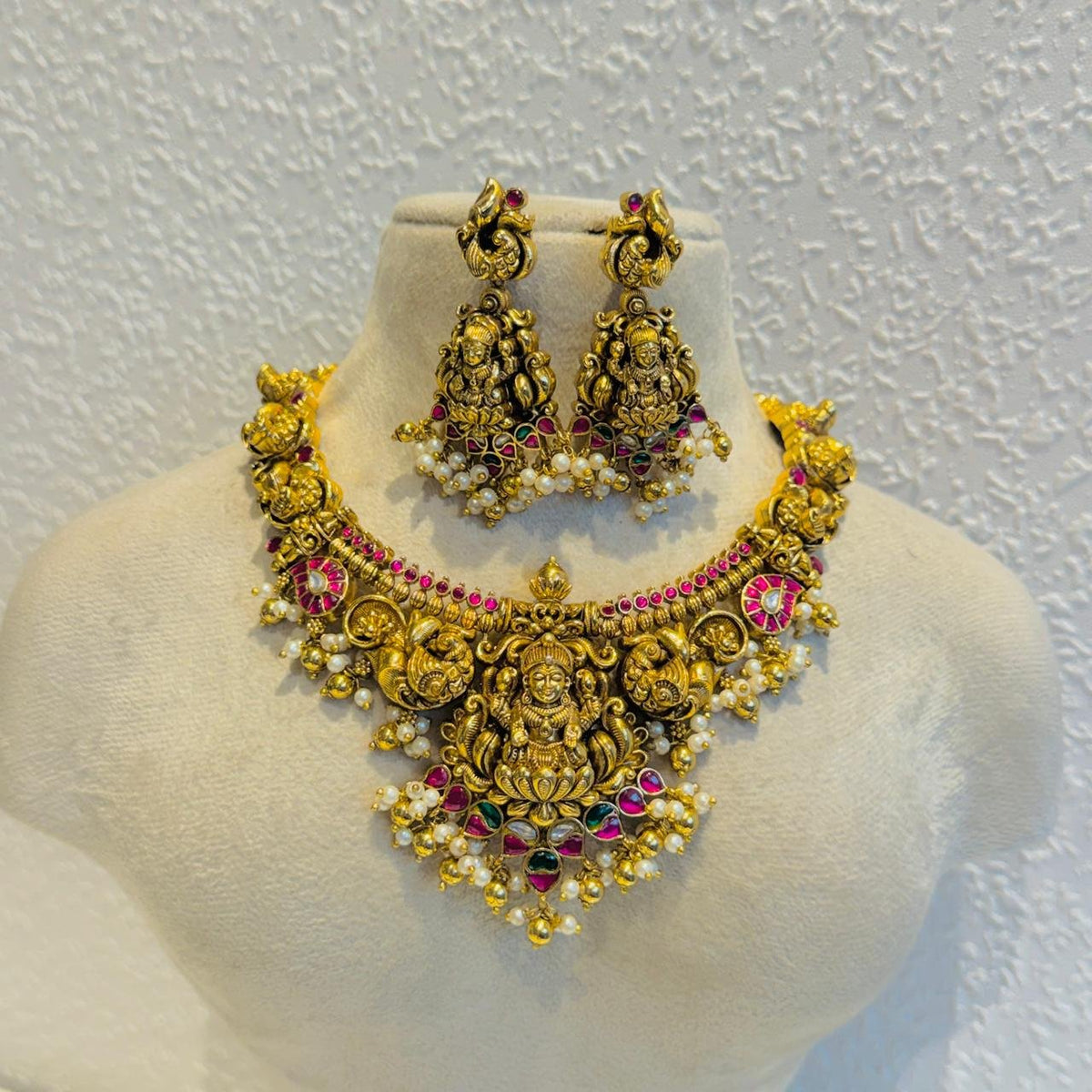
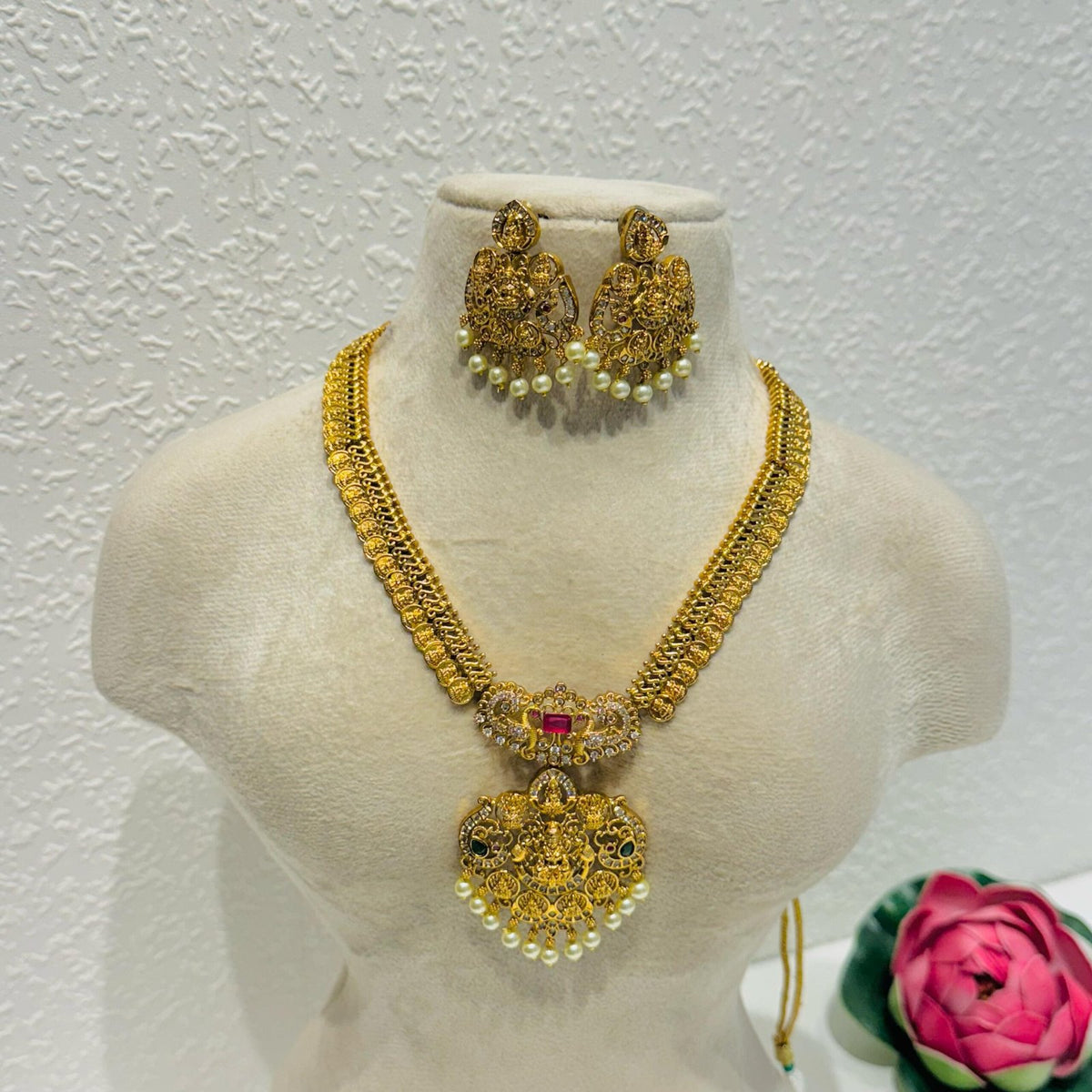
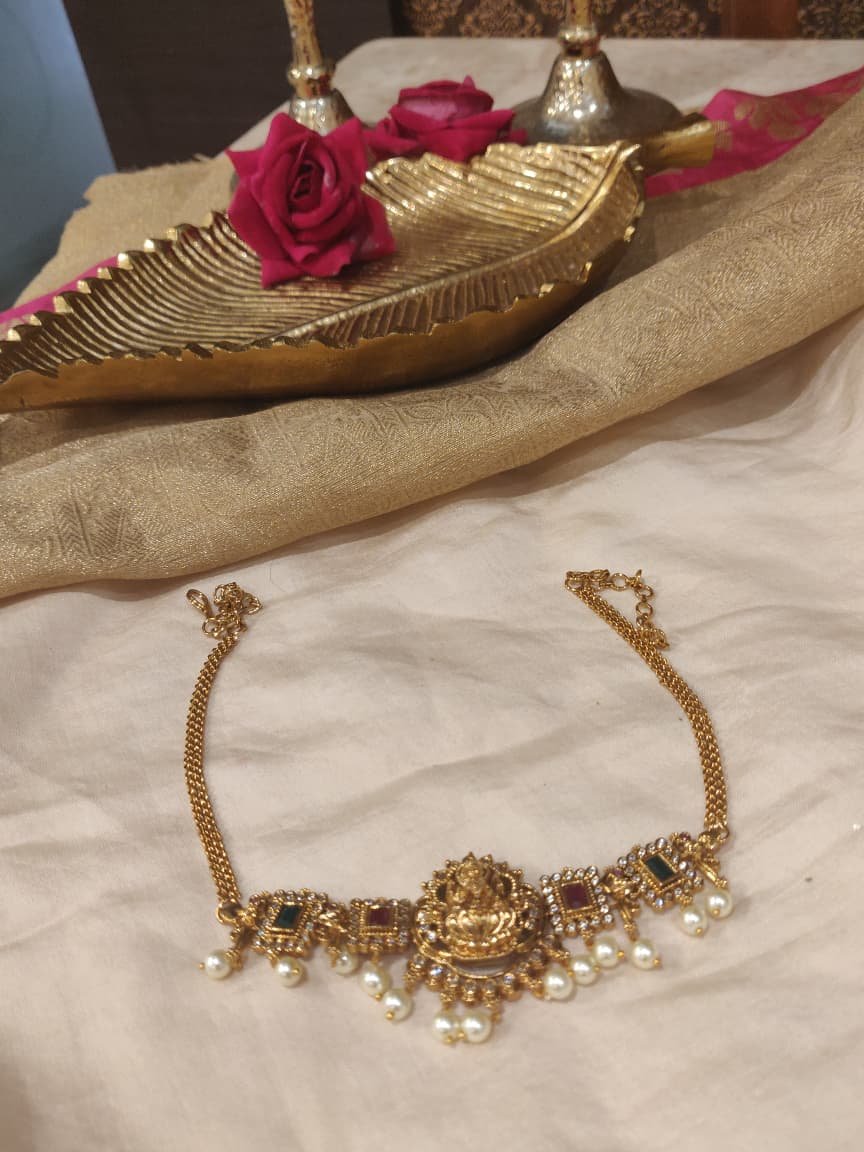
Temple jewellery is identified above all by its motifs. These are not abstract or decorative patterns. They are drawn directly from South Indian temple iconography.
The most common motifs include:
-
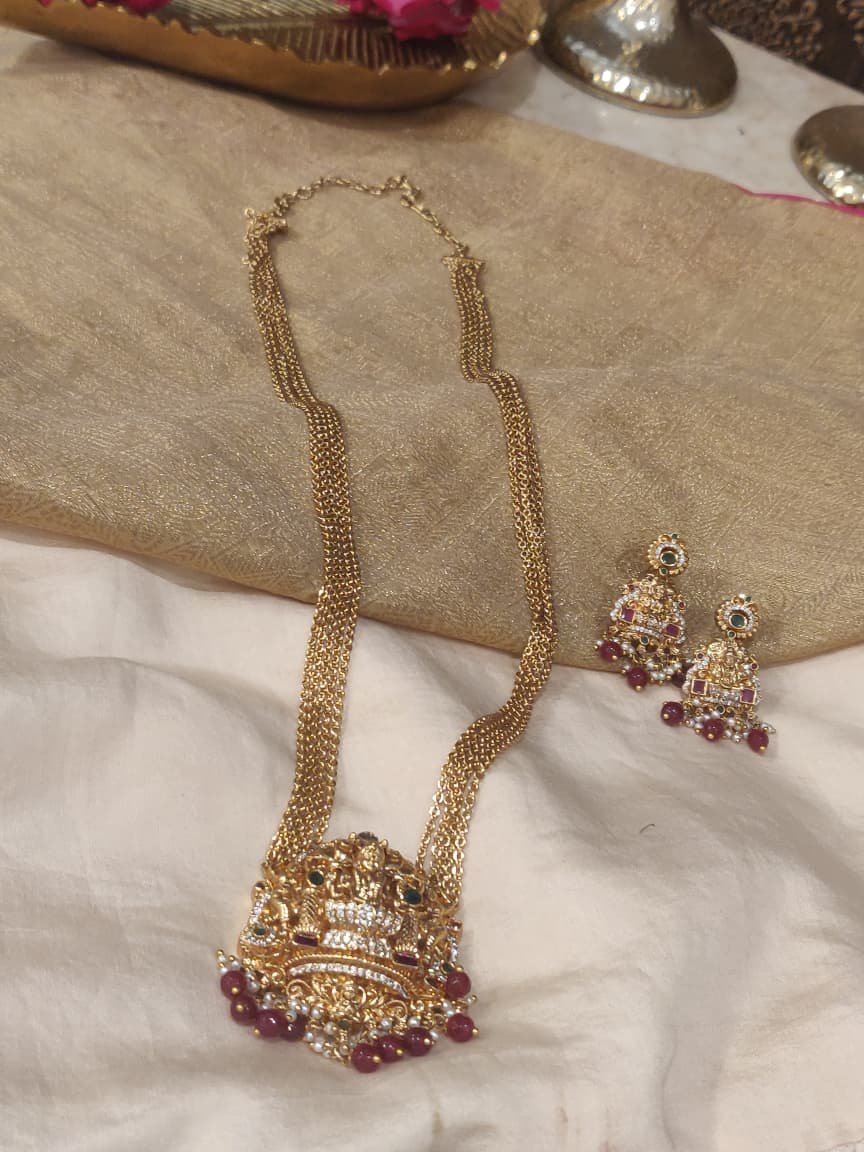
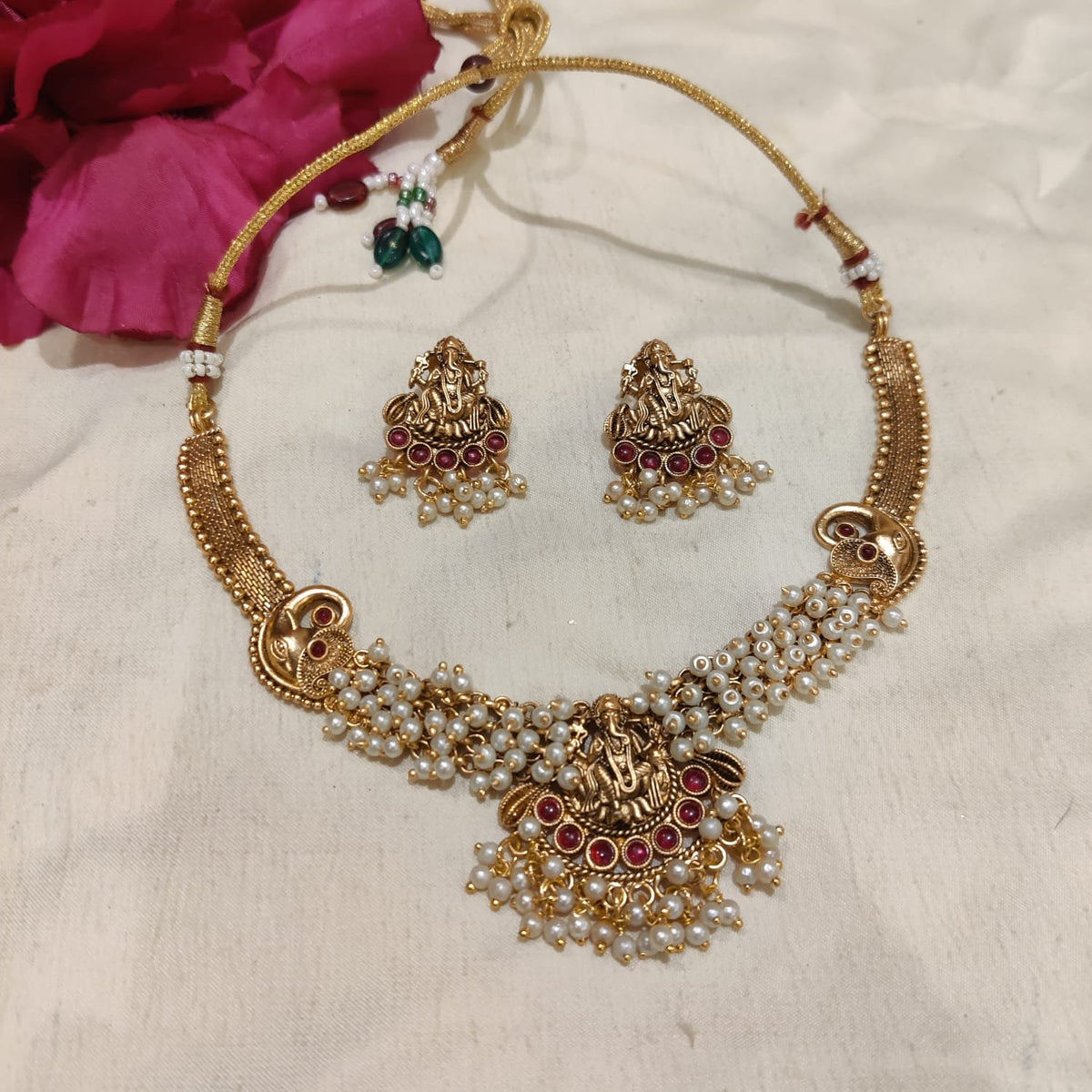
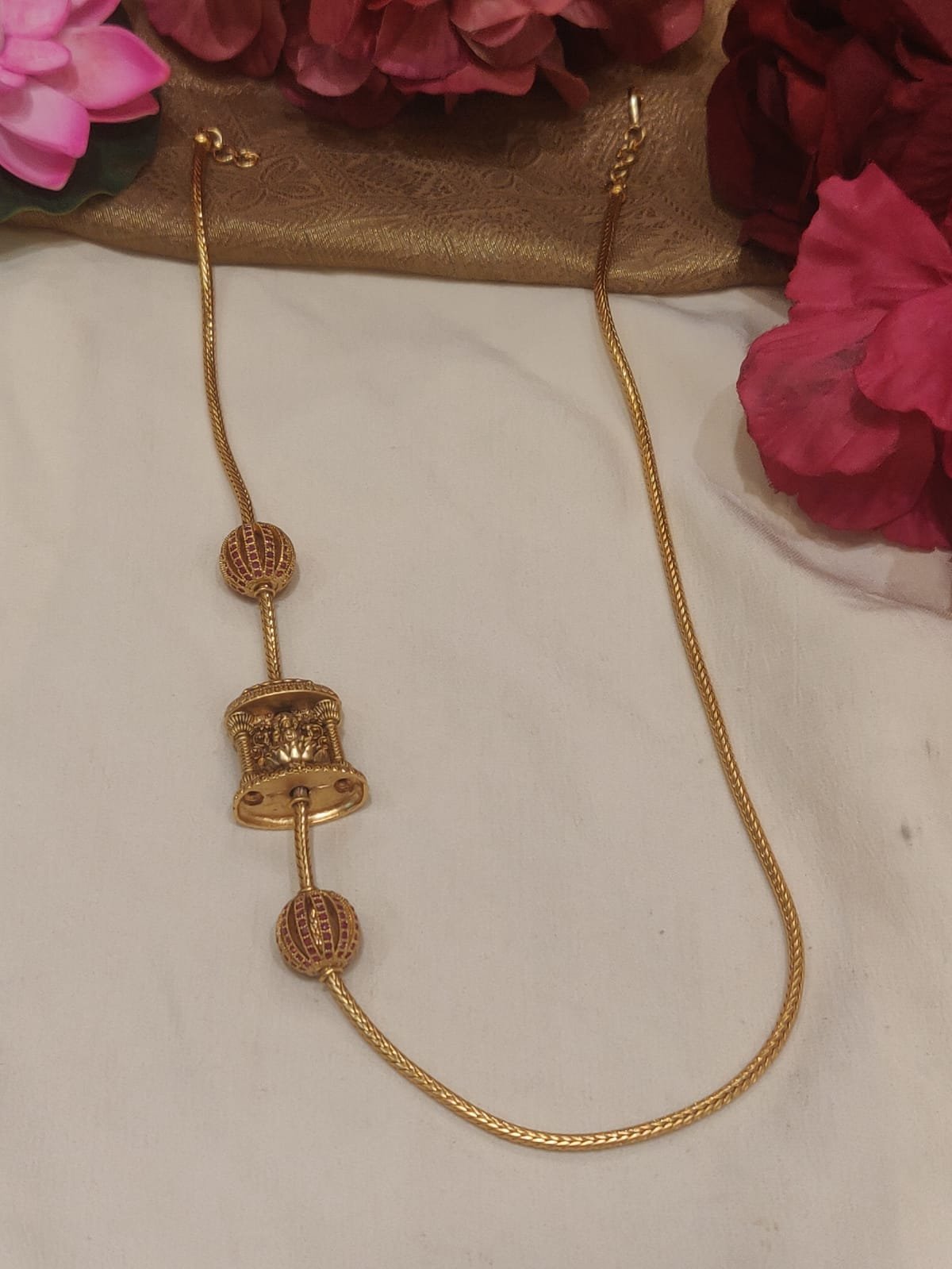
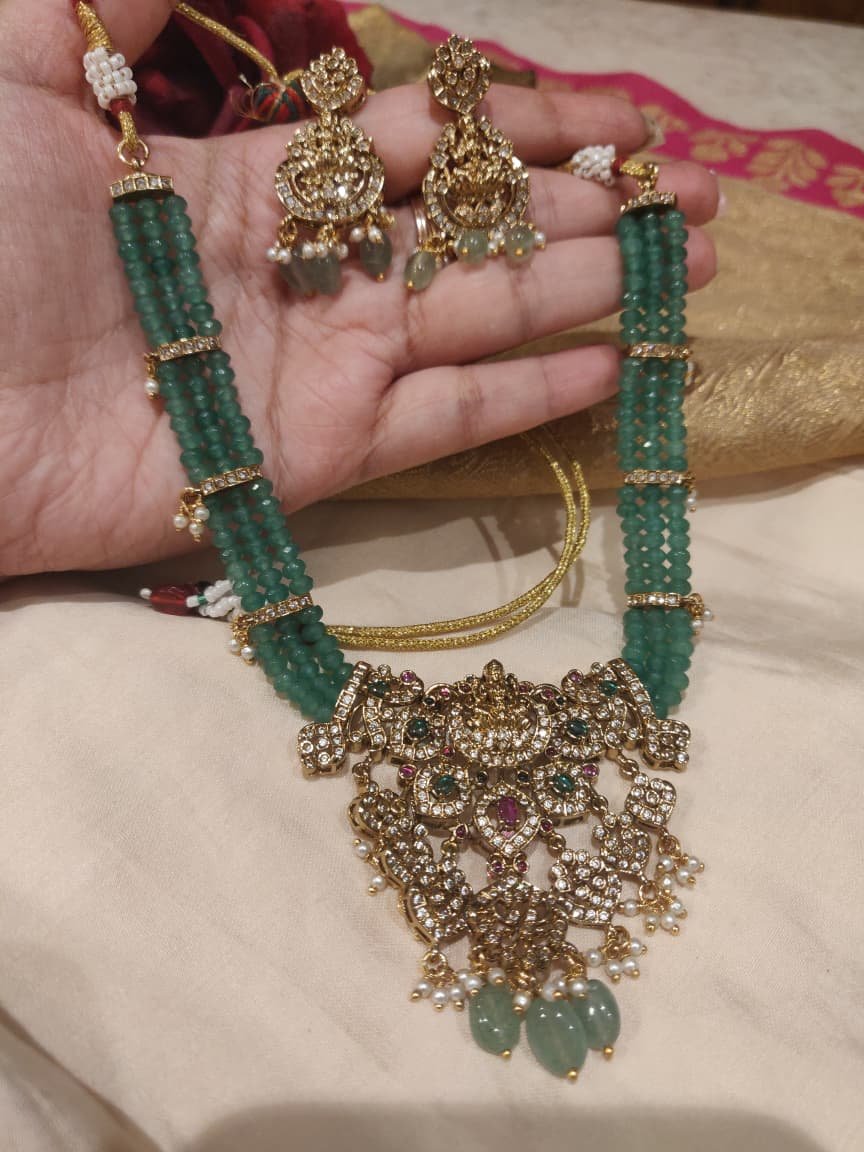
Goddess Lakshmi: The most frequently used deity motif, associated with prosperity and auspiciousness. Lakshmi figures appear on pendant centres, necklace drops, and earring tops.
-
Lord Ganesha: Used as a central pendant or accent motif across necklaces and hair ornaments.
-
Peacocks: The peacock is a recurring symbol in South Indian art and temple architecture. It appears on earrings, necklace borders, and vanki (arm cuff) designs.
-
Lotus flowers: A symbol of purity, the lotus appears as a framing element around deity figures and as a standalone pendant design.
-
Coin pendants: Rows of coin-shaped drops along the base of a necklace or haram are one of the most recognisable features of temple jewellery.
These motifs are what separate temple jewellery from other Indian styles like Kundan or meenakari. The craft is not just decorative. It carries iconographic meaning.
The Finish and Stone Palette
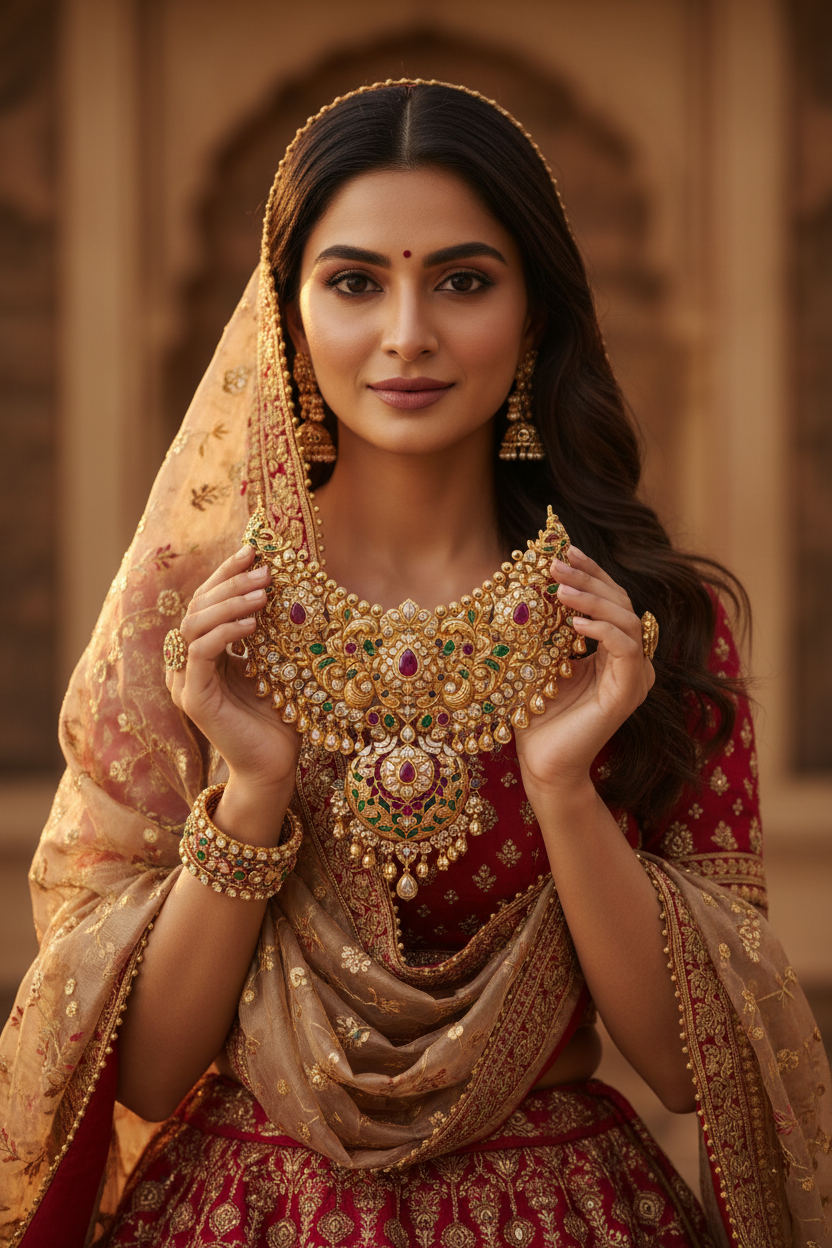
Traditional temple jewellery uses 22-carat gold with rubies and emeralds as the primary stone colours. Fashion versions, which are the standard for most buyers in the UK, replicate this using gold-toned alloy bases with red and green glass stones. The result maintains the rich, warm aesthetic of the original craft at a fraction of the cost.
Who Wears Temple Jewellery in the UK and on What Occasions?
South Indian Brides
For Tamil, Telugu, Kannada, and Malayali brides getting married in the UK, temple jewellery is the traditional bridal standard. A complete South Indian bridal set includes:
-
A long haram necklace (typically layered in two or three tiers)
-
Jimiki earrings (South Indian bell-shaped drops)
-
Vanki or upper arm cuff
-
Maang tikka or nethichutti (forehead ornament)
-
Bangles and coordinated anklets for some traditions
For brides building this look from the UK, finding a store that carries the full set as a coordinated collection rather than individual pieces matters significantly.
Bharatanatyam and Classical Dance Performers
The UK has a substantial classical dance community. Bharatanatyam students and performers at arangetram events in London, Birmingham, and Leicester require complete temple jewellery sets. Dance sets typically include additional hair ornaments, a surya (sun) and chandra (moon) side placement, and coordinated bangles, not always included in standard bridal sets.
Saree Occasions and Formal Events
Temple jewellery pairs more naturally with sarees than any other Indian outfit. Kanjivaram silk, Pochampally, Mysore silk, and cotton weaves all sit under temple jewellery aesthetically. For UK-based women attending South Indian community weddings, temple events, or cultural programs, a temple jewellery set paired with a silk saree is the expected formal look.
Cross-Community Festive Wear
Temple jewellery has crossed regional boundaries in the UK Indian community. Non-South Indian women increasingly choose temple jewellery as an alternative to Kundan for festive occasions, weddings, and photoshoots, drawn by its distinctive aesthetic and the way it photographs under event lighting.
Explore fashion jewellery online for temple-inspired collections curated for the UK Indian buyer across occasion types.
Styling Temple Jewellery: A Practical Guide by Outfit Type
With Kanjivaram silk sarees: This is the definitive temple jewellery pairing. A layered haram necklace with jimiki earrings against a jewel-toned Kanjivaram silk creates a South Indian aesthetic that is both traditional and visually powerful. Keep other accessories minimal.
With Mysore silk or lighter cotton sarees: A single-layer temple necklace with earrings works better than a full layered set on lighter sarees. The weight of a heavy haram can pull a delicate drape out of shape.
With half-sarees: Young women at arangetram events or cultural celebrations typically wear full temple jewellery sets with half-sarees. The more formal the occasion, the more complete the set.
With lehengas: South Indian brides who choose lehengas for contemporary weddings often incorporate temple jewellery to maintain the traditional aesthetic. A long haram over a silk lehenga bridges regional tradition and contemporary styling effectively.
With salwar suits and formal kurtas: A single temple jewellery piece, either a coin necklace or a pair of jimiki earrings, adds ethnic depth to a formal kurta without requiring a full set. Pair with a pearl necklace and earring set as a lighter underlayer for added elegance.
What to Check When Buying Temple Jewellery Online from the UK
Shopping remotely for temple jewellery requires specific attention to detail.
Motif definition: This is the most important quality check for temple jewellery. Deity and nature motifs should be clearly defined in product close-up images. If the motif appears blurred, flat, or indistinctly pressed, the piece has been produced with minimal craftsmanship.
Necklace length confirmation: Temple harams are long by design and should fall below the collarbone. Confirm the length in centimetres before ordering, since "long" means different things in different product listings.
Stone colour accuracy: Red and green are the traditional stone colours. If product images show stones that appear orange-red rather than deep ruby red, or pale rather than deep emerald green, the finished piece may not carry the visual richness you expect.
Set completeness: Confirm precisely which pieces are included. A temple jewellery set for a bride or performer requires more components than a standard necklace and earring combination.
Reverse detail: Higher quality temple jewellery pieces show patterning or finish on the reverse side. If a product image shows the back of the piece and it appears well-finished, it indicates stronger overall craftsmanship.
For complete temple jewellery sets and occasion pieces, explore designer jewellery online for curated collections with detailed product imagery.
Building a Temple Jewellery Collection for UK Life
For UK-based Indian women who attend South Indian community events regularly, building a small temple jewellery collection across tiers makes more sense than buying reactively before each event.
Tier one: Everyday and semi-formal
-
One pair of jimiki earrings in a medium size for saree occasions and cultural events
-
A single-layer coin necklace for versatile use across formal and semi-formal looks
Tier two: Occasion and wedding wear
-
One full-layered haram set with matching earrings for weddings and major cultural events
-
Coordinated bangles to complete the South Indian bridal or formal look
For bangle sets that pair naturally with temple jewellery aesthetics, browse traditional gold bangle designs available with UK delivery.
Emporia Jewels carries temple-inspired jewellery collections organised by occasion and outfit type, making it a practical starting point for UK-based buyers building a South Indian ethnic jewellery wardrobe.
Frequently Asked Questions
Q1: What is temple jewellery used for?
Temple jewellery is used for South Indian weddings, classical dance performances, saree occasions, and cultural events. It is the traditional bridal jewellery style for Tamil, Telugu, Kannada, and Malayali communities.
Q2: Can I wear temple jewellery if I am not South Indian?
Yes. Temple jewellery is worn across Indian communities in the UK for weddings, festive events, and photoshoots. It is not restricted to South Indian wearers.
Q3: What is the correct necklace length for a temple jewellery haram?
A traditional haram falls below the collarbone at approximately 18 to 24 inches. Longer versions layered in tiers are worn for bridal and classical dance occasions.
Q4: What are jimiki earrings?
Jimiki earrings are the South Indian version of jhumka earrings, characterised by a cone or bell shape with temple motif detailing. They are the standard earrings for temple jewellery sets.
Q5: How do I care for temple jewellery?
Wipe with a dry soft cloth after wearing. Store each piece separately in a soft pouch away from moisture and direct sunlight to preserve the gold-tone finish and stone settings.
Q6: Does Emporia Jewels ship temple jewellery to the UK?
Check Emporia Jewels' website for current international shipping policies, including UK delivery timelines and available temple jewellery collections