

South Indian Bridal Jewellery Set: Unveiling the Royal Splendour of Southern Heritage
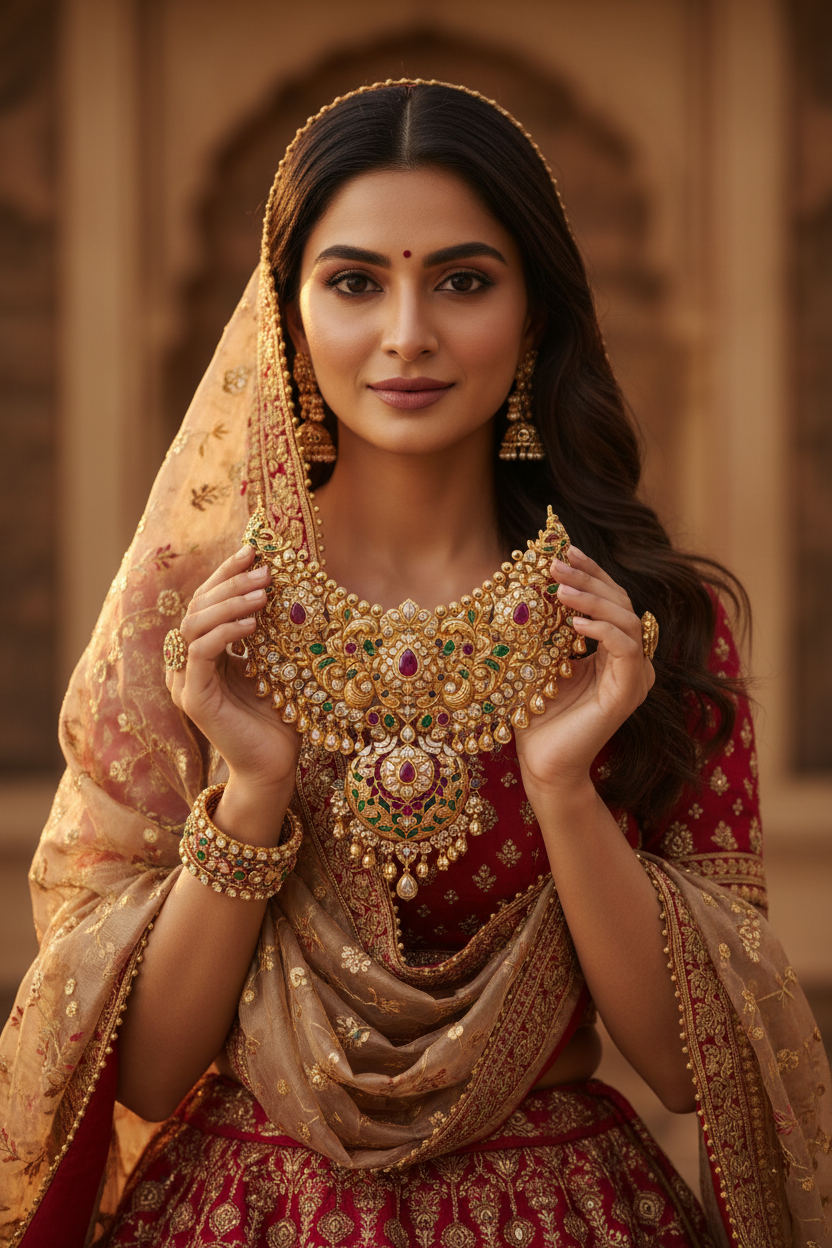
For generations, the classic south indian bridal jewellery set has stood as a breathtaking symbol of divine grace and ancestral heritage. Modern brides in 2026 are increasingly blending these timeless gold heirlooms with ultra-premium imitation options for a customised look. At Emporiajewels, we specialize in helping brides navigate this rich landscape to find pieces that balance historical artistry with wearable comfort.
Traditional Components of a Complete South Indian Bridal Array
Head and Neck Adornments
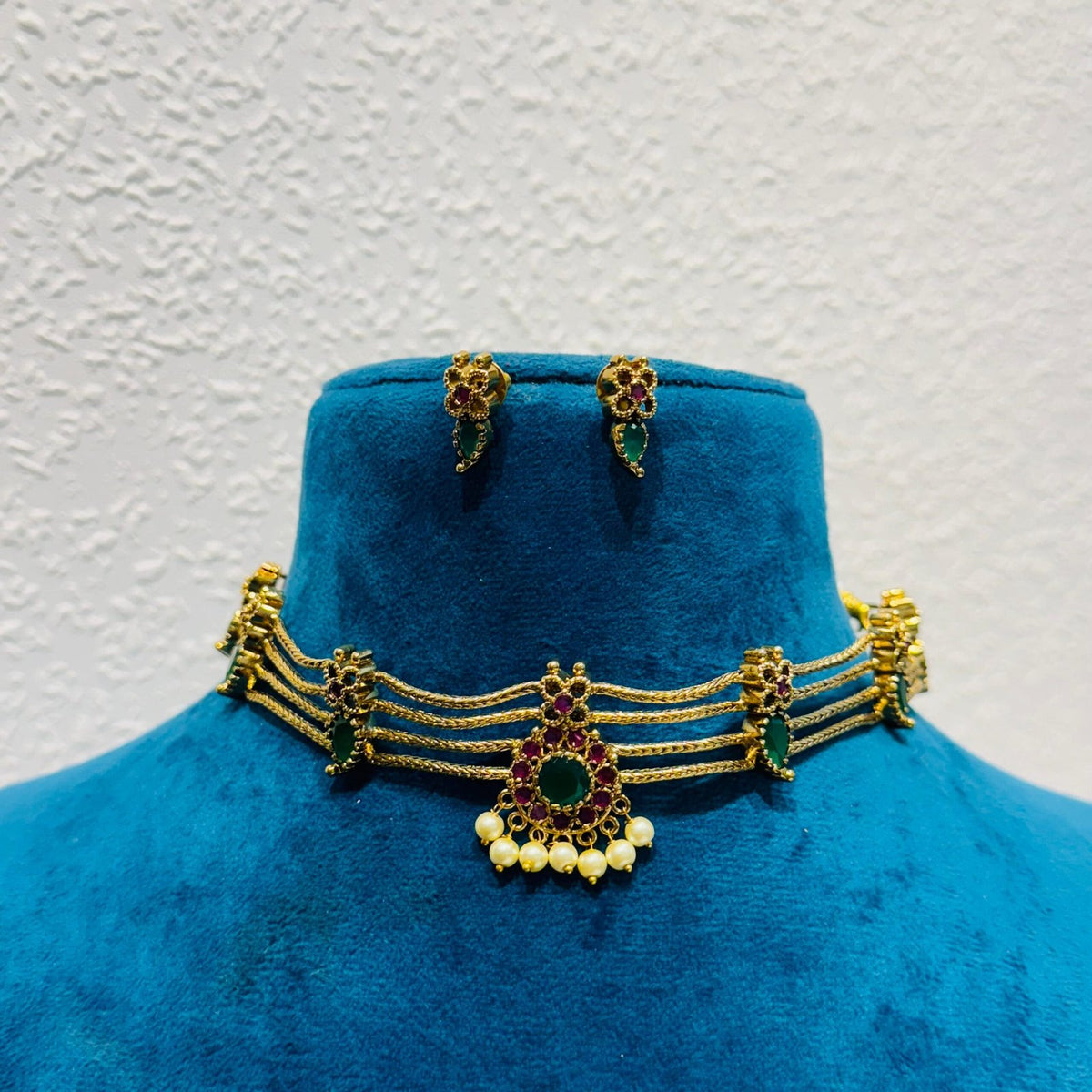
The crowning glory of a Southern bride begins with the Nethichutti, a dual-band maang tikka that perfectly frames the face along the hairline. Moving downward, the neck is layered with a choker, followed by a Mango Mala or a Kasu Mala composed of contiguous gold coins. Combining these pieces with a statement pearl necklace and earring set creates a stunning, regal tiered effect.
-
Nethichutti: A detailed forehead ornament that rests on the central parting and drapes along the hairline.
-
Choker: A close-fitting neckband serving as the foundational layer of the bridal stack.
-
Manga Malai: A symbolic necklace containing distinctive mango-shaped motifs to represent growth and fertility.
-
Kasu Mala: A long coin necklace featuring repeated imprints of deities to invoke divine blessings.
-
Guttapusalu: A heritage necklace adorned with fringe-like clusters of delicate seed pearls and rubies.
Essential Torso and Limb Accents
No ensemble is complete without the Vanki, a classic V-shaped armlet showcasing intricate depictions of deities like Goddess Lakshmi. The waist is accentuated by the Oddiyanam, a structured belt that holds the heavy pleats of Kanjeevaram silk in place. The Jadanagam is braided into the hair to represent a divine serpent, while matching kadas and payals complete the extremities.
|
Ornament Name |
Traditional Placement |
Symbolic Significance |
Styling Tip |
|
Nethichutti |
Forehead and Hairline |
Wisdom and Auspiciousness |
Align precisely with the centre hair parting. |
|
Vanki |
Upper Arms |
Protection and Valour |
Position on the outer arm above the sleeve hem. |
|
Oddiyanam |
Waist |
Royalty and Saree Security |
Secure firmly over the Kanjeevaram saree pleats. |
|
Jadanagam |
Braid and Hair |
Divine Serpent Energy |
Interweave with fresh jasmine buds for maximum elegance. |
Distinguishing Iconic Regional Jewellery Styles
Sacred Temple and Nakshi Work
Traditional temple jewelry utilizes the Nakshi technique, where artisans meticulously hand-carve divine motifs directly onto sheets of pure gold. These designs frequently highlight detailed portraits of Lord Ganesha, peacocks, or divine goddesses atop elaborate lotus flowers. These heavy, matte-finished masterpieces pair best with deep red or bottle green wedding sarees, and brides seeking fancy artificial jewellery alternatives will find equally stunning options available.
-
Divine Iconography: Prominent carvings of sacred deities to provide protective blessings to the bride.
-
Antique Matte Finish: A specialized dark gold polish that emphasizes the fine, hand-etched details.
-
Kemp Stone Inlays: Traditional unpolished rubies and emeralds that lend a classic vintage aesthetic.
-
Solid Gold Core: A heavy foundation that serves as a multi-generational heirloom.
Modern Adaptations and Lightweight Alternatives
The evolving trends of 2026 have popularized hybrid designs that merge classic temple aesthetics with lightweight open-back stone settings. Premium collections now frequently incorporate high-quality Kundan and Polki glass to achieve maximum sparkle without the prohibitive weight of solid gold. Brides exploring fashion jewellery online will find modular necklaces that seamlessly transition from a wedding to a festive reception.
|
Feature / Aspect |
Traditional Temple Gold |
Premium Silver-Based Replica |
Copper-Alloy Imitation |
|
Metal Composition |
Pure 22-Karat Gold |
92.5 Sterling Silver Base |
Refined Brass or Copper |
|
Stone Settings |
Hand-set Kemp / Rubies |
High-grade CZ or Kemp |
Synthetic Glass Crystals |
|
Weight and Comfort |
Highly dense and heavy |
Moderately weighted for all-day wear |
Extremely lightweight and wearable |
|
Average Price Tier |
Premium Investment |
Moderate Mid-range Value |
Cost-effective and budget-friendly |
|
Longevity & Care |
Generations with minimal care |
Decades with proper anti-tarnish storage |
Two to five years depending on wear |
Step-by-Step Selection and Purchasing Guide
Defining the Budget and Metal Base
Before making your purchase, decide whether your priority is long-term asset investment or practical versatility for destination events. Many modern brides select a hybrid wardrobe, combining a genuine gold choker with premium silver-based replica harams. Brands like Emporiajewels offer incredible flexibility, allowing you to secure heirloom-grade aesthetics at a fraction of the cost.
-
Establish your maximum budget and distribute allocations between heirloom gold and high-grade imitation pieces.
-
Select your bridal saree first to ensure the jewellery metal matches the zari border undertones.
-
Identify your face shape to choose between round, choker-style necklaces or elongated v-shaped harams.
-
Inspect the clasp mechanisms and weight distribution of every piece during your bridal trial sessions.
-
Verify the hallmark certifications on solid gold or the base-metal composition of replica sets.
Customizing the Set to Your Bridal Saree
The neckline of your bridal blouse dictates the specific length and width of the chokers and necklaces you should buy. A high boat-neck collar pairs beautifully with a single long Kasu Mala, whereas a deep sweetheart neck demands a multi-layered stack. Always carry a fabric swatch of your Kanjeevaram silk when attending jewellery consultations, and browsing designer jewellery online beforehand helps ensure perfect color harmony.
Maintenance and Long-Term Preservation Rules
Proper Cleaning Techniques
Traditional South Indian ornaments feature intricate crevices that easily trap sweat, body oils, and cosmetics during long wedding ceremonies. Clean your jewelry using a dry, soft-bristled microfiber brush to gently sweep away dust without scratching the delicate gold plating. Avoid harsh chemical cleaners or dipping solutions, as they can quickly strip the beautiful antique patina from Nakshi carvings. Traditional gold bangle designs require the same careful cleaning approach to preserve their intricate surface detailing.
Safe Storage Guidelines
Moisture is the primary enemy of both gold-plated replica sets and delicate, kemp-stone embellished antique jewellery. Wrap each ornament separately in cotton fabric or acid-free tissue paper before storing them in airtight plastic containers. Never store your premium sets inside velvet-lined boxes, because the synthetic glue used can cause rapid metal oxidation. For more information, explore the Traditional gold bangle designs.
Frequently Asked Questions
What is the difference between Temple jewellery and Nakshi jewellery?
While Temple jewellery refers to any design featuring sacred motifs, Nakshi jewellery specifically describes the intensive hand-carving process used to create three-dimensional relief sculptures on gold.
Can I mix gold-plated imitation jewellery with real gold for my wedding?
In practice, many modern brides seamlessly layer a solid gold choker with a premium gold-plated silver haram to maximize their look while optimizing their budget.
How do I prevent my south indian bridal jewellery set from tarnishing?
Store each piece individually in an airtight container wrapped in soft cotton fabric, keeping them far away from moisture, hairsprays, and perfumes.
Is a waistband or Oddiyanam adjustable for different waist sizes?
Most traditional and replica Oddiyanams are designed with an adjustable back chain or fabric cord to ensure a comfortable and secure fit over any saree drape.
How early before the wedding should I purchase my bridal jewellery set?
We recommend selecting and securing your set at least two to three months before the wedding date to allow ample time for custom fitting and color coordination with your saree.