

Kemp Jewellery Online: The South Indian Tradition That the Rest of India Is Finally Discovering
Kemp jewellery is having a moment that feels less like a trend and more like an overdue recognition. For centuries, these deep red and green glass stones set in antique gold-tone metal have been the defining visual element of South Indian jewellery traditions. Classical dancers, temple priests, and South Indian brides have worn kemp pieces as essential components of their dress for generations. And now, women across India who have no South Indian connection at all are discovering kemp jewellery online and falling for the same things that have made this style endure for so long.
This guide explains what Kemp actually is, where it comes from, and how to find and wear it well.
What Is Kemp? The Stone, the History, the Tradition
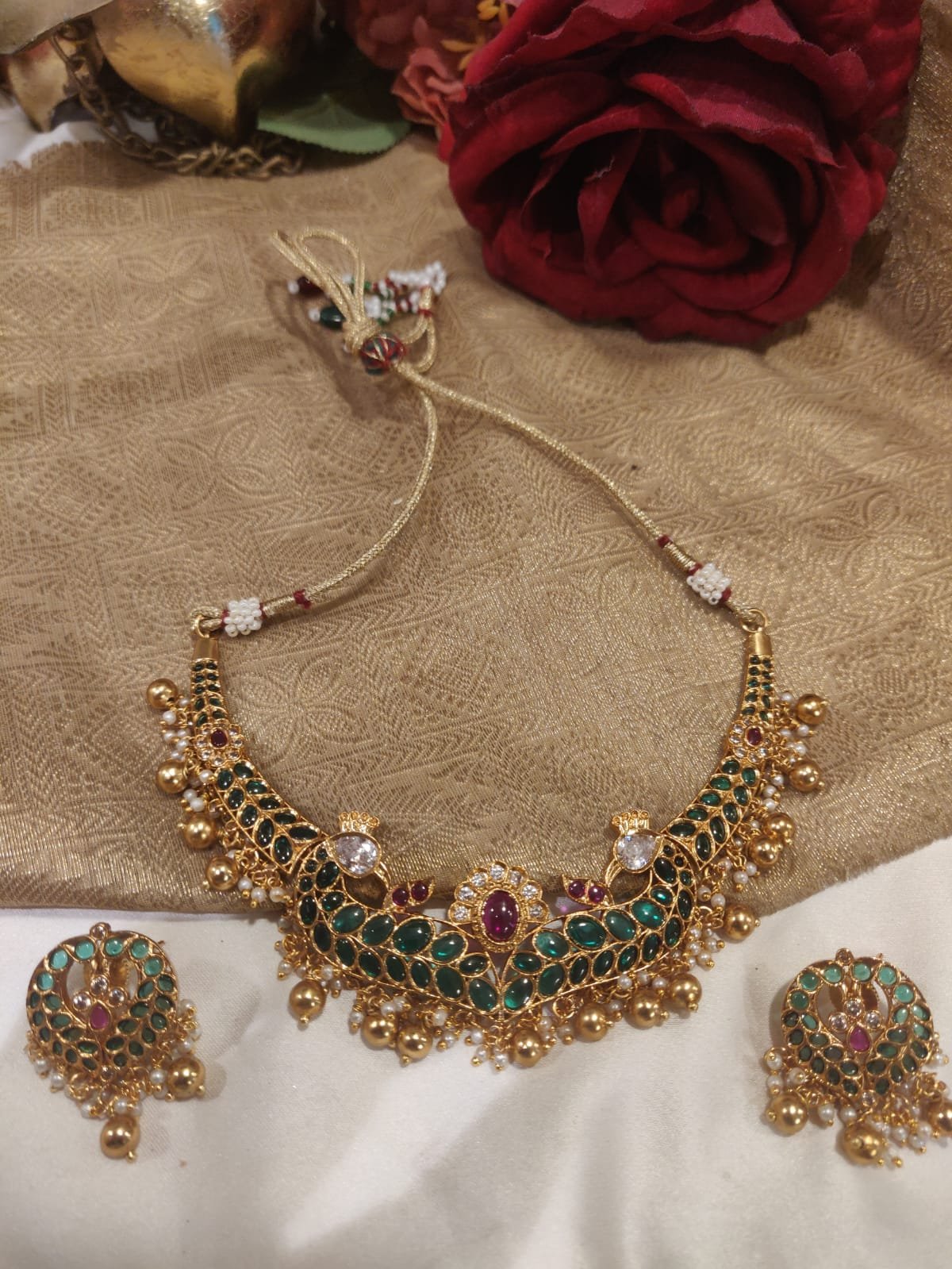
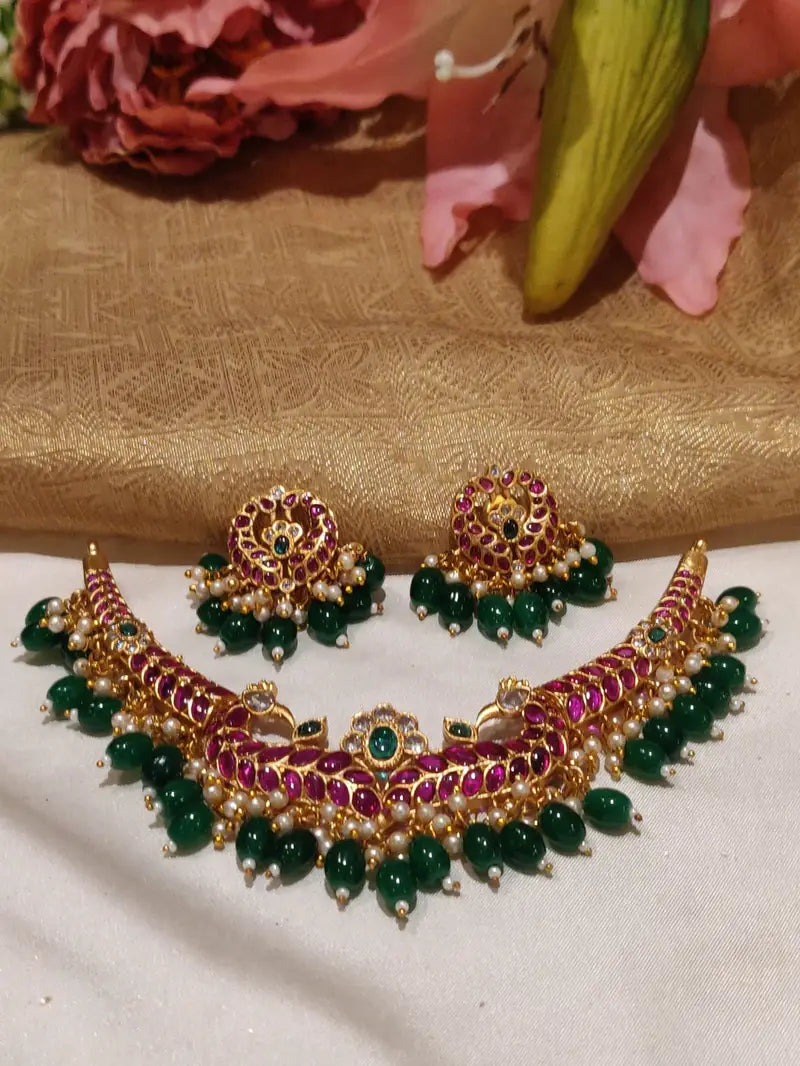
Kemp refers to a type of foiled glass stone, traditionally deep red in colour, used in South Indian jewellery. The word itself is derived from the Kannada word for red. The stones are set in gold-tone metal, typically brass with antique finish, and are often combined with green glass stones to create the characteristic two-colour palette associated with this tradition.
Kemp jewellery originates in the royal courts and temple traditions of South India, particularly in Karnataka (where Mysore was a major centre of kemp craft), Tamil Nadu, and Andhra Pradesh. The jewellery was originally made for temple deity adornment and classical dance costume, which is why Kemp pieces have the visual weight, clarity, and structured scale that reads well from a distance.
Key characteristics of Kemp jewellery:
- Deep red glass stones (kemp) are often combined with green glass
- Antique gold-tone metal setting (typically brass with a darkened finish)
- Foil backing behind the stones to increase their luminosity
- Bold, structured designs with clear motifs
- Common motifs include peacocks, deity forms, lotus flowers, and geometric borders
The combination of the stone colour, the antique metal, and the motif language creates a look that is immediately identifiable and unlike anything produced by any other jewellery tradition in India.
Kemp Jewellery vs Temple Jewellery: Are They the Same?
This is a question that comes up consistently. The short answer is that Kem jewellery is a component of temple jewellery, but the two terms are not interchangeable.
Temple jewellery is a broader category that refers to South Indian jewellery drawing from the temple craft tradition. It includes Kemp stone pieces but also pieces with pearl, white stones, coral, and other materials.
Kemp jewellery specifically refers to pieces where the red and green kemp glass stones are the defining design element. All Kemp jewellery is temple jewellery in spirit, but not all temple jewellery is Kemp.
When you search for Kemp jewellery online, you are looking specifically for that red-green stone and antique gold combination. Pieces described as "temple jewellery" may or may not include kemp stones.
The Essential Pieces in a Kemp Jewellery Collection
If you are building a Kemp jewellery wardrobe, here are the pieces worth knowing and the order in which they add the most value:
Jhumka earrings: The most accessible entry point into kemp jewellery. Kemp-set jhumkas are available at a wide range of price points and work with both traditional and contemporary Indian outfits. The red stone catches the eye beautifully, even in a small format.
Choker necklace: A short, structured necklace with kemp stone coverage across the front. This is the most versatile kemp necklace style because it pairs with sarees, salwar suits, and even certain contemporary western outfits at a collar neckline.
Long haram: A long chain necklace with coin-edge or kemp-panel detailing. The most formal and traditional kemp necklace style, suited to silk sarees and bridal or classical dance looks.
Maang tikka: A kemp-set forehead ornament. The red stone reads with great clarity in photographs, making this a particularly effective bridal and festive piece.
Bangles and kadas: Thick gold-tone bangles with kemp stone settings. Typically sold in pairs for a coordinated wrist look.
Vanki (armlet): An upper-arm ornament in kemp setting. Worn for classical dance and formal bridal occasions.
The bridal collections page features coordinated Kemp sets that include multiple pieces designed to work together.
How to Style Kemp Jewellery Beyond the Classical Context
Kemp jewellery is most naturally worn with traditional South Indian outfits. But its contemporary relevance extends beyond that context.
With Kanjivaram or Banarasi silk sarees: The definitive pairing. The rich jewel tones of silk sarees and the antique gold plus red-green of kemp complement each other precisely. A choker with matching jhumkas is a clean, complete look.
With cotton and handloom sarees: A single kemp jhumka or a minimal kemp necklace adds traditional weight to a simpler fabric without overwhelming it. The contrast of the stone colour against natural, undyed, or earth-tone fabrics is particularly striking.
With salwar suits and anarkalis: Kemp jhumkas are the most transferable piece. They work with embroidered, printed, and plain salwar suits in both casual and semi-formal contexts.
For Navratri: The red and green palette of Kemp jewellery aligns naturally with the festive colour traditions of Navratri. Kemp pieces are popular choices for multiple days of the festival.
With contemporary Indian fusion wear: A kemp choker worn with an embroidered jacket or a structured kurta creates an interesting traditional-contemporary tension that works particularly well for cultural events and art spaces.
The fashion jewellery range includes kemp-influenced pieces that have been adapted for broader contemporary styling.
Caring for Kemp Jewellery: Specific Guidance
Kemp stones are glass with a foil backing. The foil is what gives them their characteristic deep luminosity. Water damage to the foil backing is the most significant care concern.
Specific care points for Kemp jewellery:
- Never expose Kemp pieces to water of any kind
- Store flat in individual soft cloth pouches, not hanging or stacked
- Avoid perfume and hairspray on the stones
- Do not clean with a wet cloth or any liquid cleaner
- Handle stones gently; glass is harder than softer stones, but can chip if struck against a hard surface
For handcrafted kemp pieces where the stone setting is particularly intricate, the handcrafted jewelry range comes with design details that reward careful storage and handling.
Frequently Asked Questions
Q1. Are Kemp stones real gemstones?
No. Kemp stones are coloured glass with a foil backing. They are not precious or semi-precious gemstones. Their value is in their aesthetic tradition and craft setting, not in the stone material itself.
Q2. What is the difference between Kemp and rubies?
Kemp stones are glass that approximates the colour of rubies. They are not rubies in any sense. Real rubies are precious gemstones with certification and significant monetary value. Kemp is a craft material with a deep cultural heritage but no gemological status.
Q3. Can Kemp jewellery be worn for North Indian weddings?
Yes. Kemp jewellery has crossed regional boundaries significantly. It is now widely worn by brides and guests across North India who appreciate its traditional aesthetic, particularly for mehendi and ceremony functions.
Q4. How do I verify the quality of Kemp stones in an online listing?
Look for even, deep colour across all stones with no cloudiness or visible air bubbles. In product photographs, check that the foil backing creates a consistent glow. Customer review photos in natural light are the most reliable quality indicator.
Q5. Is Kemp jewellery only available in red and green?
Traditionally, yes. The red-green combination is definitive of Kemp tradition. However, contemporary adaptations sometimes use blue, white, or orange glass in Kemp-style settings. These are stylistic variations, not traditional kemp.