

Jewellery Designer Expertise: Decoding the Artistry and Engineering of Modern High Jewellery
Selecting a master jewellery designer requires a deep understanding of both traditional bench craftsmanship and modern digital manufacturing. Professional designers balance artistic vision with structural metallurgy to create pieces that are both structurally sound and visually breathtaking. This guide explores the essential technical skills, creative methodologies, and industry standards that define contemporary high jewellery creation, utilizing the design standards upheld by Emporiajewels, where you can explore fashion jewellery online across a wide range of styles.
Core Methodologies of the Modern Jewellery Designer
Traditional Hand Sketching and Technical Rendering
Before digital tools dominated the industry, every exceptional piece began as a hand-drawn gouache paint rendering on grey paper. In practice, this traditional technique allows a jewellery designer to capture the nuanced play of light across precious metal surfaces and gemstones. Master designers still rely on these foundational hand sketches to establish initial proportions and design direction before moving into digital spaces.
-
Gouache rendering establishes the primary color palette and gemstone placement.
-
Orthographic projections provide multi-angle views for the master bench jeweller.
-
Hand sketches capture fluid, organic movements that are difficult to initial-code.
-
Shading techniques simulate the realistic brilliance and fire of precious diamonds.
-
Paper templates offer a physical scale reference for ergonomic testing.
Computer-Aided Design and Rapid Prototyping
Modern design workflows heavily depend on Computer-Aided Design software like MatrixGold or RhinoGold to achieve microscopic precision. These digital tools enable a jewellery designer to build highly accurate 3D models that calculate exact metal weights and gemstone tolerances, making it easier than ever to find designer jewellery online. Once the digital model is perfected, 3D printing technologies output high-resolution wax models ready for investment casting.
|
Software Platform |
Primary Use Case |
Key Technical Advantage |
Primary Material Focus |
|
MatrixGold |
High-end organic jewelry |
Parametric history modelling |
Gold and Platinum |
|
RhinoGold |
Structural geometric bands |
Precise boolean operations |
Gold and Titanium |
|
ZBrush |
Micro-sculpting and textures |
High-polygon organic modeling |
Custom Alloys |
|
JewelCAD |
Standard commercial jewelry |
Automated stone setting layouts |
Silver and Brass |
|
Blender |
Conceptual rendering and visualization |
Realistic lighting simulations |
Mixed Materials |
|
AutoCAD |
Basic structural engineering |
Highly accurate 2D draft lines |
Heavy Metals |
|
SolidWorks |
Functional mechanical clasps |
Advanced stress analysis simulation |
Platinum Alloys |
Material Science and Gemological Expertise
Metallurgy and Alloy Selection in High Jewellery
A skilled jewellery designer must possess deep expertise in metallurgy to ensure the longevity and durability of their creations. Field use commonly shows that selecting the correct alloy, whether 18-karat gold or platinum 950, directly impacts the structural integrity of thin prongs and fine filigree. Understanding these material characteristics prevents catastrophic stress fractures during the setting process and daily wear.
-
Evaluate the target weight and structural demands of the proposed jewellery piece.
-
Select the gold karatage or platinum ratio to match the desired hardness.
-
Formulate the specific master alloy composition for precise color control.
-
Conduct thermal annealing to relieve internal stresses within the cast metal.
-
Perform micro-hardness testing to verify the durability of the finished alloy.
Gemstone Integration and Setting Mechanics
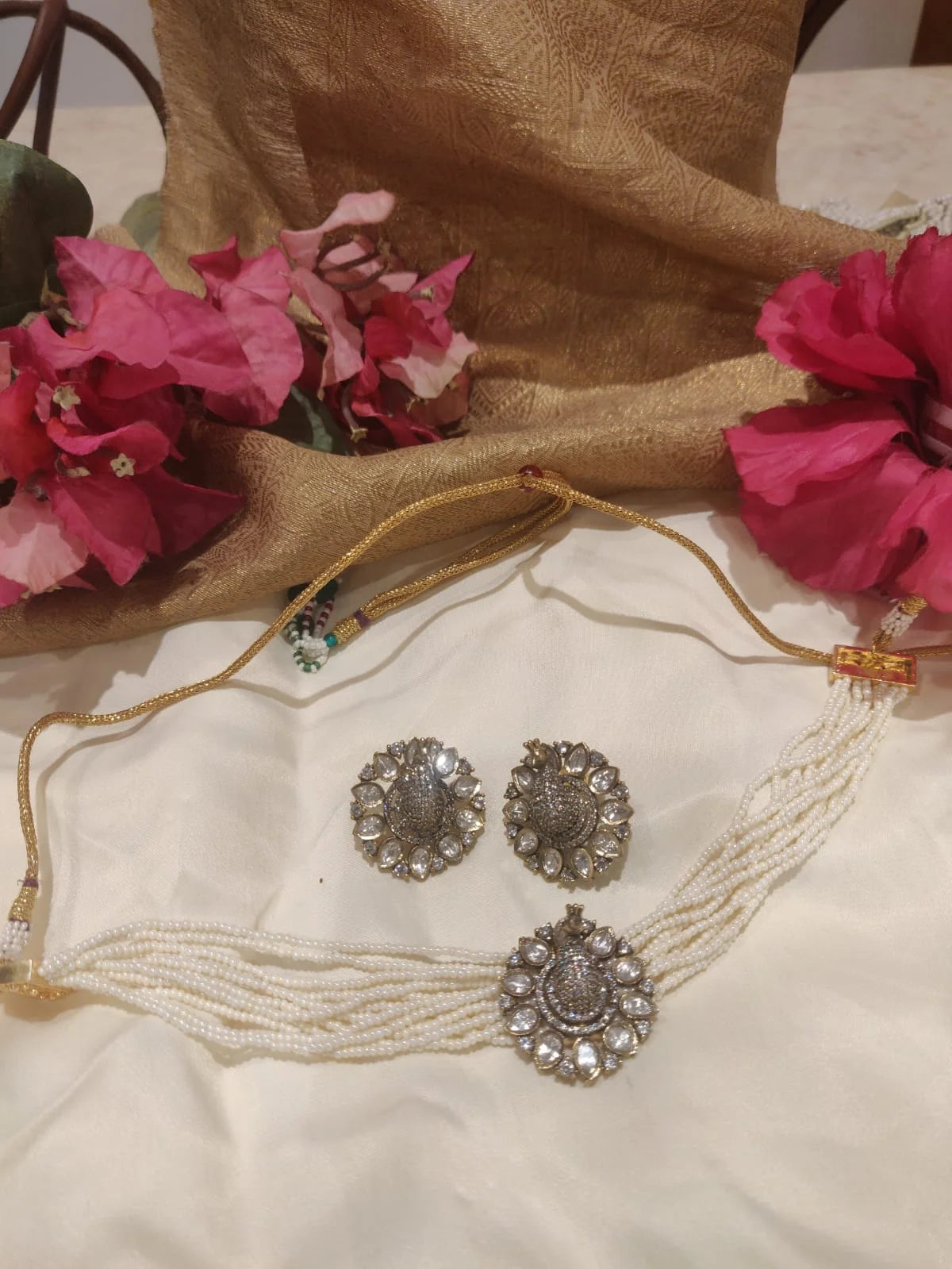
Integrating gemstones requires precise calculations of pavilion depths, girdle thicknesses, and table angles to maximize brilliance. A master jewellery designer carefully coordinates with gemologists and master setters to select the safest setting style for each specific gemstone species, from a classic pearl necklace and earring set to complex multi-stone arrangements. This collaborative engineering ensures that vulnerable gems like emeralds are protected while brilliant diamonds receive maximum light exposure.
|
Setting Style |
Best Gemstone Types |
Protection Level |
Light Exposure |
Required Skill Level |
|
Bezel Setting |
Fragile gems like emeralds |
Maximum Protection |
Moderate Light |
Master Artisan |
|
Prong Setting |
Hard gems like diamonds |
Moderate Protection |
Maximum Light |
Intermediate Jeweler |
|
Channel Setting |
Calibre-cut accent gems |
High Protection |
Moderate Light |
Experienced Setter |
|
Pavé Setting |
Small round diamonds |
Moderate Protection |
High Light |
Expert Micro-setter |
|
Tension Setting |
Extremely hard gems |
Low Protection |
High Light |
Master Metallurgist |
|
Flush Setting |
Tiny accent gemstones |
Maximum Protection |
Low Light |
Entry-level Jeweler |
|
Bar Setting |
Baguette-cut diamonds |
Moderate Protection |
High Light |
Intermediate Jeweler |
The Custom Design Journey for Clients
Collaborative Consultation and Concept Definition
The custom creation process relies on a structured, collaborative dialogue between the client and the jewellery designer. In practice, elite design studios use this initial phase to discover personal narratives, aesthetic preferences, and lifestyle considerations that influence wearability. This rigorous exploration ensures the final piece aligns perfectly with the client's expectations and ergonomic requirements.
-
Personalized narratives are woven directly into the structural design.
-
Ergonomic optimization ensures the piece fits comfortably on the body.
-
Resource sourcing is tailored to specific budget and ethical preferences.
-
Digital renders provide realistic previews before any physical metal is cast.
-
Heirloom remodelling preserves sentimental value while modernizing the aesthetic.
Precision Fabrication and Master Finishing
Once the design is approved, the physical fabrication transitions from raw casting to meticulous bench assembly. Master artisans polish hard-to-reach galleries, laser-weld delicate joints, and hand-burnish the metal to a mirror finish. This dedication to precision hand-finishing separates mass-produced jewellery from high-art designer pieces that endure for generations, including fancy artificial jewellery crafted to the same exacting standards.
Evaluating Professional Design Standards
Quality Assurance and Structural Integrity Testing
Rigorous quality assurance is the final defence against manufacturing defects that can compromise a piece's lifetime value. Field use commonly shows that checking prong tension, solder joint consistency, and gemstone security is non-negotiable for high jewellery. Designers utilize microscopic inspection and acoustic testing to verify that every component meets rigorous international standards.
-
Prong alignment check ensures every claw is centred perfectly over the gemstone facet.
-
Porosity inspection detects micro-bubbles in the cast metal using 10x magnification.
-
Solder joint stress test verifies the strength of assembly points under tension.
-
Symmetry analysis compares the left and right halves of the piece for balance.
-
Comfort fit evaluation checks that inner edges are rounded for smooth wear.
Brand Distinction and Authentic Craftsmanship
Discerning clients seek out design houses like Emporiajewels because they consistently bridge the gap between historical heritage and contemporary relevance. Traditional gold bangle designs exemplify this balance, honouring centuries-old craft while meeting modern structural standards. A dedicated jewellery designer from such reputable ateliers ensures that every custom piece is backed by certified materials and superb finishing, creating timeless assets that transcend fleeting fashion trends.
Download the Technical Datasheet
Acquire our comprehensive metallurgy and gemology reference manual to master structural evaluation standards before your next custom commission. This educational resource provides detailed blueprints and tolerances used by industry professionals. Read the full case study to understand our structural validation process.
Frequently Asked Questions
How does a jewellery designer calculate metal weight from a 3D CAD model?
A designer uses CAD software to calculate the precise volume of the digital model and multiplies it by the specific gravity of the chosen metal alloy.
What is the main difference between a jewellery designer and a bench jeweller?
While a designer conceptualizes, renders, and models the piece using artistic and digital tools, a bench jeweller physically fabricates, sets, and finishes the metal.
Why is 18k gold preferred over 24k gold by designers?
Pure 24k gold is far too soft for jewellery, so designers blend it with stronger alloys to create durable 18k gold that holds gemstones securely.
How long does the custom design process typically take?
The entire custom design journey, from initial sketch to final polished piece, generally takes between four and eight weeks depending on complexity.
What file formats are used for 3D printing jewellery designs?
Designers export digital models into high-density STL or 3DM file formats to ensure maximum precision during the wax 3D printing stage.