


Heavy bridal jewellery set online: A Buyer's Framework for Choosing the Right Dulhan Set Without Regret
Shopping for a heavy bridal jewellery set online means navigating hundreds of listings, varying material grades, and style categories that look similar but perform very differently on the wedding day. This guide cuts through the noise with concrete evaluation criteria, price-to-weight comparisons, and style-matching logic so you can make a confident, informed decision before checkout. For more information, explore fashion jewellery online.
Understanding What Makes a Bridal Jewellery Set "Heavy" and Why It Matters
Weight, Coverage, and Visual Impact Defined
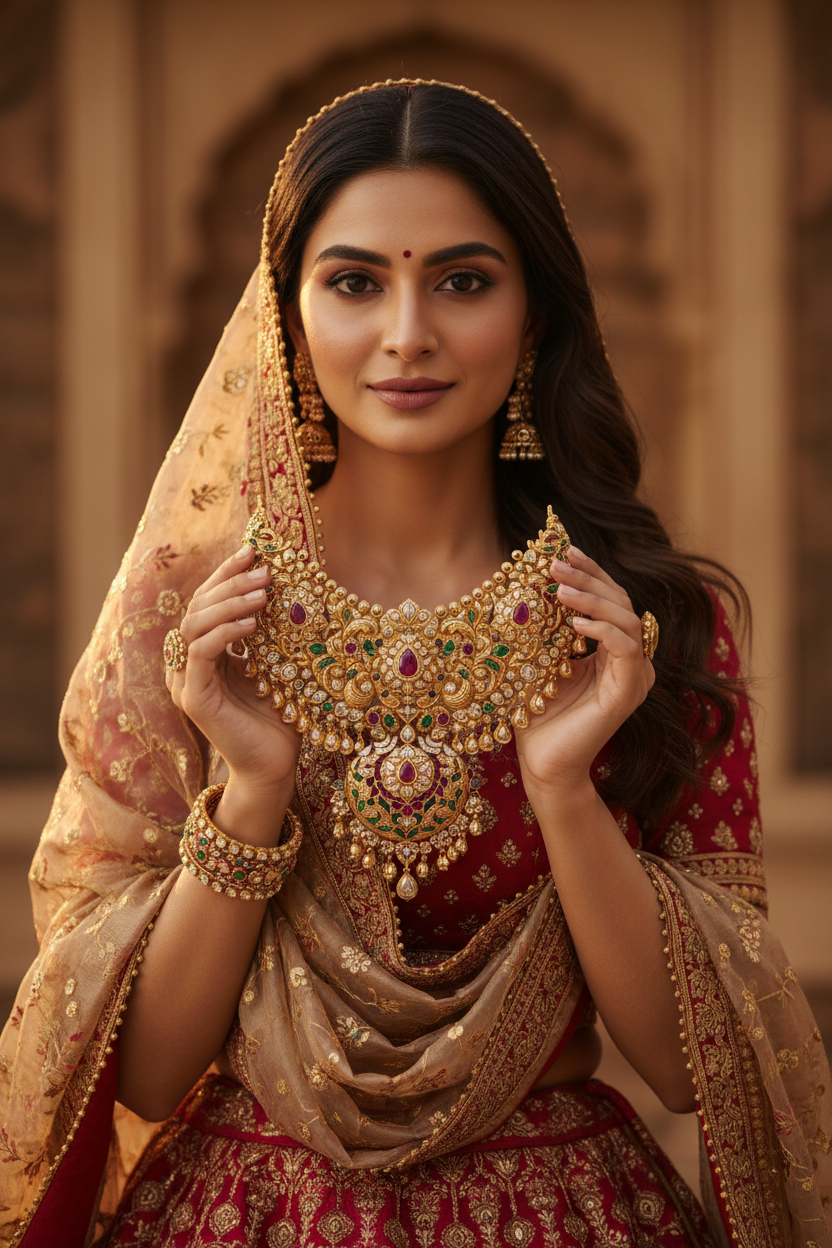
In bridal jewellery, "heavy" refers to layered construction, dense stone setting, and multi-piece coverage across the neckline, ears, wrists, and hair. A true heavy bridal set typically includes a broad choker or rani haar necklace, chandelier jhumkas or passa earrings, a maang tikka, nath, bajuband, and stacked bangles or kadas. The combined visual weight of these pieces is what creates the traditional dulhan silhouette seen in North Indian, Rajasthani, and Punjabi bridal looks.
How Set Composition Differs Across Regional Bridal Styles
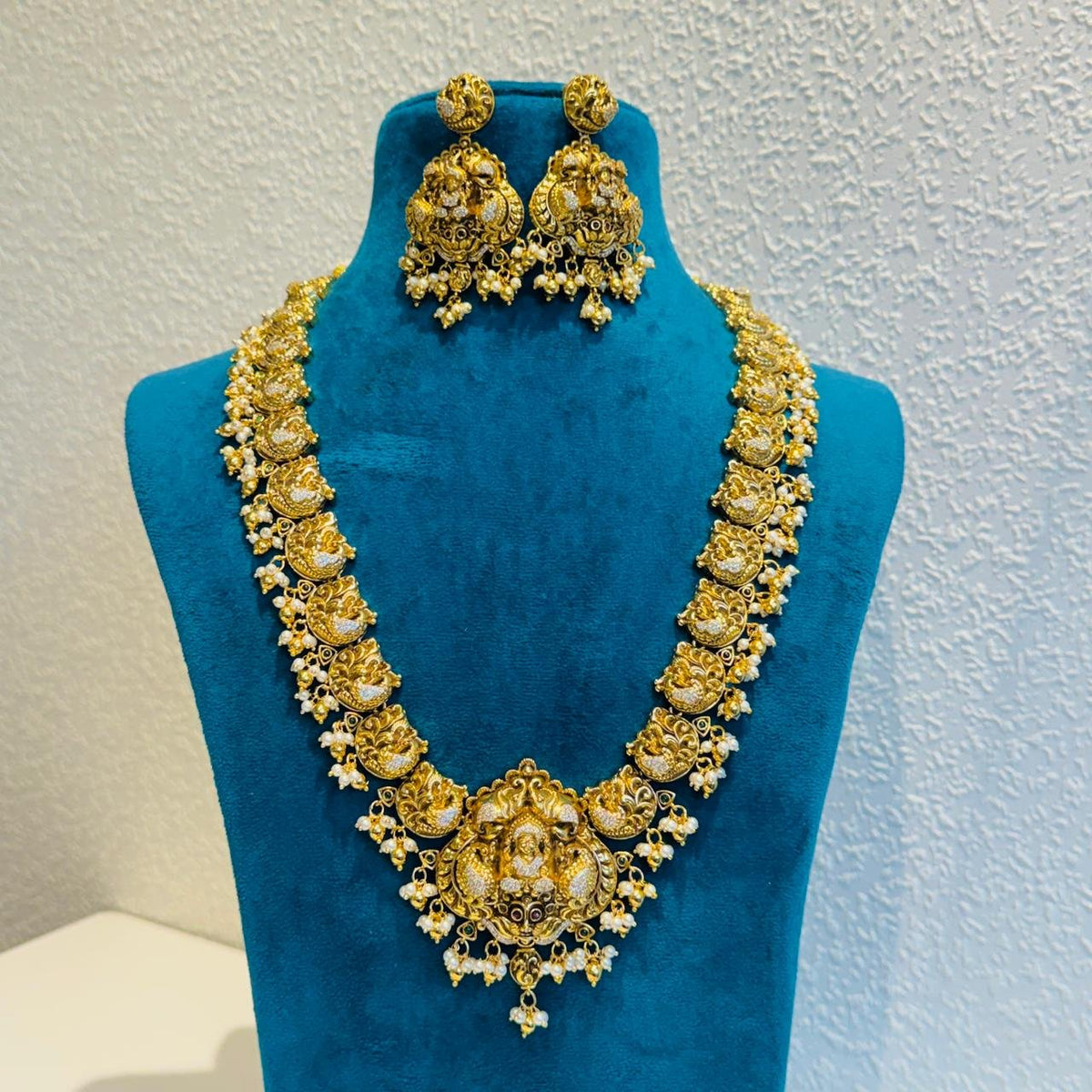
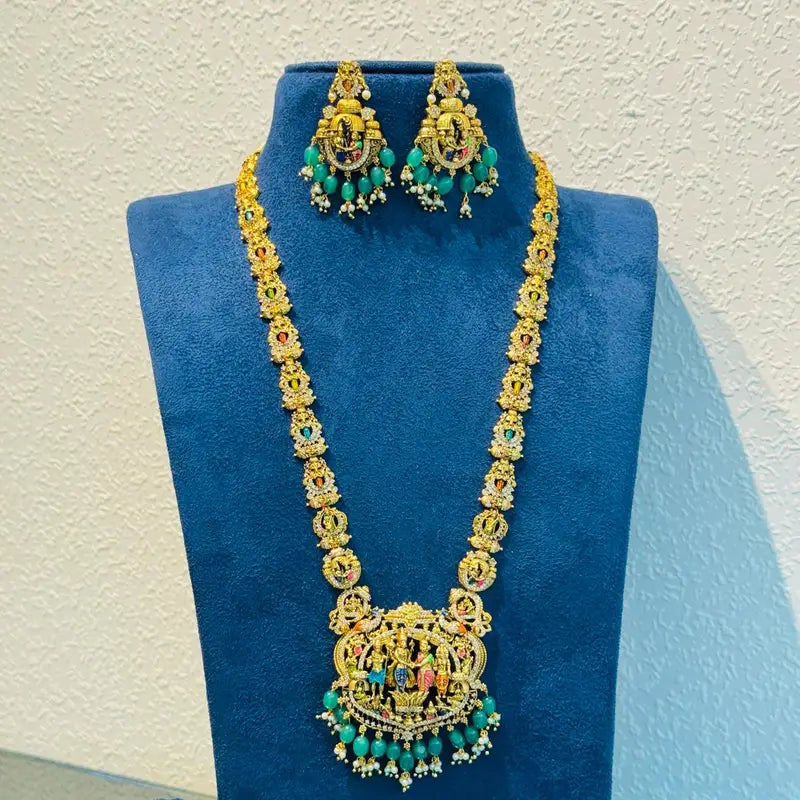
South Indian heavy bridal sets lean toward temple-motif necklaces, long chains, and vanki armlets, while Rajasthani sets prioritise kundan panels, meenakari backs, and layered haar combinations. Bengali bridal jewellery centres on gold-toned shakha-pola bangles and thick chokers, whereas Punjabi sets favour polki-style necklaces with matching passa and jhumka clusters. Knowing your regional style before browsing online narrows the search significantly and prevents mismatched purchases. Traditional gold bangle designs are especially relevant for brides seeking authentic regional bangle styles to complete their set. For more information, explore designer jewellery online.
Key Material Categories in Heavy Bridal Sets Available Online
Kundan, Polki, and AD Stone: What Each Delivers
Kundan sets use glass stones set in gold-foil-backed lac bases, producing a rich, opaque look suited to traditional lehenga and saree pairings. American diamond (AD) stone sets use cubic zirconia in silver or gold-plated frames, offering high sparkle at a lower price point than polki. Polki-style imitation sets replicate the uncut diamond aesthetic using resin or glass inserts, making them popular for brides who want a heritage look without fine jewellery pricing.
Base Metal and Plating: The Detail Most Buyers Overlook
Most heavy bridal sets sold online use brass, zinc alloy, or copper as the base metal, finished with gold plating, antique gold coating, or silver rhodium. Brass bases generally hold plating longer than zinc alloy under event-day conditions involving sweat and friction. When reviewing listings, check whether the product description specifies the base metal; sets that omit this detail entirely are harder to evaluate for longevity and finish consistency. Brides exploring fancy artificial jewellery should pay particular attention to base metal disclosures, as finish quality varies widely across this category.
|
Material Type |
Typical Finish |
Best Suited For |
Price Range (INR) |
|
Kundan (lac-set glass) |
Gold foil, meenakari back |
Traditional lehenga, saree |
1,500 - 6,000 |
|
American Diamond (CZ) |
Silver or gold plated |
Contemporary bridal, reception |
800 - 4,500 |
|
Polki-style imitation |
Antique gold, oxidised |
Heritage, Mughal-inspired looks |
1,200 - 5,500 |
|
Meenakari enamel |
Coloured enamel on gold tone |
Rajasthani, Punjabi bridal |
1,000 - 4,000 |
How to Evaluate a Heavy Bridal Jewellery Set Listing Before You Buy
Reading Product Images and Descriptions Critically
High-quality bridal set listings show multiple angles: front, back clasp, earring drop length, and a model wearing the full set. If a listing shows only one flat-lay image with no scale reference, the actual size and weight of the necklace are impossible to judge accurately. Look for descriptions that state the necklace length in centimetres, earring drop in centimetres, and the number of pieces included in the set, as these are the three most useful data points for fit and styling decisions. Shoppers browsing fashion jewellery online should apply these same criteria to ensure listings meet a minimum standard of detail before adding to cart.
Piece Count, Adjustability, and Comfort Factors
A complete heavy bridal set typically contains seven to twelve pieces; sets advertised as "complete" with fewer than five pieces are usually partial sets requiring separate purchases. Adjustable necklace chains and screw-back or push-back earring closures are practical features for long wedding-day wear. Buyers with sensitivity concerns should check whether the listing specifies the plating type, since nickel-free or copper-free claims require explicit product-level confirmation rather than assumed category standards. For more information, explore the Traditional gold bangle designs.
-
Confirm the total piece count and verify each component is listed individually.
-
Check necklace length and earring drop measurements against your neckline and outfit neckline depth.
-
Review the base metal specification to assess plating durability for event-day wear.
-
Read return and exchange policies before purchasing, especially for sets bought well ahead of the wedding date.
-
Cross-reference customer review photos against the product listing images to verify colour accuracy.
Comparing Heavy Bridal Set Options: Price Tiers, Style Fit, and What to Expect
Budget Segmentation and What Each Tier Realistically Delivers
Entry-level heavy bridal sets priced between INR 800 and 2,000 typically use zinc alloy bases with thin gold plating and machine-set stones, suitable for mehendi or haldi functions where the set will not face prolonged wear. Mid-range sets between INR 2,000 and 5,000 often use brass bases with thicker plating, hand-set kundan or AD stones, and more detailed meenakari work on the reverse. Sets above INR 5,000 in the artificial jewellery category generally feature layered construction, heavier stone density, and finishing details like pearl necklace and earring set combinations or thread tassels that add to the overall bridal aesthetic.
|
Occasion |
Recommended Set Style |
Finish Tone |
Typical Piece Count |
|
Wedding ceremony |
Full kundan or polki-style |
Antique gold |
9 - 12 pieces |
|
Reception |
AD stone or CZ set |
Silver or rose gold |
5 - 7 pieces |
|
Mehendi / Haldi |
Lightweight floral or oxidised |
Oxidised silver or gold |
4 - 6 pieces |
|
Engagement |
Choker with matching earrings |
Gold or rose gold plated |
3 - 5 pieces |
-
Store heavy bridal sets in individual soft pouches to prevent stone displacement and plating scratches. -
Avoid contact with perfume, hairspray, and water to preserve the finish through the wedding day.
-
Wrap each piece in tissue before placing in a box if travelling to a wedding venue.
-
Platforms like Emporiajewels categorise sets by occasion and finish, which simplifies shortlisting without browsing unrelated styles.
Frequently Asked Questions
What is typically included in a heavy bridal jewellery set?
A heavy bridal set usually includes a necklace, earrings, maang tikka, nath, bangles or kadas, and sometimes a passa or bajuband, totalling seven to twelve pieces depending on the regional style.
How do I know if the set will match my lehenga colour?
Gold-toned kundan sets suit warm jewel tones like red and maroon, while silver or rose-gold AD sets complement pastels and ivory outfits more effectively.
Is artificial bridal jewellery suitable for a full wedding day?
Brass-based sets with quality plating can handle a full wedding day, but avoiding prolonged contact with sweat, water, and cosmetics helps preserve the finish and stone settings.
How many pieces should a complete heavy bridal set contain?
A complete heavy bridal set for the main wedding ceremony typically contains nine to twelve pieces, while partial sets for functions like reception or engagement may include three to seven pieces.
What is the difference between kundan and American diamond bridal sets?
Kundan sets use glass stones in gold-foil lac settings for a traditional opaque look, while American diamond sets use cubic zirconia for high sparkle and a more contemporary finish.