


Bangles for Women: The Sizing, Stacking, and Styling Guide You Have Been Missing
Few sounds feel as familiar in an Indian home as the soft clink of bangles. It is the sound of a festival morning, a wedding ceremony, a mother moving around the kitchen. Bangles for women are more than an accessory in India. They are tied to marriage, celebration, regional identity, and everyday style.
Yet many women still struggle with the basics. Which size fits? How many should you wear? How do you stack bangles without looking cluttered? This guide answers all of it, from sizing charts to stacking formulas to the regional traditions behind different bangle styles.
Why Bangles Matter in Indian Culture
Bangles hold deep meaning in many Indian traditions:
-
Punjabi weddings: Brides wear the chooda, a set of red and ivory bangles, often given by the maternal uncle. Many brides traditionally keep wearing it for a period after the wedding.
-
Bengali weddings: Brides wear shakha (white conch shell bangles) and pola (red bangles), which are strongly linked to married life.
-
Maharashtrian traditions: Green glass bangles are commonly worn by brides and married women, especially during festivals.
-
Rajasthani and Hyderabadi crafts: Lac bangles decorated with stones and mirrors are a long-standing craft. Hyderabad's Laad Bazaar, near the Charminar, is famous for them.
-
South Indian traditions: Gold-toned bangles are stacked in large numbers for weddings and festivals.
Bangles are also part of everyday style, worn with sarees, suits, kurtas, and even western outfits.
Types of Bangles for Women
Kada
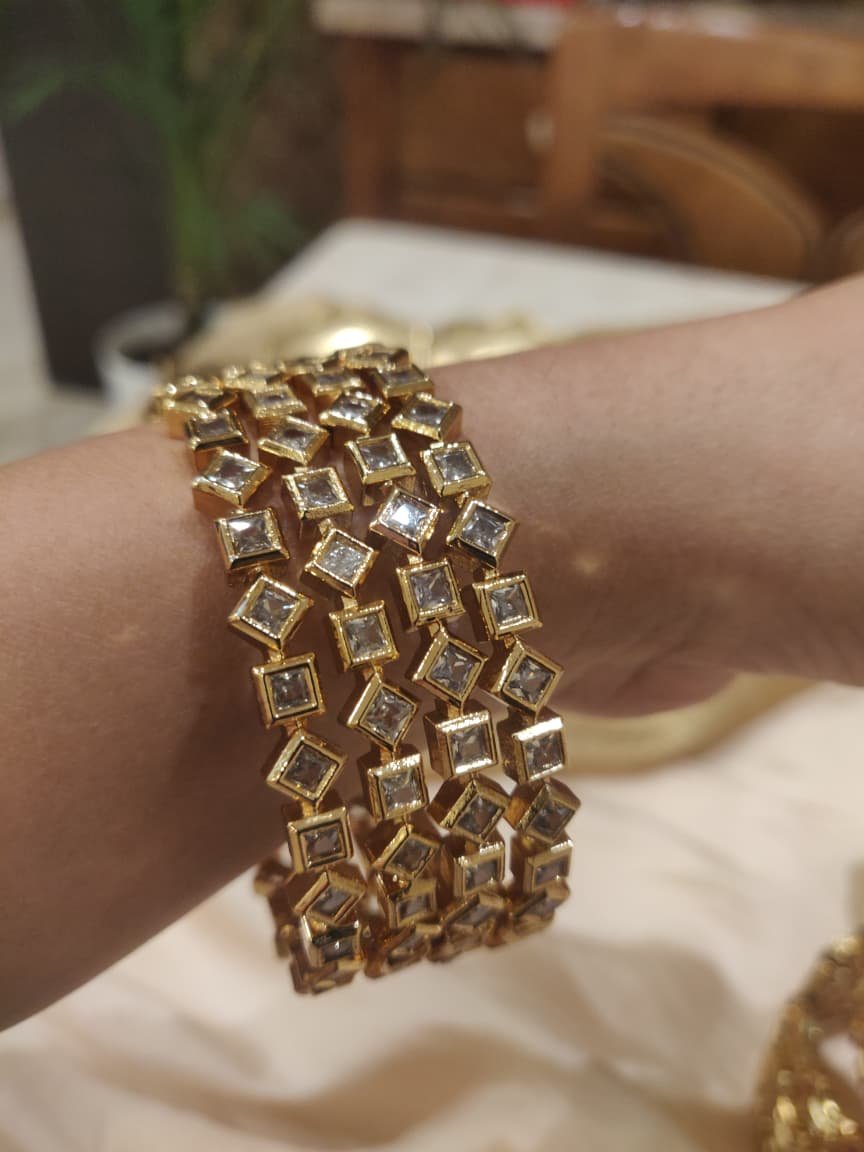
A thick, sturdy bangle, often worn alone or as the anchor of a stack. Kadas can be plain, carved, or studded with stones.
Chudi
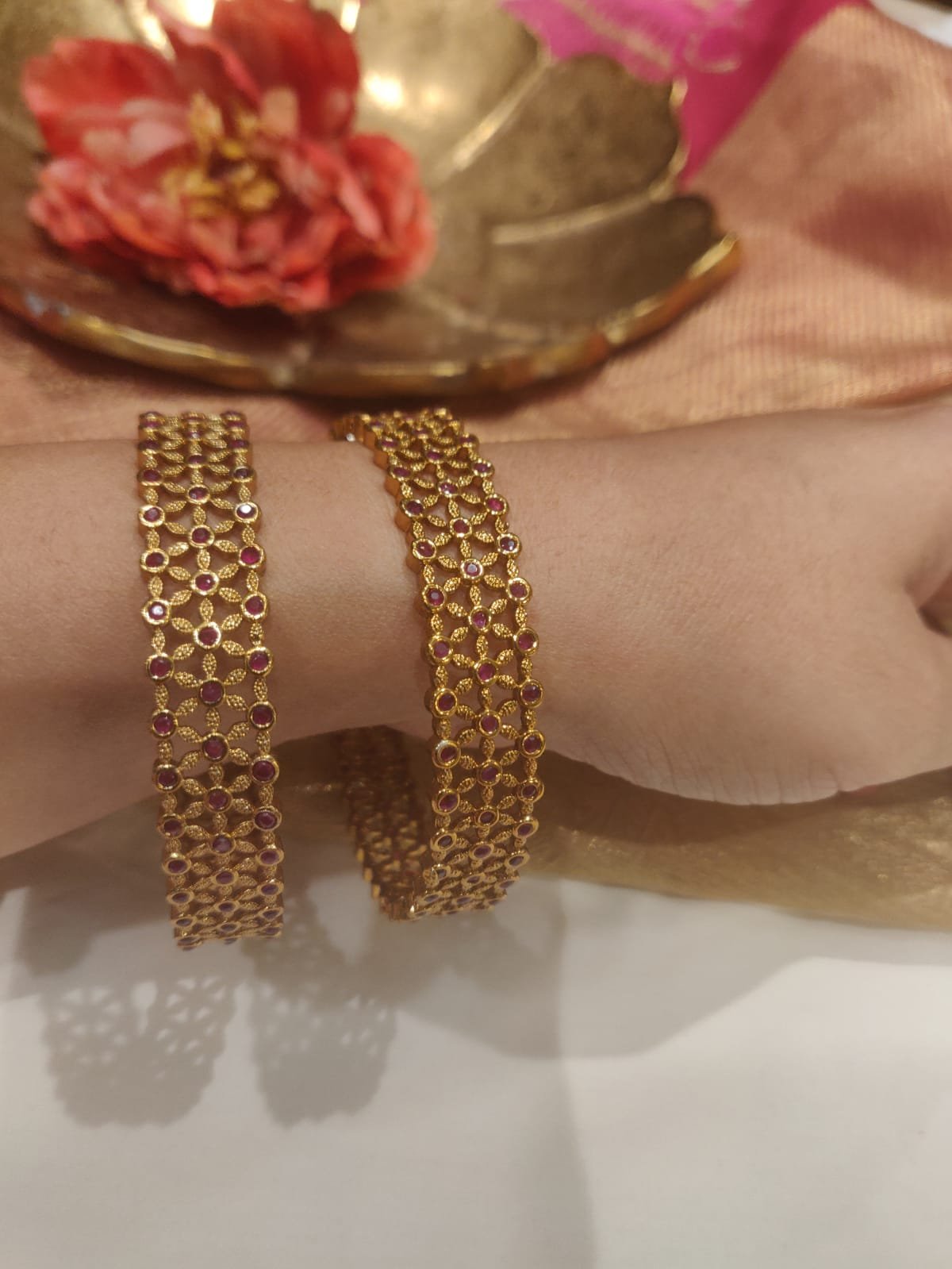
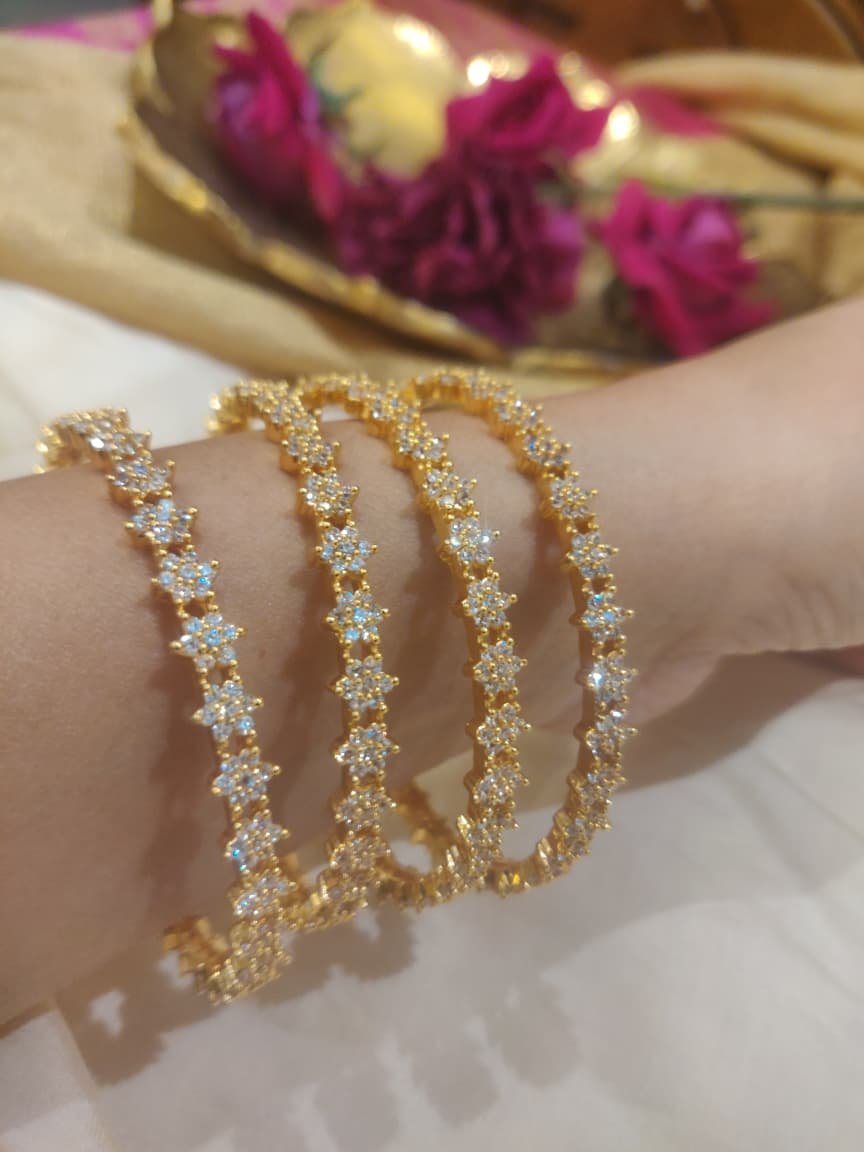
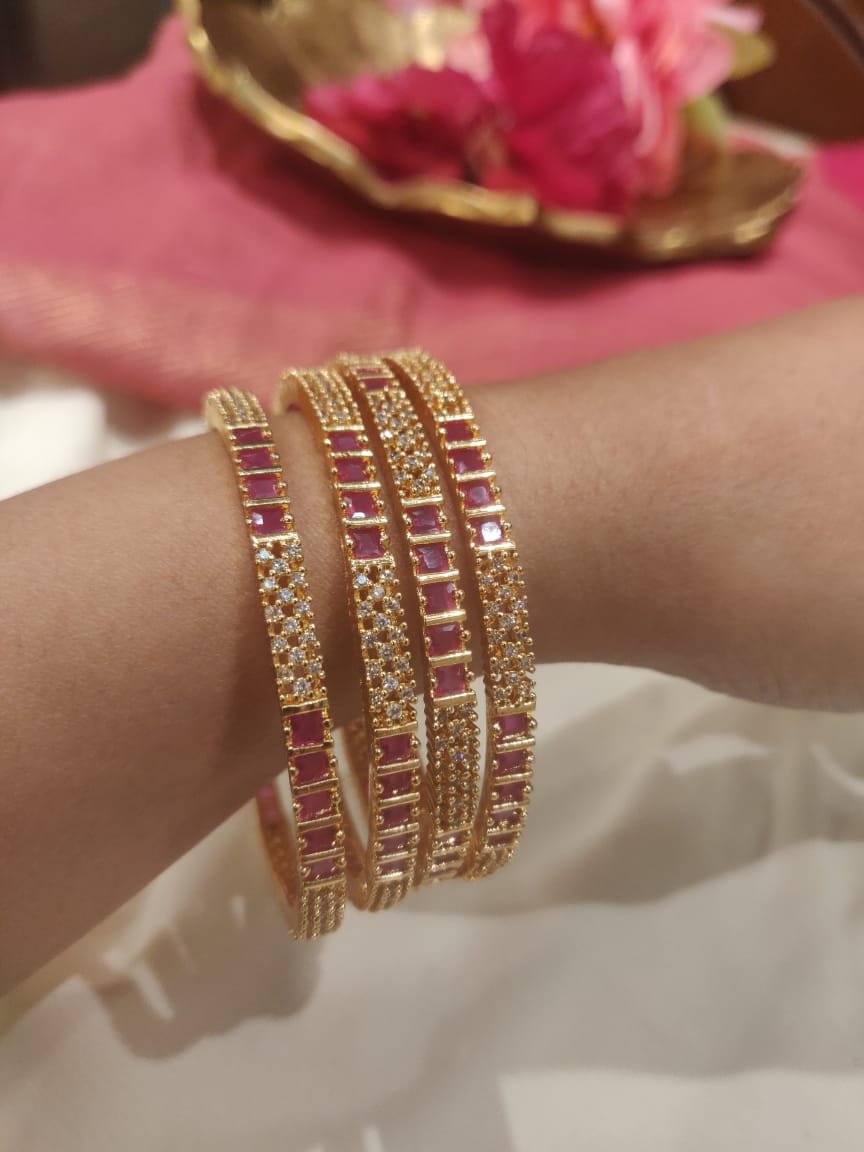
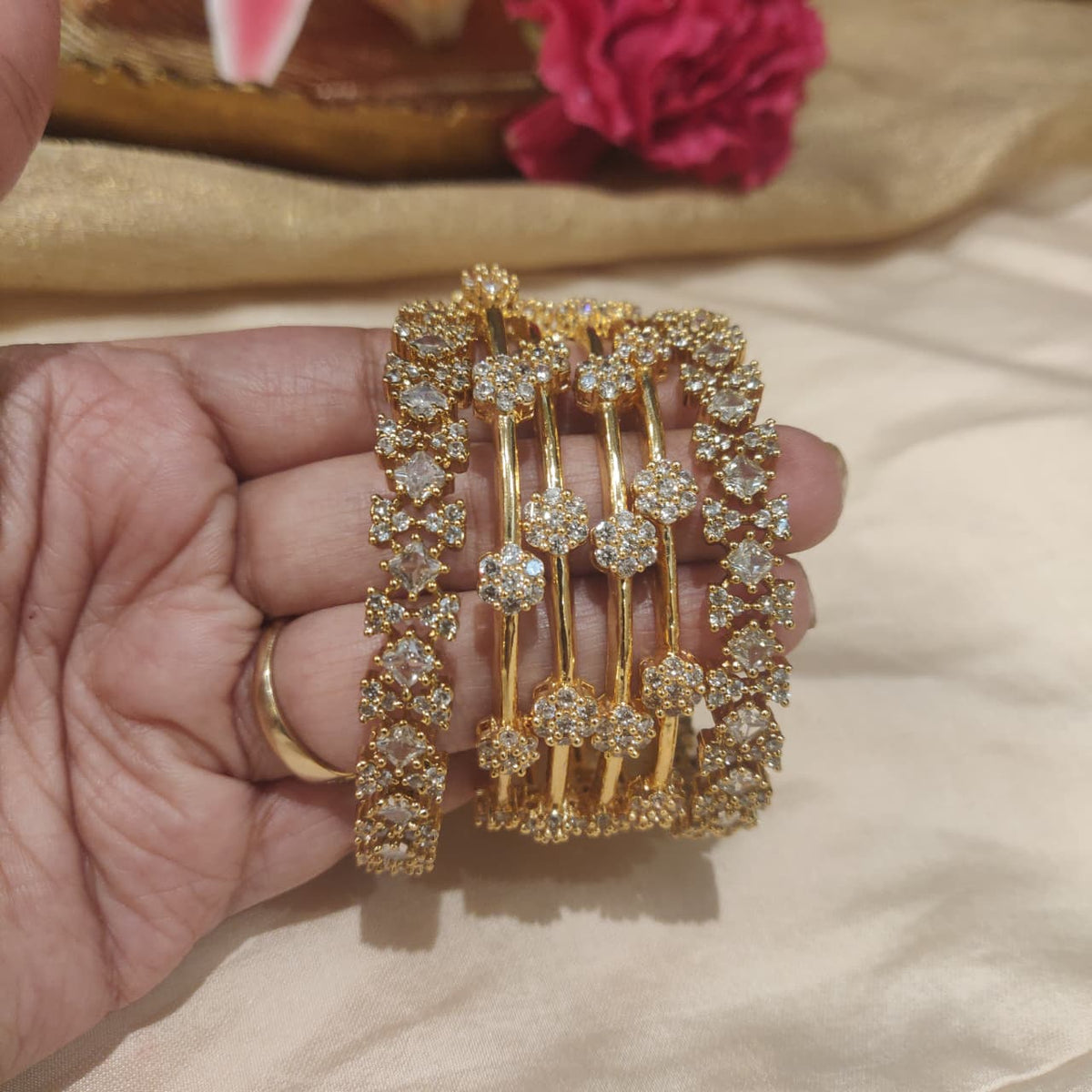
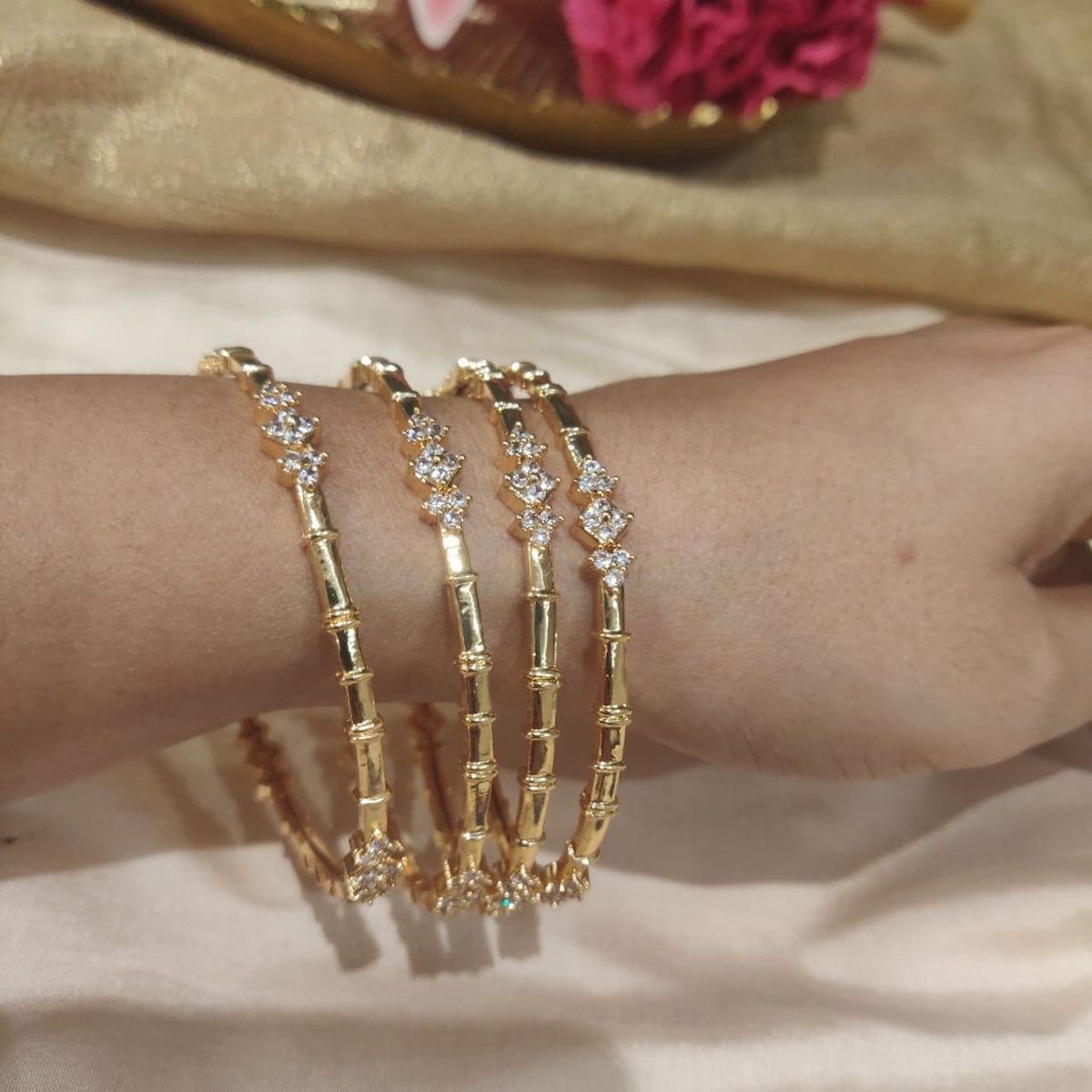
Thin bangles worn in sets. Chudis are the classic choice for stacking and are common in both gold-toned and glass styles.
Glass Bangles
Light, colorful, and festive. Glass bangles are popular for haldi, mehendi, and festivals like Teej and Karwa Chauth.
Lac Bangles
Made from lac and often decorated with stones, mirrors, and beads. These are bold and colorful, perfect for ethnic outfits.
Openable and Adjustable Bangles
These have a screw or hinge closure, which makes them easier to wear and helps with sizing.
Bracelet-Style Bangles
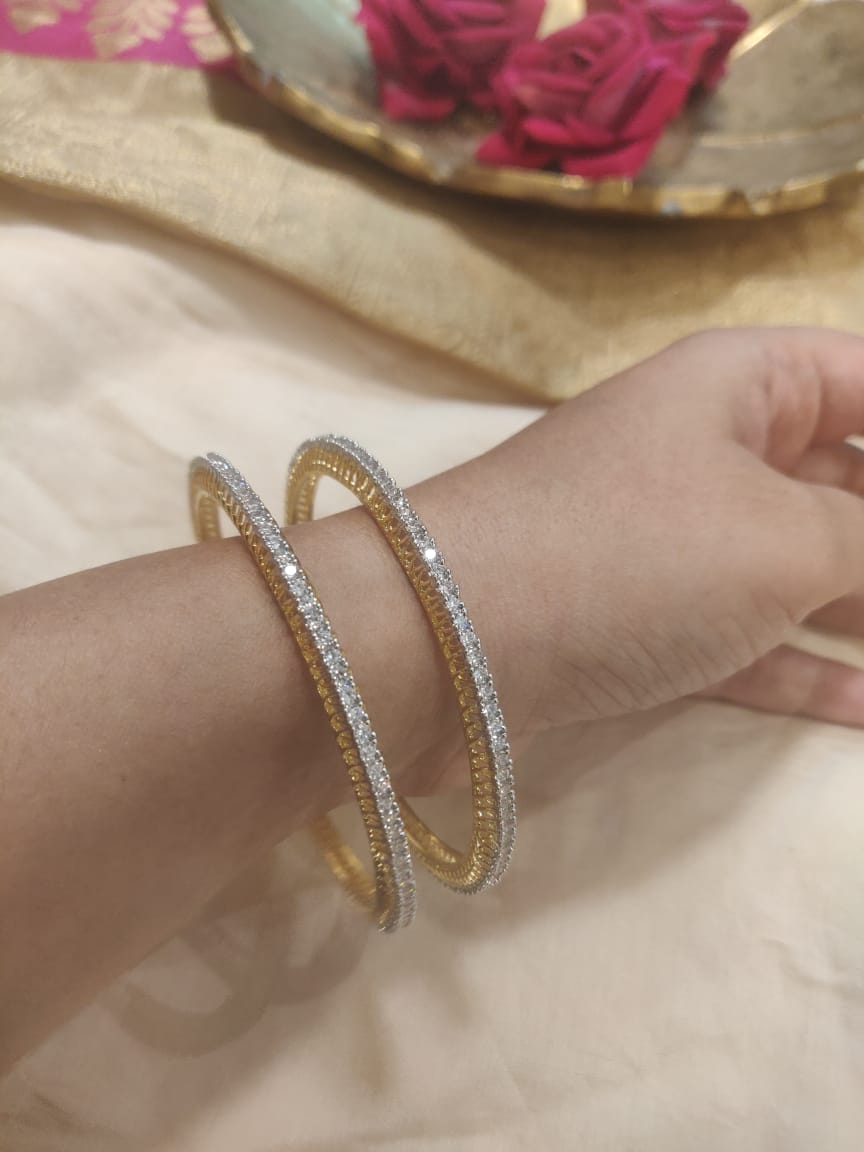
Sleeker designs that work with western and office wear.
How to Find Your Bangle Size
The right size matters more than design. A bangle that is too tight is hard to put on. One that is too loose slides around and can fall off.
Indian Bangle Size Chart
Indian bangle sizes are based on the inner diameter in inches. The number after the decimal shows sixteenths of an inch.
-
Size 2.2: About 2.125 inches, or 54 mm
-
Size 2.4: About 2.25 inches, or 57 mm
-
Size 2.6: About 2.375 inches, or 60 mm
-
Size 2.8: About 2.5 inches, or 63.5 mm
-
Size 2.10: About 2.625 inches, or 67 mm
Sizes 2.4 and 2.6 are among the most common for adult women, but your hand shape matters, so always measure.
Method 1: Measure an Existing Bangle
Take a bangle that fits you well. Measure the inside diameter from edge to edge in millimeters. Match it to the chart above.
Method 2: Measure Your Hand
-
Bring your thumb and little finger together, as if putting on a bangle.
-
Wrap a soft measuring tape around the widest part of your hand.
-
Note the measurement in millimeters.
-
Divide by 3.14 to get the approximate diameter.
-
Match the diameter to the chart.
If you fall between two sizes, choose the larger one for slip-on bangles, or pick an openable style.
Stacking Formulas That Always Work
Stacking is where bangles become personal. Here are five reliable formulas.
Formula 1: The Classic Balance
-
One kada on each wrist
-
Four to six thin chudis on either side of the kada
Works for: weddings, festivals, and family functions.
Formula 2: The Single Statement
-
One wide, detailed kada on one wrist
-
Nothing on the other wrist, or a watch
Works for: office wear and Indo-western outfits.
Formula 3: The Festive Mix
-
Glass bangles in two colors matching your outfit
-
One gold-toned kada at each end of the stack
Works for: mehendi, haldi, Teej, and Navratri.
Formula 4: The Bridal Full Stack
-
A large number of matching chudis
-
Two kadas or statement bangles at the ends
-
Coordinated colors across both wrists
Works for: brides and close family members at weddings.
Formula 5: The Modern Mix
-
One sleek bracelet-style bangle
-
A watch
-
One thin chain bracelet
Works for: daily wear with western clothes.
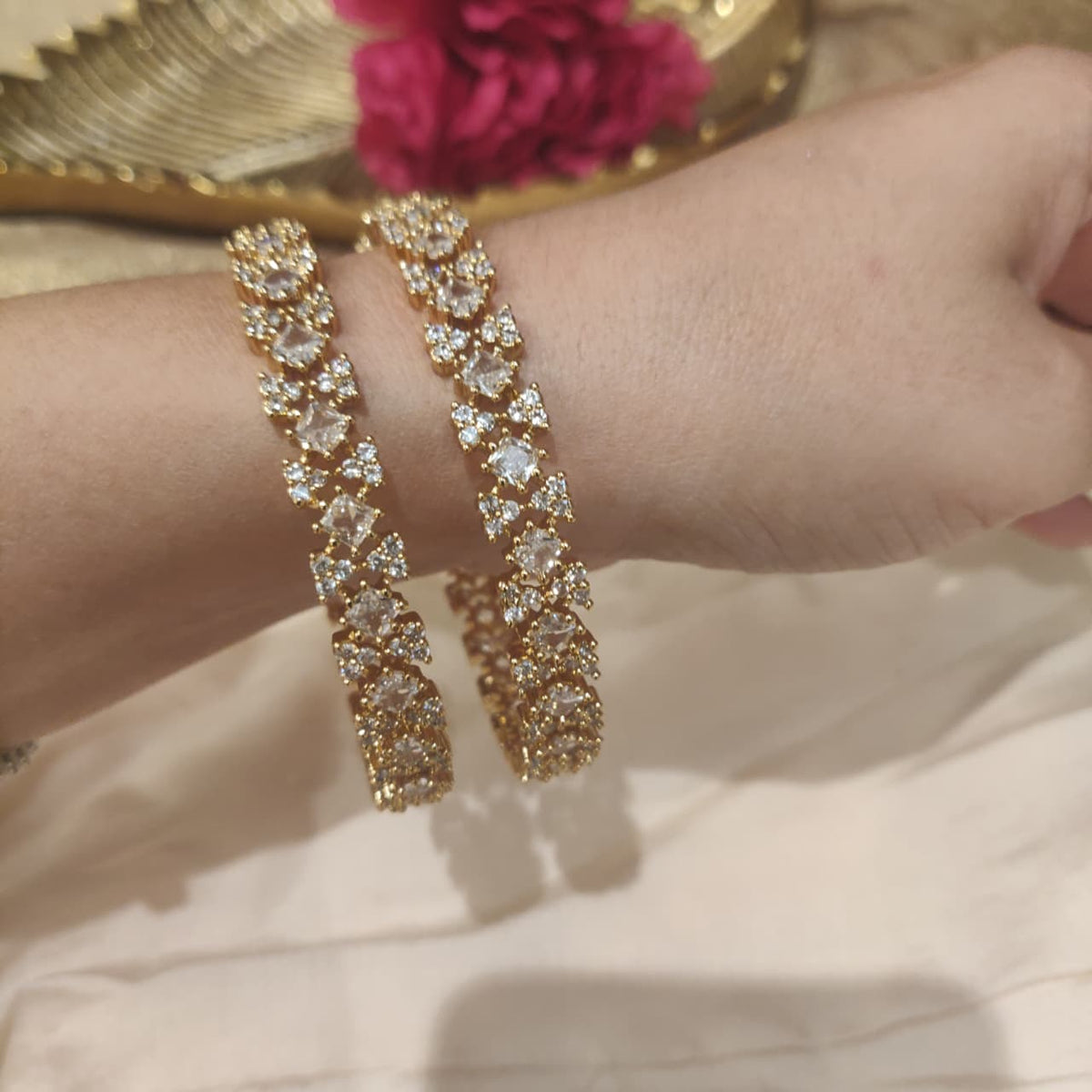
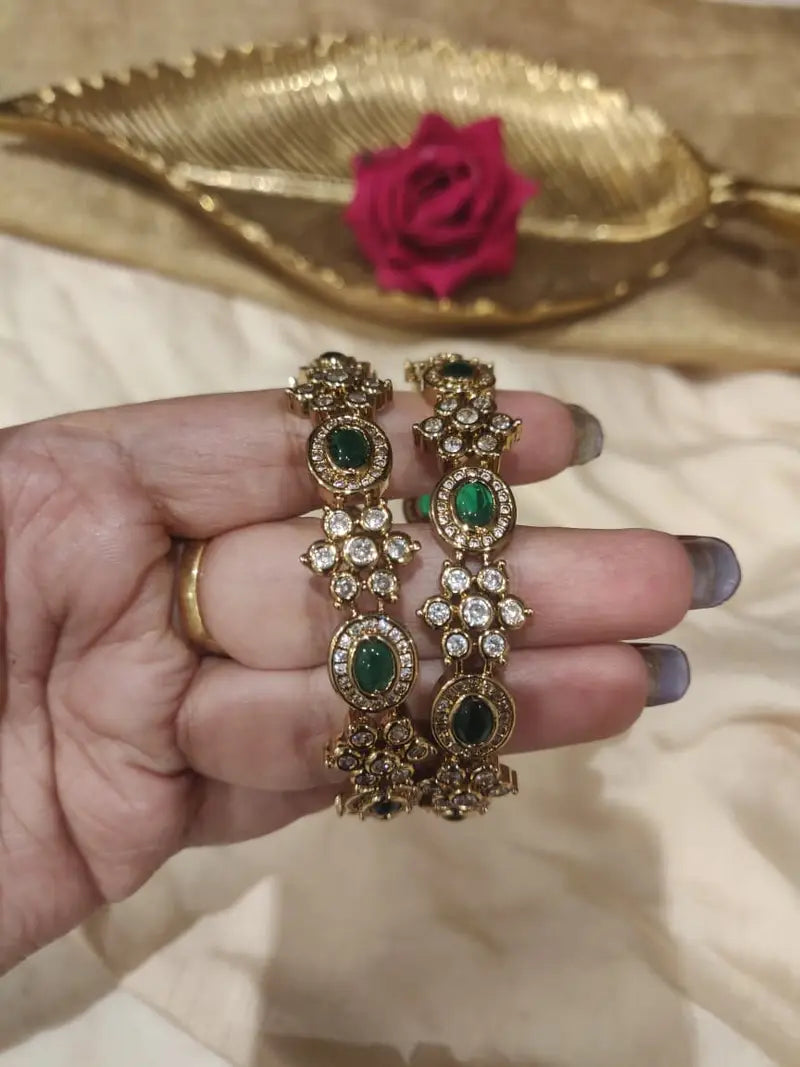
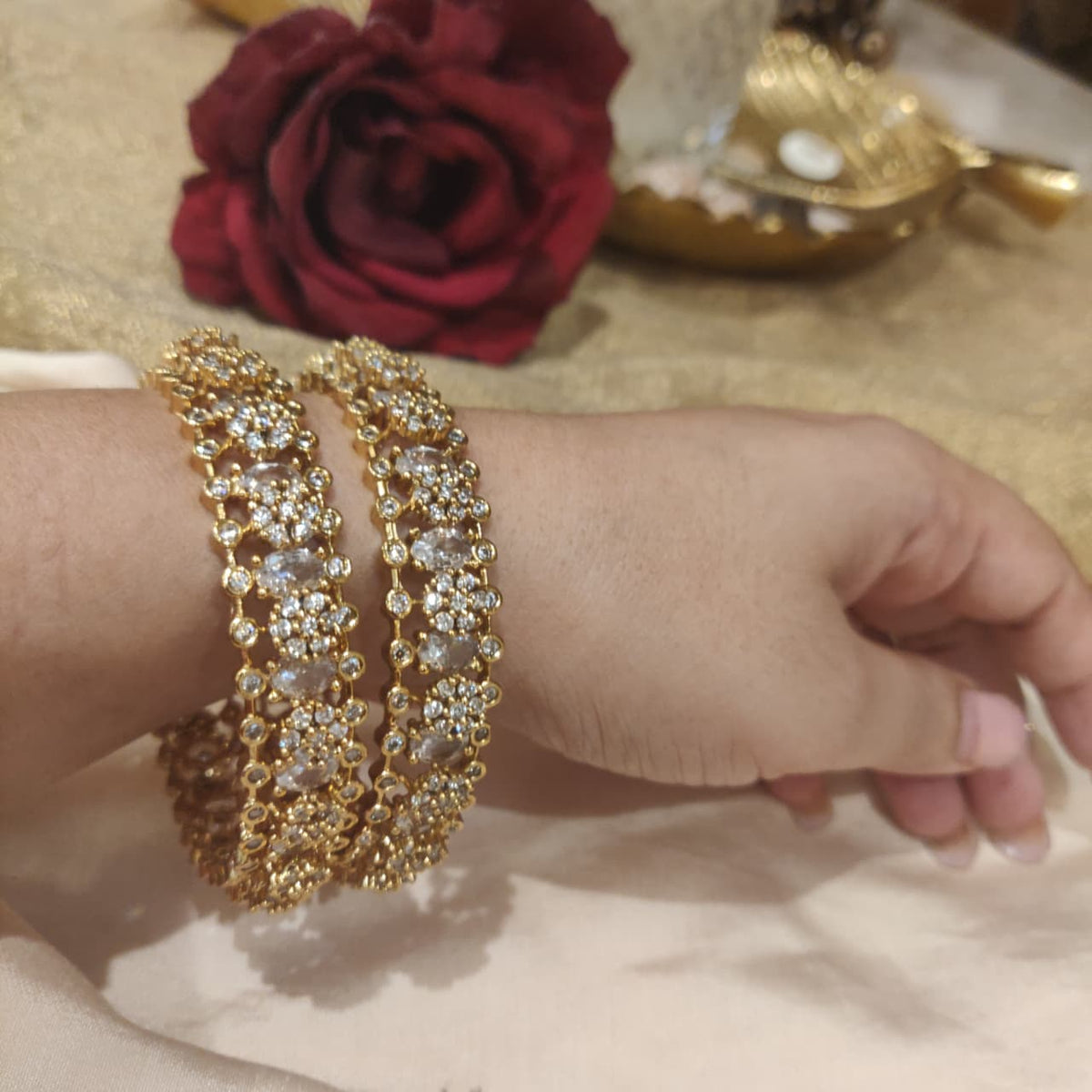
For classic stacks, start with a few pieces from the traditional gold bangle designs collection at Emporia Jewels, since gold-toned bangles mix easily with almost any color.
Matching Bangles to Your Outfit
-
Sarees: Gold-toned kadas and chudis work with silk sarees. Glass or lac bangles work with cotton and printed sarees.
-
Lehengas: Coordinate bangle colors with the lehenga's main shade or embroidery color.
-
Salwar suits: One kada or a small stack of chudis keeps it balanced.
-
Kurtis and jeans: A single statement bangle or a few oxidized bangles add an easy ethnic touch.
-
Western dresses: Go with sleek, minimal bangles or a bracelet-style cuff.
To complete the look with matching earrings and necklaces, explore the fancy artificial jewellery range.
Bangles for Every Occasion
Weddings
Full stacks with coordinated colors. Brides follow their family or regional tradition, while guests can choose lighter stacks.
Festivals
Bright glass or lac bangles for Navratri, Teej, and Karwa Chauth. Gold-toned stacks for Diwali.
Office
One kada or two thin bangles. Avoid stacks that clink loudly while typing.
Gifting
Bangles are a popular gift for Raksha Bandhan, birthdays, and festivals. Openable designs are a safe choice when you do not know the exact size.
How to Care for Your Bangles
-
Store bangles on a bangle stand or roll to keep their shape.
-
Keep glass bangles separate to avoid cracks.
-
Avoid water, soap, and perfume on gold-toned finishes.
-
Wipe with a soft dry cloth after wearing.
-
Remove bangles before sleeping, exercising, or heavy housework.
Emporia Jewels recommends storing each bangle type separately so finishes and decorations stay in good shape longer.
Conclusion
Here is a small styling challenge for this week. Measure your bangle size using the method above. Then try three stacks: the single statement for a workday, the classic balance for a family dinner, and the modern mix for a weekend outing. Notice which one feels most like you. Once you know your size and your favorite formula, choosing bangles for women of every age and occasion, including yourself, becomes easy and genuinely fun.
Frequently Asked Questions
What is the most common bangle size for women?
Sizes 2.4 and 2.6 are among the most common for adult women in India, but measuring your hand is the best way to be sure.
How do I measure my bangle size at home?
Measure the inner diameter of a bangle that fits well, or measure around your hand with your thumb and little finger together, then divide by 3.14.
How many bangles should I wear?
It depends on the occasion. One kada works for office wear, while weddings and festivals often call for fuller stacks.
What is a kada?
A kada is a thick, sturdy bangle, often worn alone or as the anchor piece in a bangle stack.
Can I wear bangles with western outfits?
Yes. Sleek bracelet-style bangles, single kadas, or minimal stacks pair well with western clothes.
What bangles are worn by Bengali brides?
Bengali brides traditionally wear shakha, which are white conch shell bangles, and pola, which are red bangles.